Soccer fans around the world wait every four years for the excitement of the World Cup, where teams compete for one of the biggest prizes in sports! Today, I’m sharing a simple DIY Soccer Game from our Soccer World Tournament Family Unit Study that lets kids explore the rules of soccer while building and playing their very own tabletop game inspired by the world’s most popular sport.
In this activity, children will create soccer player puppets, set up a mini soccer field, and use their fingers to “kick” the ball into the net. It’s an engaging way to combine creativity, problem-solving, and active play while learning more about how soccer is played around the world. Best of all, it’s easy to set up with simple household supplies!
This activity fits into our exploration of soccer rules and gameplay, where kids learn about fouls, penalty kicks, throw-ins, and more in a fun, kid-friendly way. You can read more about the Soccer World Tournament Family Unit Study, and explore the hands-on activities offered right here.
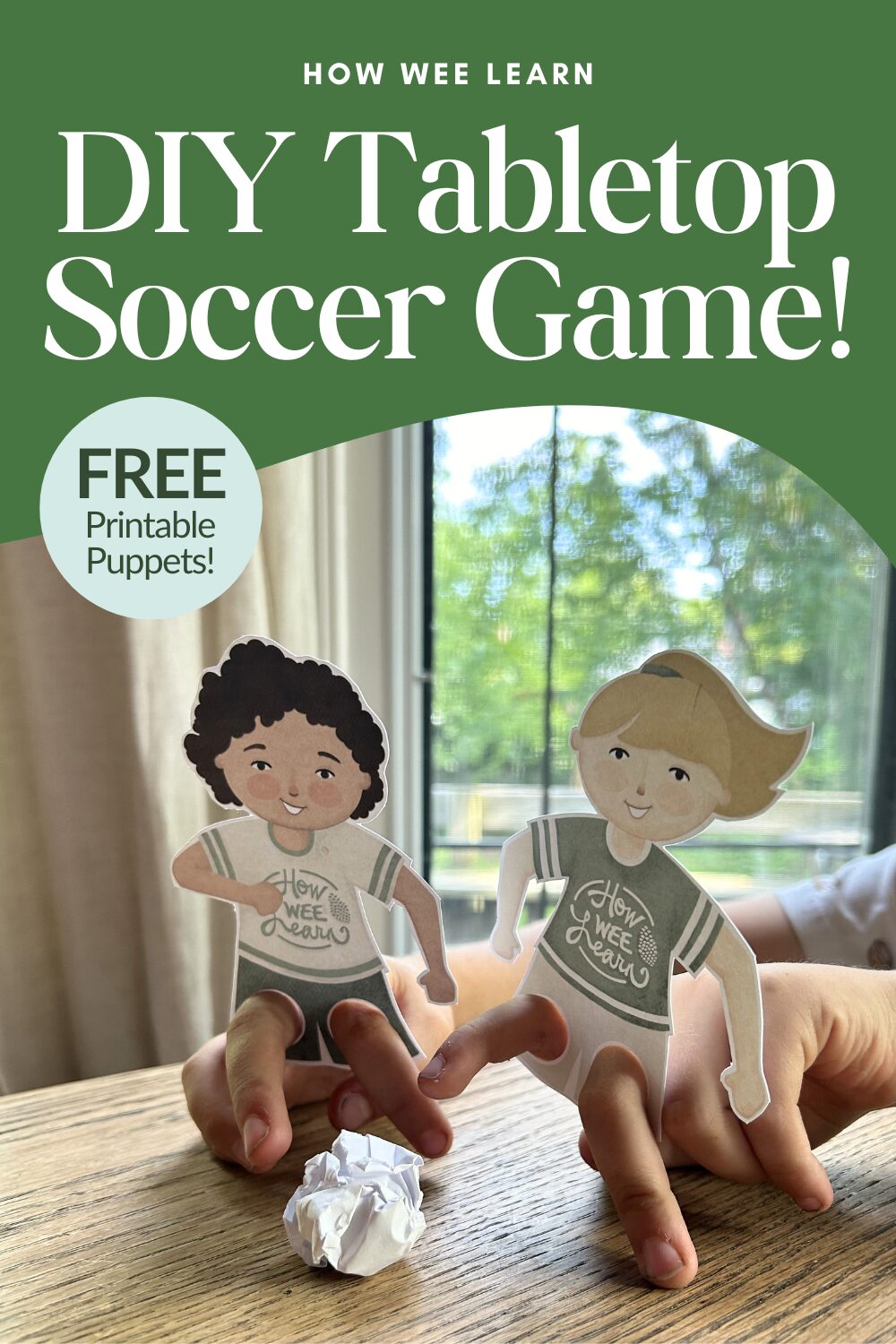
DIY Soccer Game
Did you know that each and every one of our Family Unit Studies includes: Geography, History, Science, Social Studies, Music, Art, Health, Literacy, and Math?
Well, they do! You can feel great knowing you are covering all academic subjects in an engaging, meaningful, and hands-on way.
The activity I’m sharing today blends science and art in a fun, hands-on way as kids build and play their very own DIY Soccer Game. It’s a creative way for children to explore how soccer works while designing a mini playing field, making player puppets, and experimenting with the rules of the game through active play.
Ready to get started? Enter your email below to instantly receive your free copy and enjoy this hands-on activity.
Let’s Play!
First, print the Soccer Player Puppets printables and gather your materials:

- Scissors
- Markers
- Painter’s Tape
- Two Small Boxes
- A Small Ball or PomPom
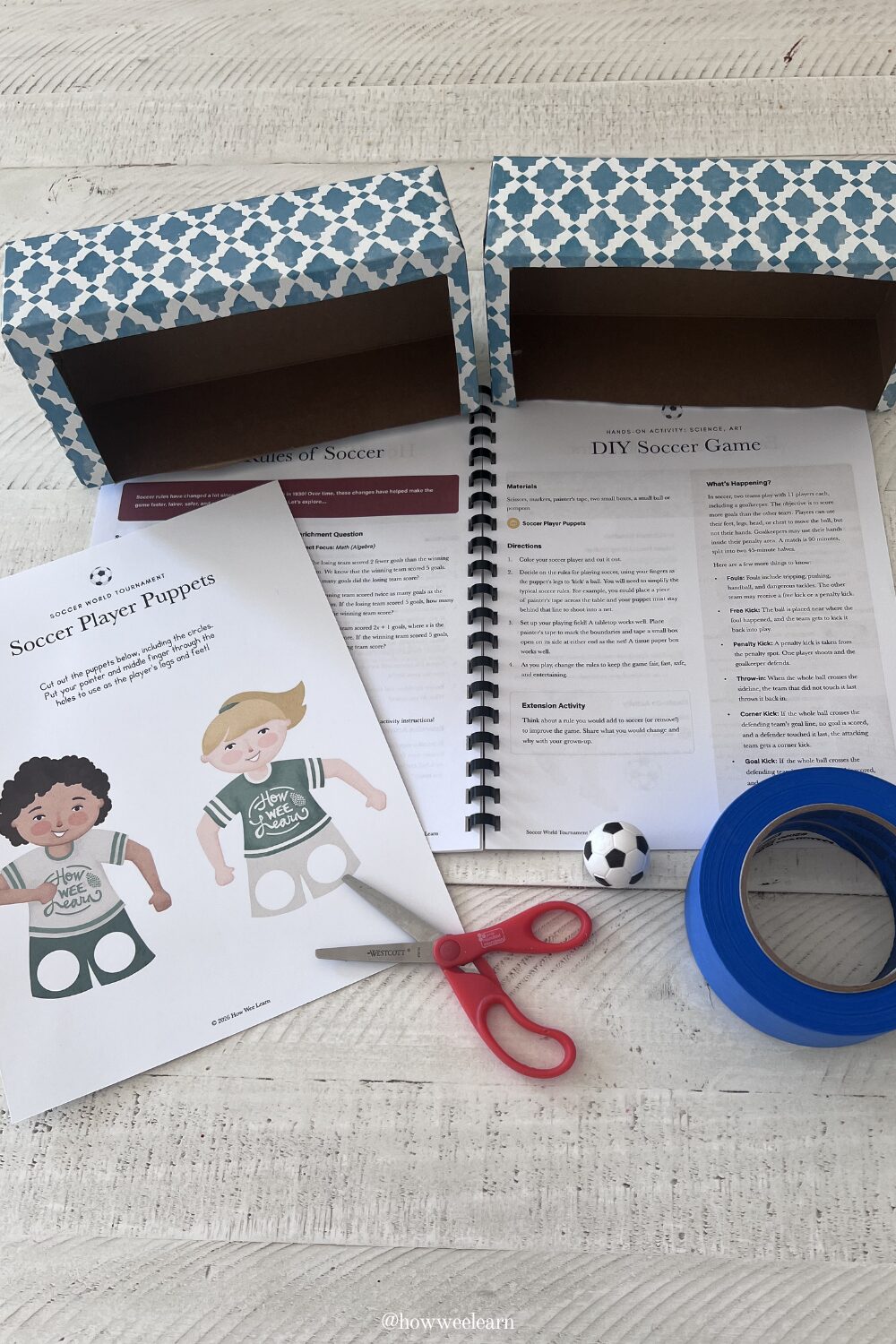
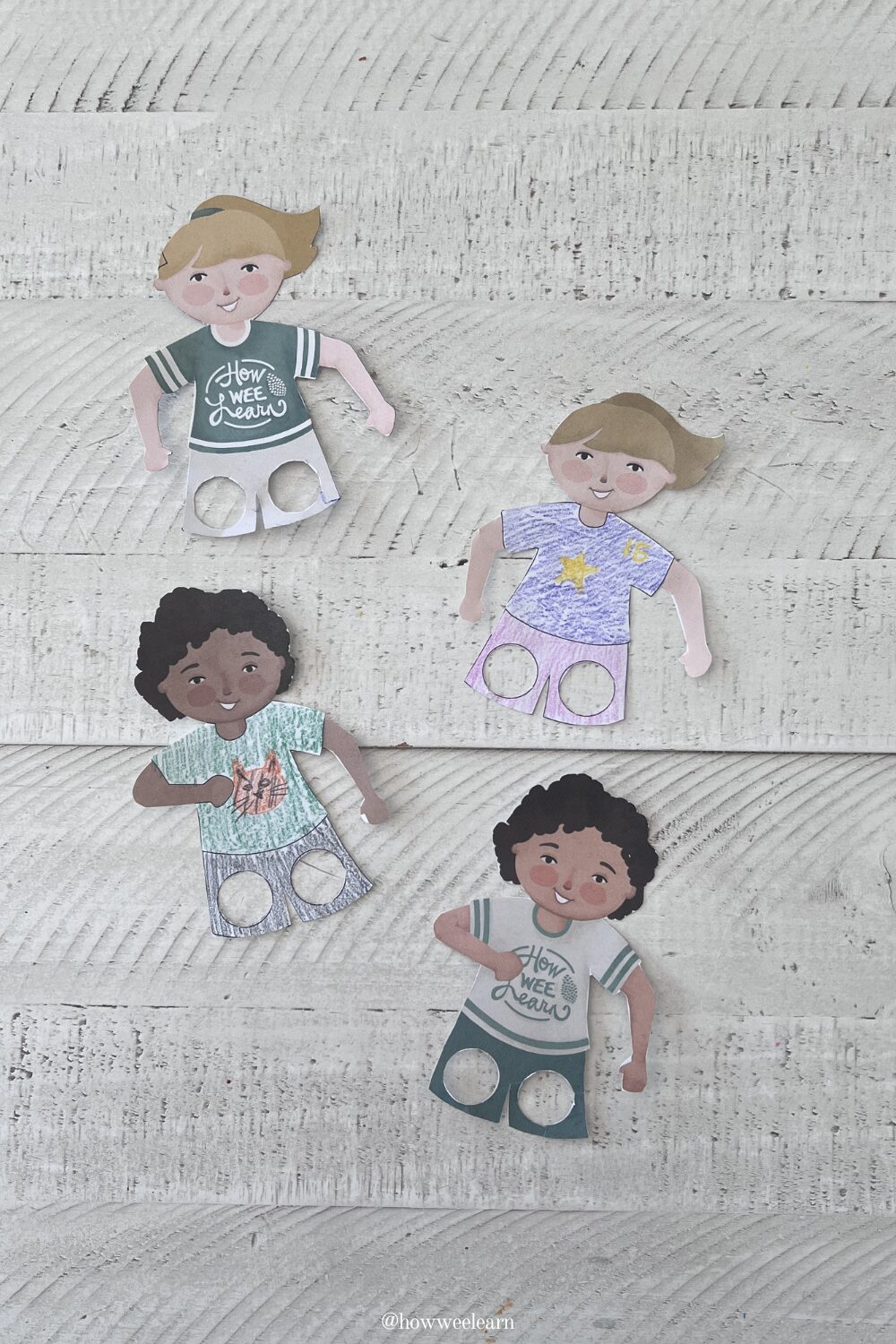
Next, carefully cut out your Soccer Player Puppets. You can use the How Wee Learn jerseys, or be creative and color your own!
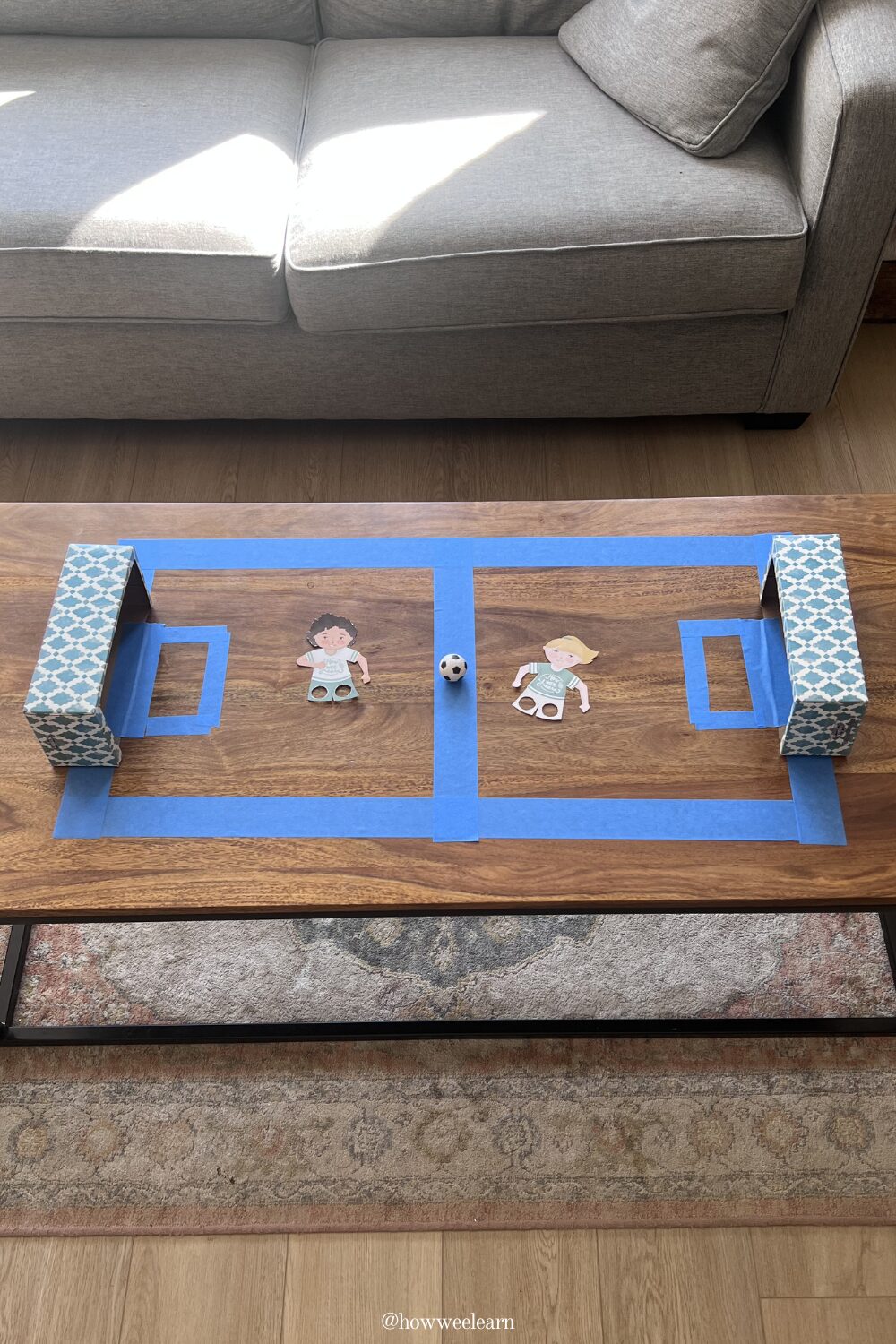
Now it’s time to build your soccer field! A tabletop or large flat surface works perfectly. Use painter’s tape to mark the boundaries of the field, then place a small box on each end to act as the soccer nets. Tissue boxes work especially well for this activity!
Next, decide on a few simple soccer rules for your DIY Soccer Game before you begin playing. Use your fingers as the puppet’s legs to “kick” the ball toward the goal. You can even create a shooting line with painter’s tape and challenge players to stay behind it while taking shots.
Once everything is set up, it’s time to play! Take turns passing, shooting, blocking goals, and making up new rules as you go. Kids can experiment with different ways to play while learning more about how soccer games work.
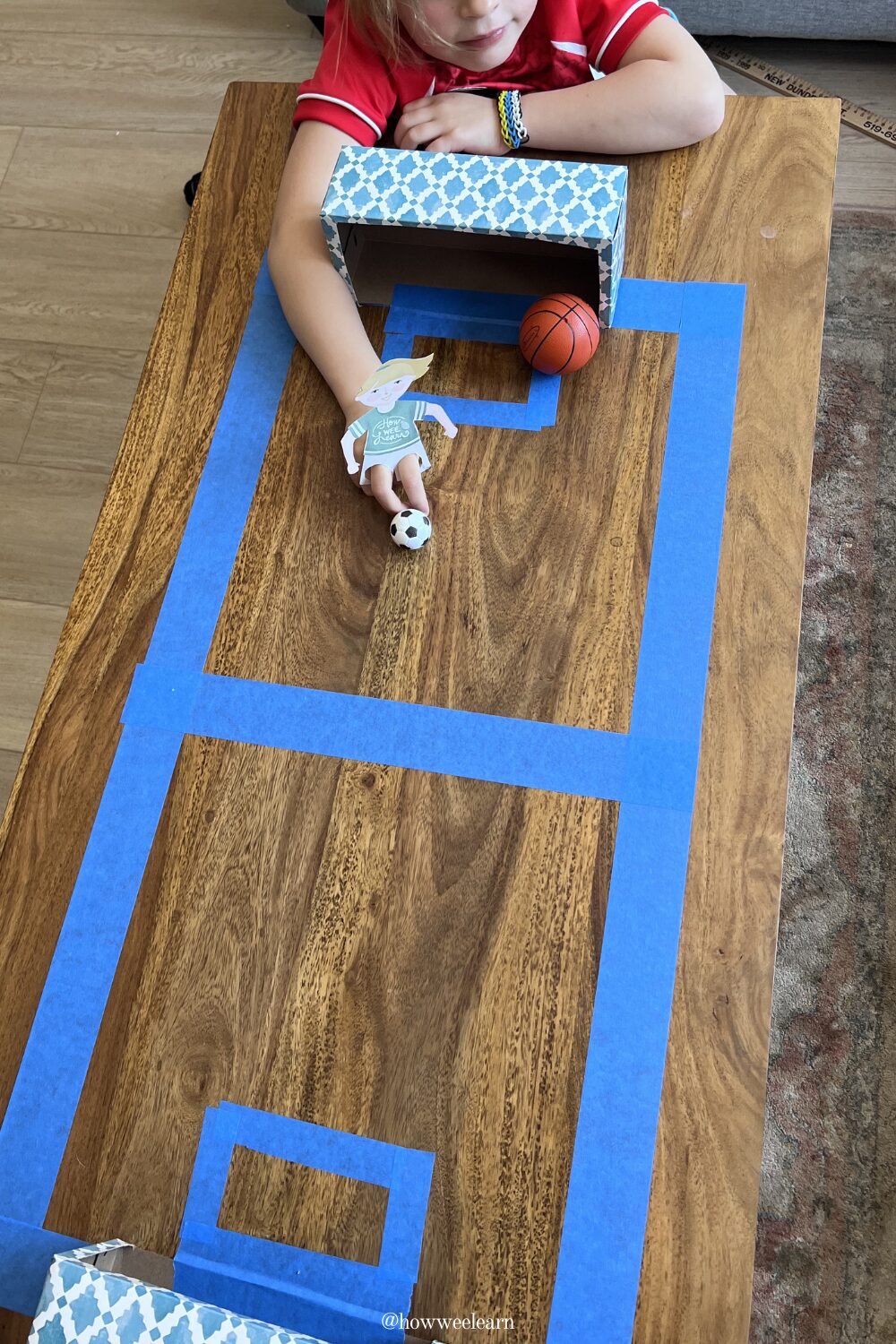
As you play, encourage children to think about what makes a game fair, fun, and exciting. You might even add your own special rules, create tournaments, or keep score just like in the World Cup!
And there you have it – your very own DIY Soccer Game!
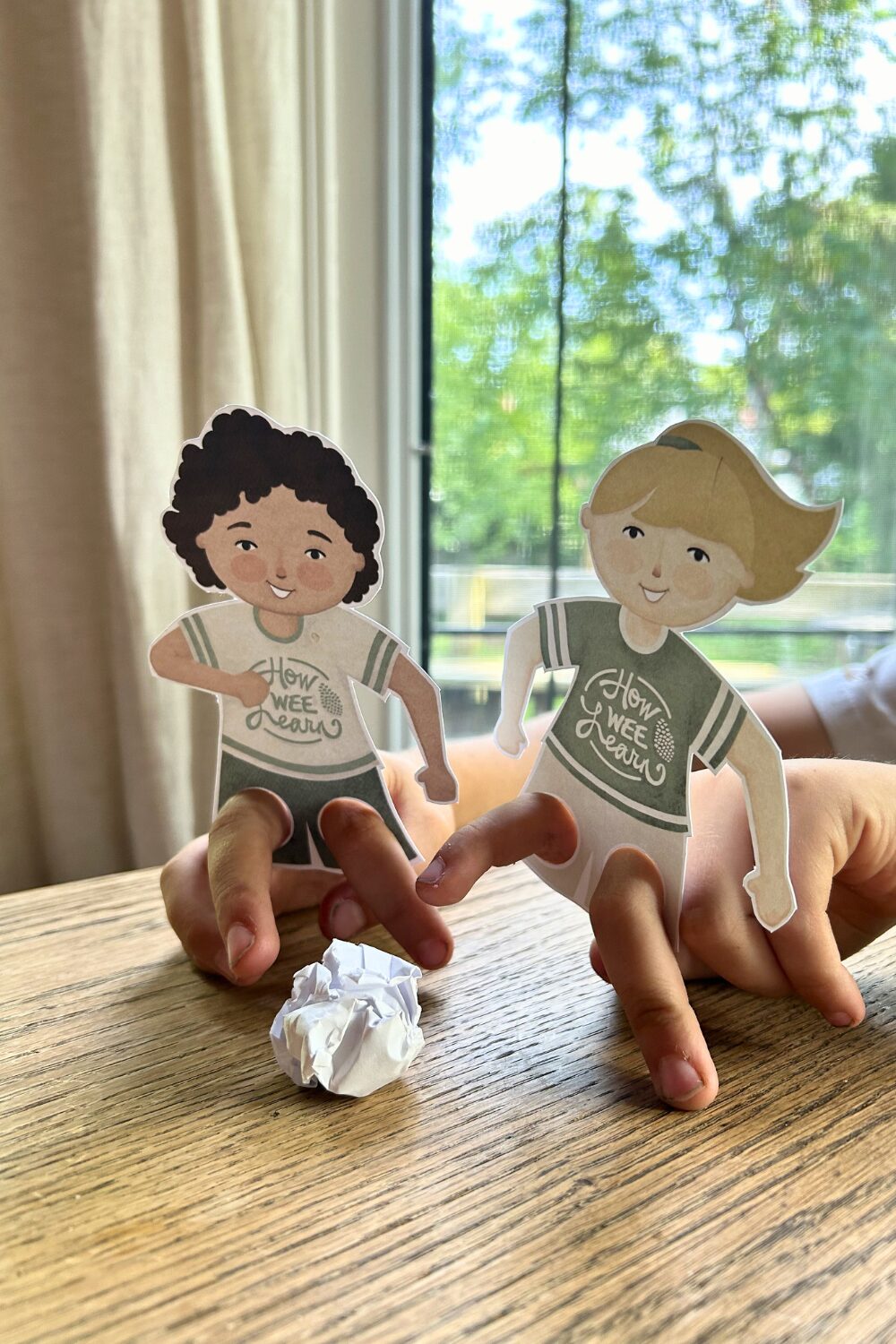
Bringing the World Cup Home!
There’s something special about turning learning into a game, and this DIY Soccer Game does exactly that! As kids build their field, create their players, and test out different rules, they’re not just learning about soccer – they’re experiencing the excitement, creativity, and strategy that makes the sport so loved around the world.
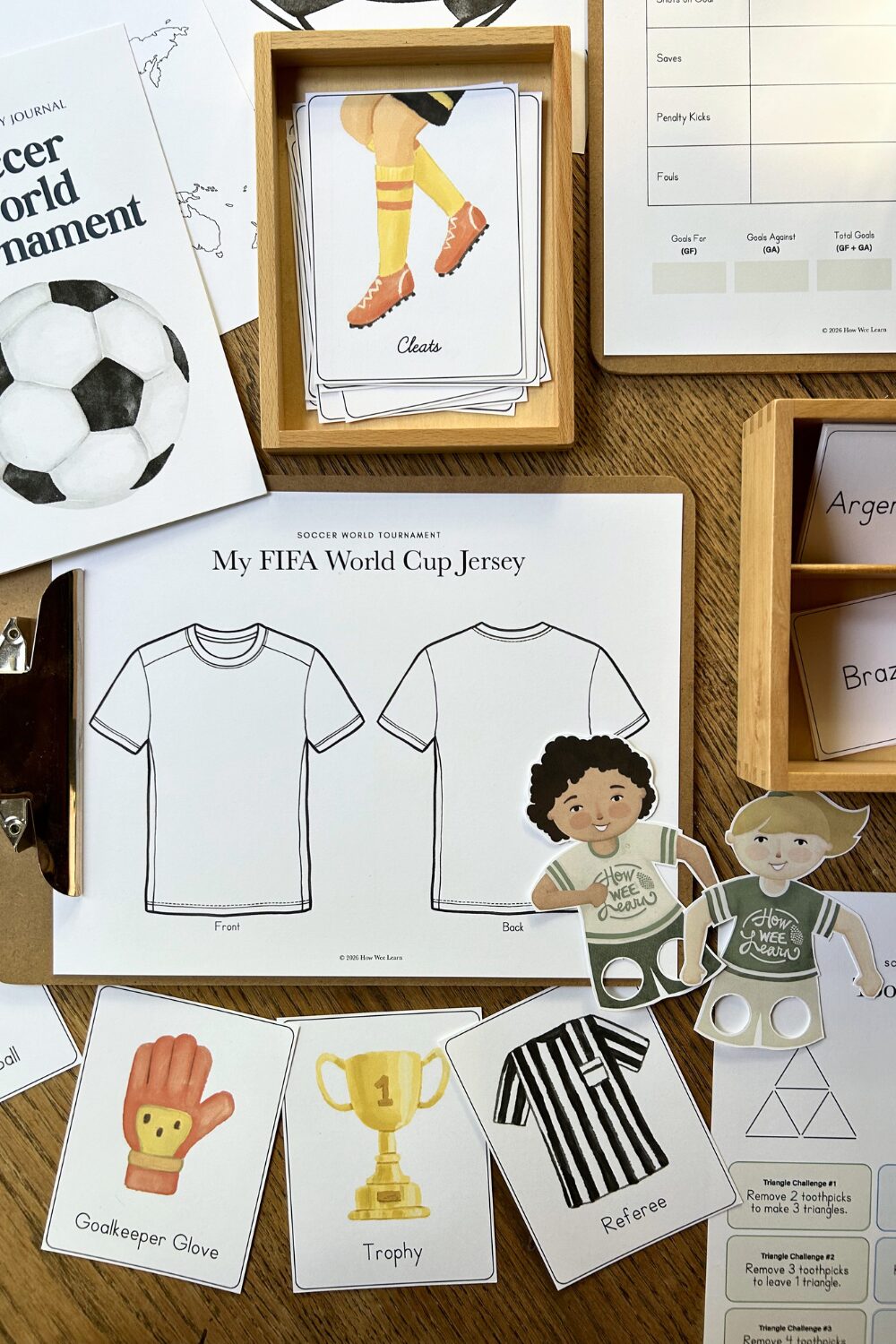
Hands-on activities like this help learning stick in a meaningful way. Children naturally begin to ask questions, experiment with ideas, and think more deeply about how the game works as they play.
If your family enjoyed this activity, be sure to explore the full Soccer World Tournament Family Unit Study. It’s packed with hands-on projects, engaging discussions, and creative learning opportunities that bring the world of soccer to life.
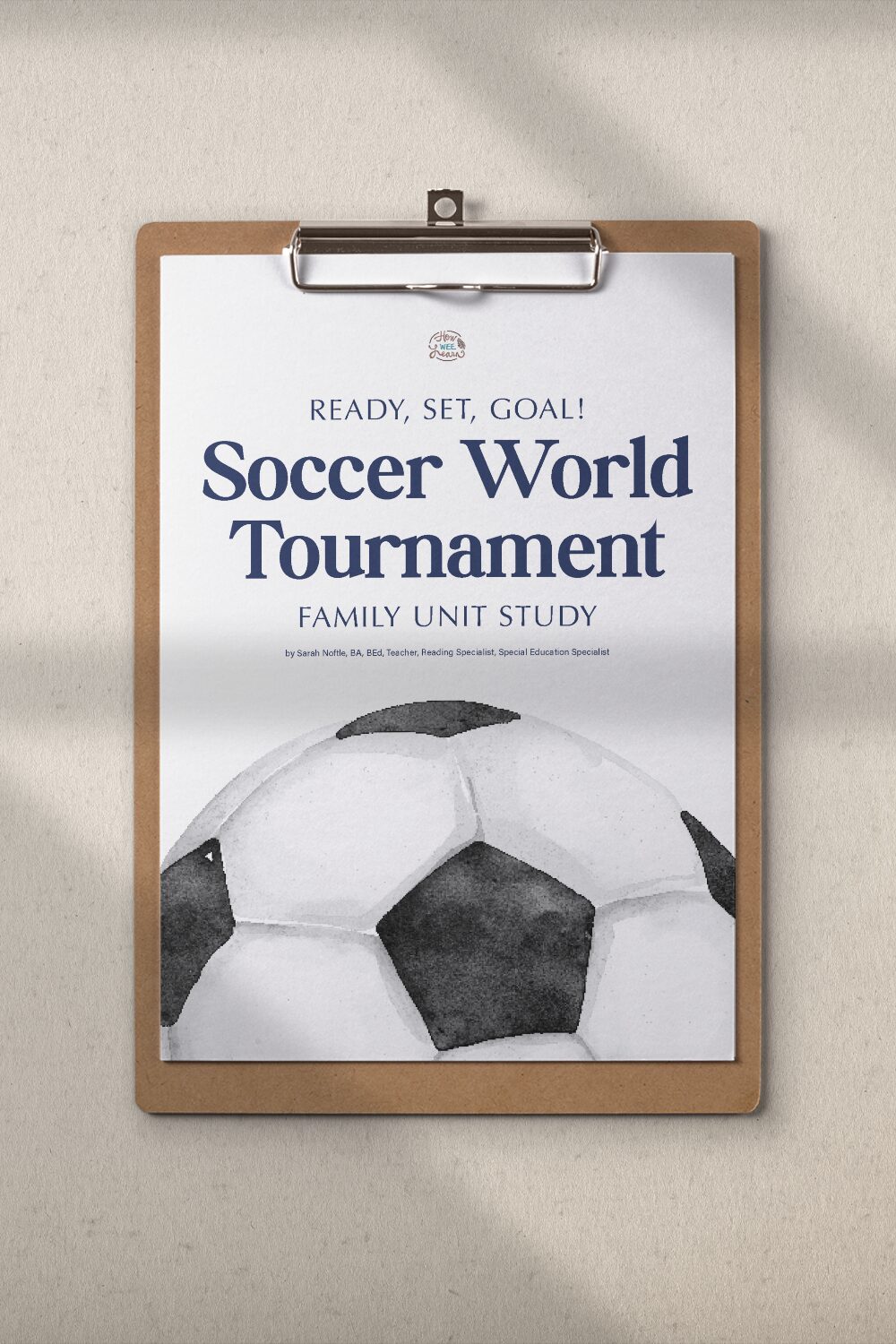
Soccer World Tournament
Bring the excitement of the World Cup into your home with this fun-filled, hands-on Family Unit Study!
https://shop.howweelearn.com/products/family-unit-study-soccer-world-tournament
 |
 |
Thanks so much for reading, friend!
xo
Sarah

Leave a Reply