Did you know that dry ice changes directly from a solid into a gas without becoming a liquid? Or that the letter “J” doesn’t appear anywhere on the periodic table of elements? Chemistry is all around us, helping us understand how matter changes and interacts with the world we live in. Best of all, it’s filled with fascinating discoveries and fun experiments that make learning come alive!
In our Exploring Chemistry Unit Study, you’ll investigate everything from acids and bases and non-Newtonian fluids to density, spectroscopy, and the amazing work of Marie Curie. Along the way, you’ll create colorful experiments, build edible science projects, and discover how chemistry helps explain many of the everyday things we see and use.
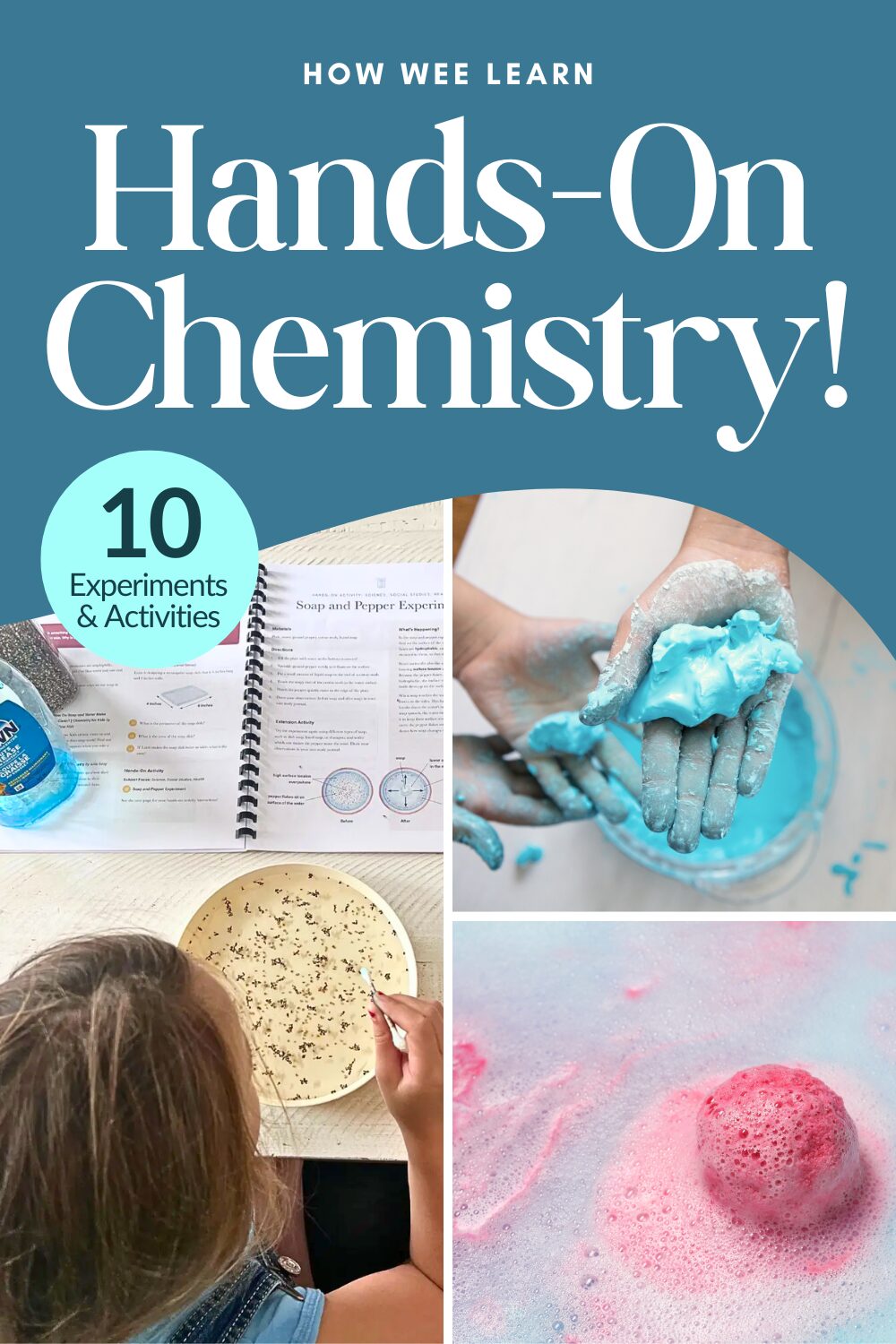
Below, I’m sharing the 10 topics included in the unit study along with some of the fun activities you’ll get to experience together!
What is a Family Unit Study?
But first… what exactly is a Family Unit Study?
This Chemistry Unit Study, like all of our ever-growing library of unit studies, takes one big theme—Chemistry—and breaks it down into ten manageable, bite-sized learning topics. This format gives you the freedom to dive into learning at a pace that works for your family. Perhaps you do one topic per day, perhaps one per week. Whatever suits your fancy! You can learn and explore topics from start to finish in about 1-2 hours each.
Dive in and watch the sparks of wonder ignite. Watch the child-led learning take off. Watch what happens when children are engaged in what they are learning!
Each of the 10 topics includes:
- an interesting fact,
- a discussion question,
- informative information,
- a curated YouTube video,
- a recommended book,
- a math or literacy enrichment question (with three difficulty levels),
- and an ultimate-can’t-be-beat hands-on activity!
Plus, all subjects are covered across the 10 topics! Geography, History, Science, Social Studies, Music, Art, Health, Literacy, and Math.
When everything connects across subjects, learning just makes more sense. Kids remember more, understand better, and actually enjoy the process. It’s the kind of learning that really sticks. 🙌

Before we spark your curiosity with the amazing world of chemistry, I’d love to share a little something to make your homeschool days just a bit easier (because we all need that, right?).
Our Mini Homeschool Toolbox is a simple, go-to resource filled with helpful printables – like math charts, number lines, and writing supports – to keep your days organized and your lessons running smoothly.
It’s completely free and so handy to have on hand as you move through your homeschool routine. Simply enter your email address below, and a copy will be instantly delivered to your inbox.
Exploring Chemistry: A Hands-On Chemistry Unit Study
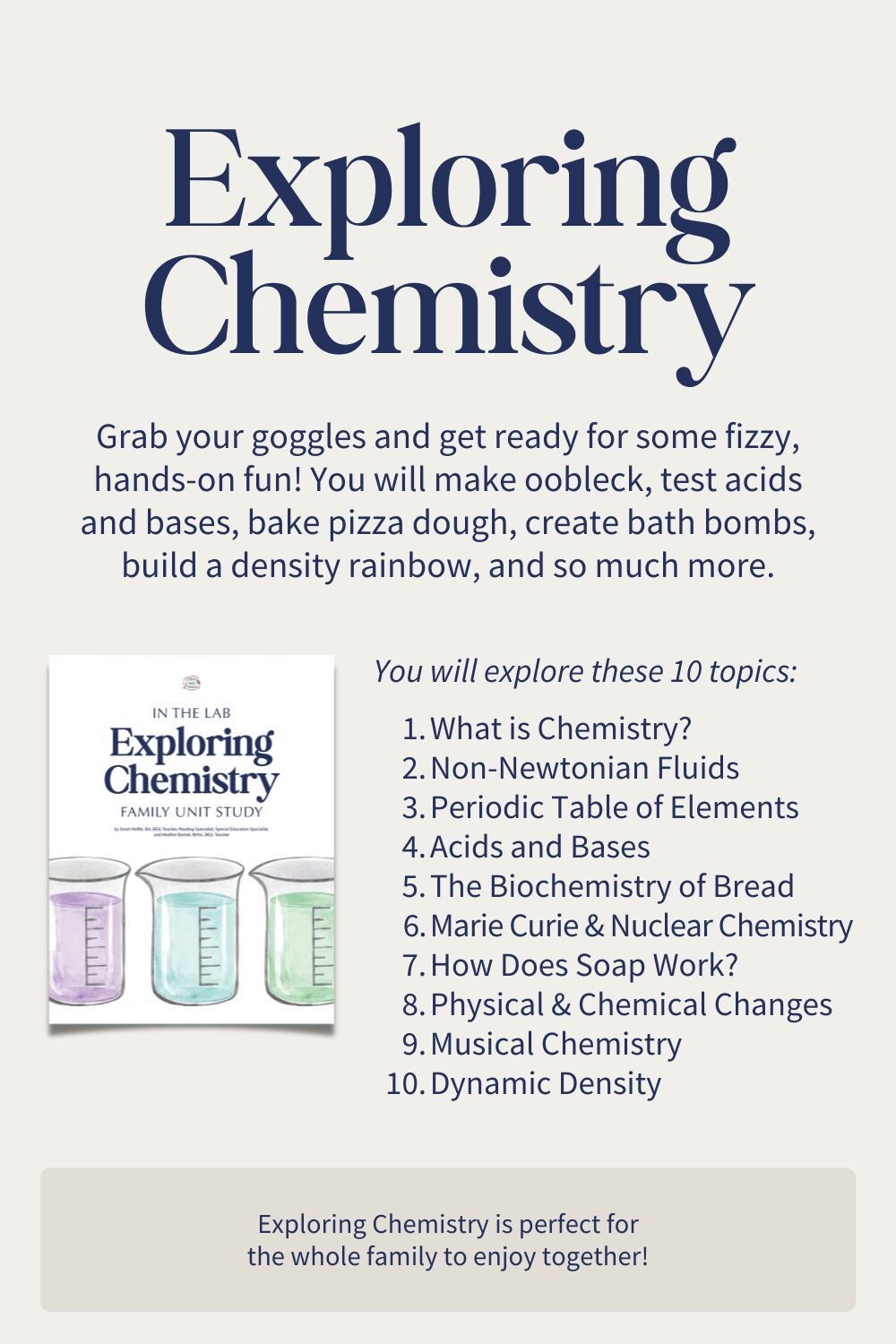
Now, let’s get the reaction started! Below are the 10 topics included in this unit study, along with a peek at the hands-on activities that you will enjoy together.
Topic #1: What is Chemistry?
Chemistry helps us understand how matter changes and interacts with the world around us! Discover what chemistry is, learn how chemists study substances as they mix and react, and explore everyday examples of chemistry in action. Then, create your own Chemical Reaction Artwork using watercolors and a white crayon to design a colorful reaction inside an Erlenmeyer flask.
Topic #2: Non-Newtonian Fluids
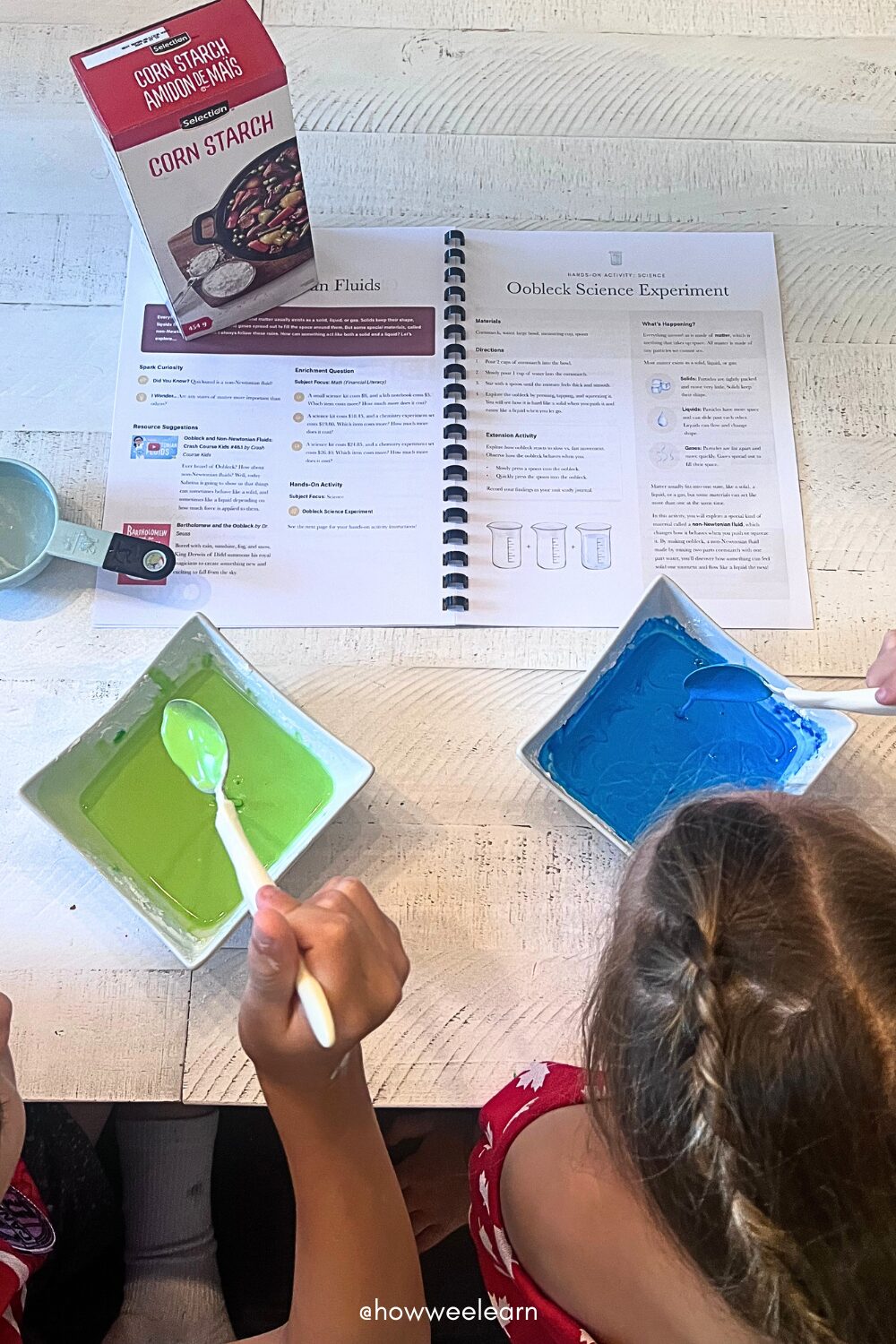
Did you know that some materials can act like both a solid and a liquid? Discover how matter is usually grouped into solids, liquids, and gases, then explore the surprising properties of non-Newtonian fluids that don’t always follow the rules! Get hands-on by mixing up your own batch of Oobleck and discovering how it can feel solid one moment and flow like a liquid the next.
Topic #3: Periodic Table of Elements
The periodic table helps scientists organize the elements that make up everything around us! Learn what elements are, how the periodic table groups them by their unique properties, and explore patterns that help us understand how they are alike and different. Then, put your detective skills to the test with an exciting Elements Scavenger Hunt as you search for hidden element cards and match them to their descriptions.
Topic #4: Acids and Bases
Why do some liquids taste sour while others feel slippery? Explore the differences between acids, bases, and neutral substances, learn how the pH scale helps scientists compare them, and discover why pH is important in everyday life. See chemistry come to life with a colorful Red Cabbage pH Test as you compare the pH of common household liquids.
Topic #5: The Biochemistry of Bread
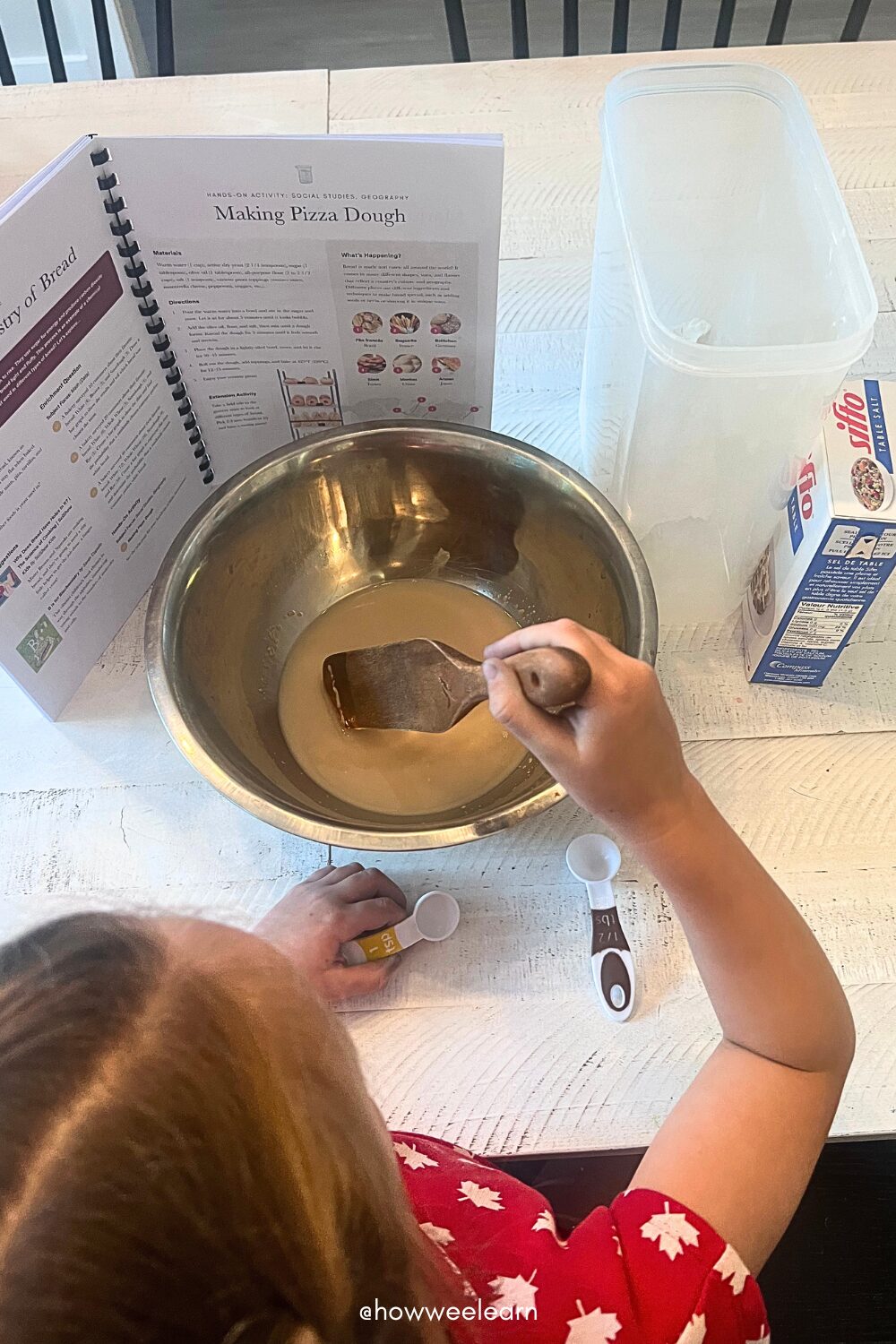
Have you ever wondered what makes bread rise? Discover how tiny living organisms called yeast use sugar to produce carbon dioxide gas, creating bubbles that make bread light and fluffy. Roll up your sleeves and make homemade pizza dough while exploring different types of bread enjoyed around the world.
Topic #6: Marie Curie & Nuclear Chemistry
Marie Curie changed the world through her groundbreaking discoveries in chemistry and physics. Learn how her research on radioactivity led to the discovery of two new elements and helped scientists better understand how radiation can be used in medicine. Celebrate her remarkable achievements by creating a Marie Curie research poster filled with fascinating facts about her life and work.
Topic #7: How Does Soap Work?
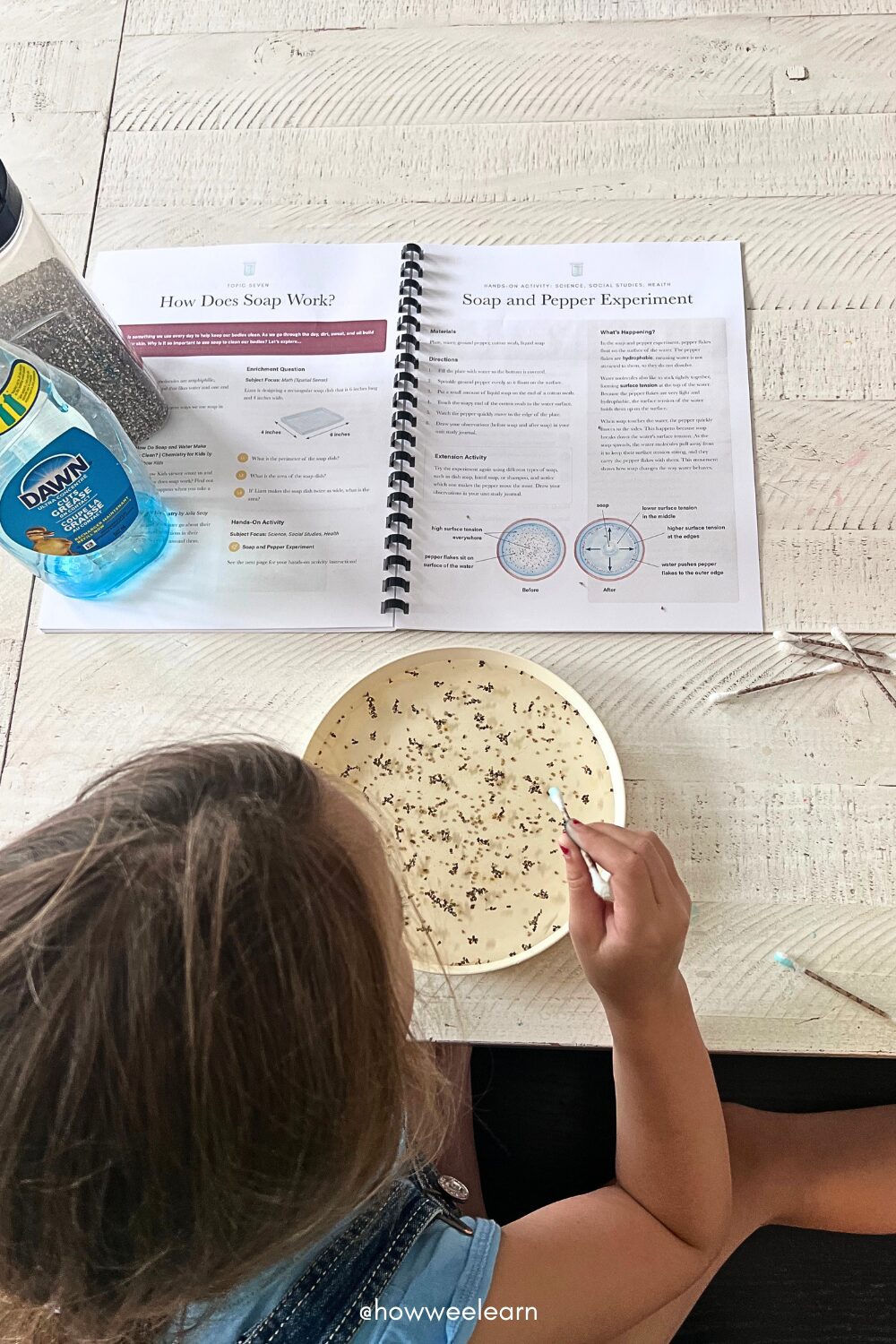
Have you ever wondered how soap washes away dirt and oil? Find out how soap interacts with water, why it is so effective at cleaning, and explore the science behind surface tension. Watch chemistry in action with a fun Soap and Pepper Experiment that reveals how soap changes the way water behaves.
Topic #8: Physical & Chemical Changes
Did you know that some changes can be reversed while others create something completely new? Learn the difference between physical and chemical changes, and see what happens when ingredients react. Create your own fizzy bath bomb and observe the exciting chemical and physical changes that happen when it is dropped into water.
Topic #9: Musical Chemistry
Did you know that elements can emit their own unique colors when they have energy? Discover how scientists use spectroscopy to identify different elements and explore how those colorful light patterns can even be turned into music. Compose your own tune with Chrome Music Lab’s Melody Maker and discover the surprising connection between chemistry and music.
Topic #10: Dynamic Density
Why do some liquids float while others sink? Learn what density is, how it describes the amount of matter packed into a given space, and why liquids with different densities stack into colorful layers instead of mixing. Finish your chemistry adventure by creating a beautiful Density Rainbow Tower and watching the colorful layers stack before your eyes!
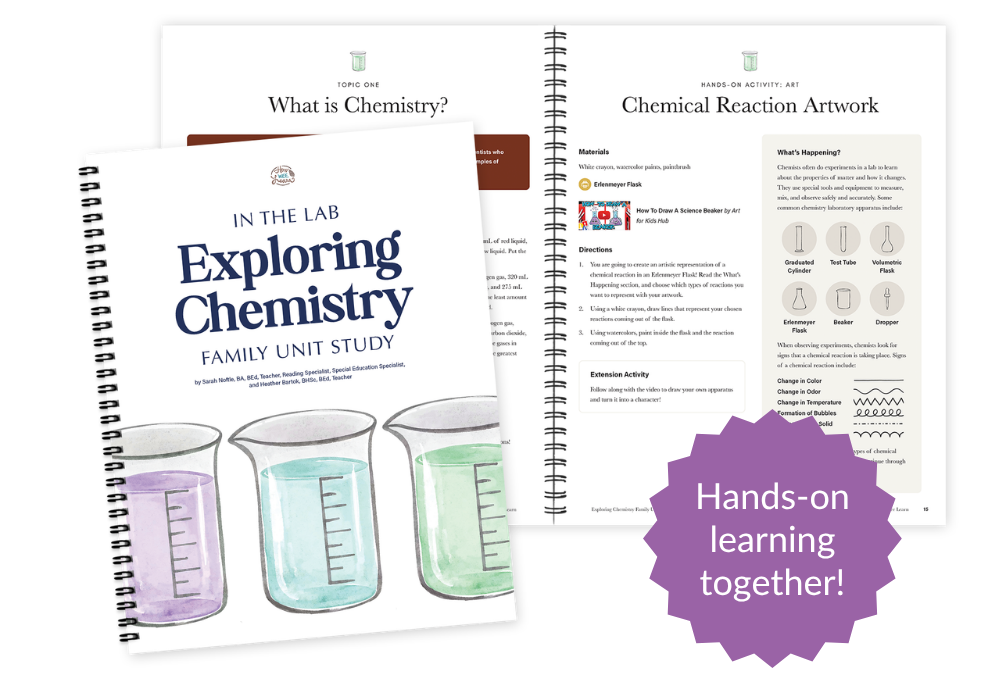
And there you have it! Ten fascinating topics and hands-on activities that make chemistry fun and exciting for the whole family!
From mixing up oobleck and testing the pH of everyday liquids to making pizza dough, creating fizzy bath bombs, and building a colorful Density Rainbow Tower, the Exploring Chemistry Family Unit Study is filled with simple experiments, creative projects, and fascinating discoveries that bring chemistry to life.
I’d love for you to pop on over to the shop, take a closer look, and see if this unit study would be a good fit for your family!
Exploring Chemistry Family Unit Study
https://shop.howweelearn.com/products/family-unit-study-exploring-chemistry
 |
 |
Thanks so much for reading, friend!
xo
Sarah

Leave a Reply