Have you ever wondered what kind of music a mythical creature might make? In ancient Greek mythology, satyrs were often connected with Pan, the god of forests, music, and nature, and they were frequently imagined dancing and playing music in the wild.
Today, I’m sharing a fun, hands-on activity from our Mythical Creatures Family Unit Study – and you can try it for free!
In this activity, you’ll make your very own DIY Pan Flute using straws. As you experiment with different straw lengths and sounds, you’ll discover how the length of an instrument affects its pitch while learning about the musical world of ancient Greek mythology.
It’s a simple, creative way to bring a little bit of mythical magic to music time!
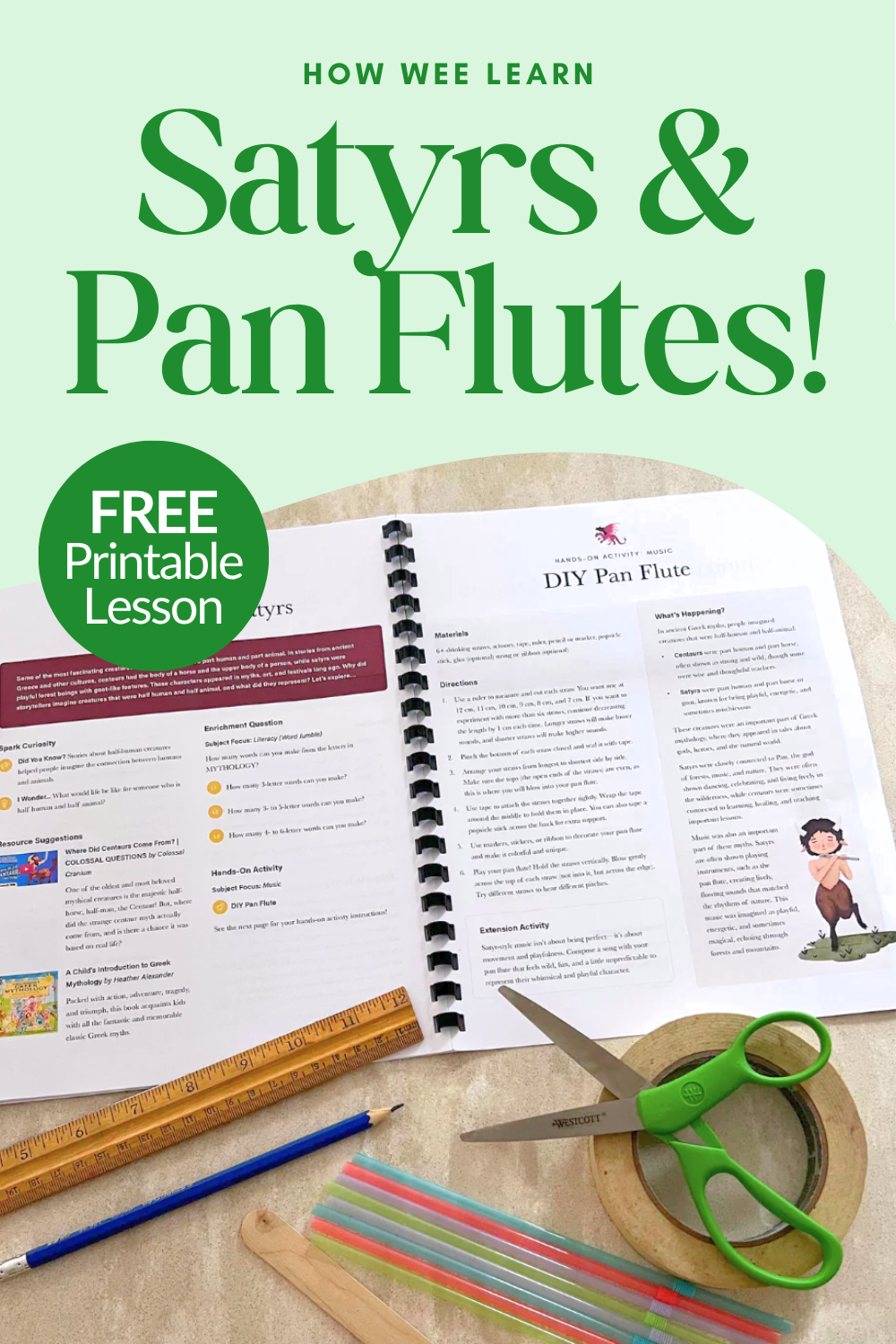
Make a Pan Flute
Did you know that each and every one of our Family Unit Studies includes: Geography, History, Science, Social Studies, Music, Art, Health, Literacy, and Math?
Well, they do! You can feel great knowing you’re covering all the core subject areas through hands-on activities that bring each topic to life.
The activity I’m sharing today is all about music. As you make your own pan flute, you’ll explore how different straw lengths create different pitches while learning about the connection between music, nature, and ancient Greek mythology. Along the way, you’ll also discover how pan flutes were connected to Pan and the satyrs in Greek myths.
It’s simple, creative, and a little bit magical – just the sort of hands-on learning we love!
Enter your email below to receive your free printable DIY Pan Flute activity and start exploring mythical creatures together!

Let’s Go!
Start by gathering your materials:
- 6-10 drinking straws
- scissors
- tape or glue
- ruler
- pencil or marker
- popsicle stick
- string or ribbon (optional)
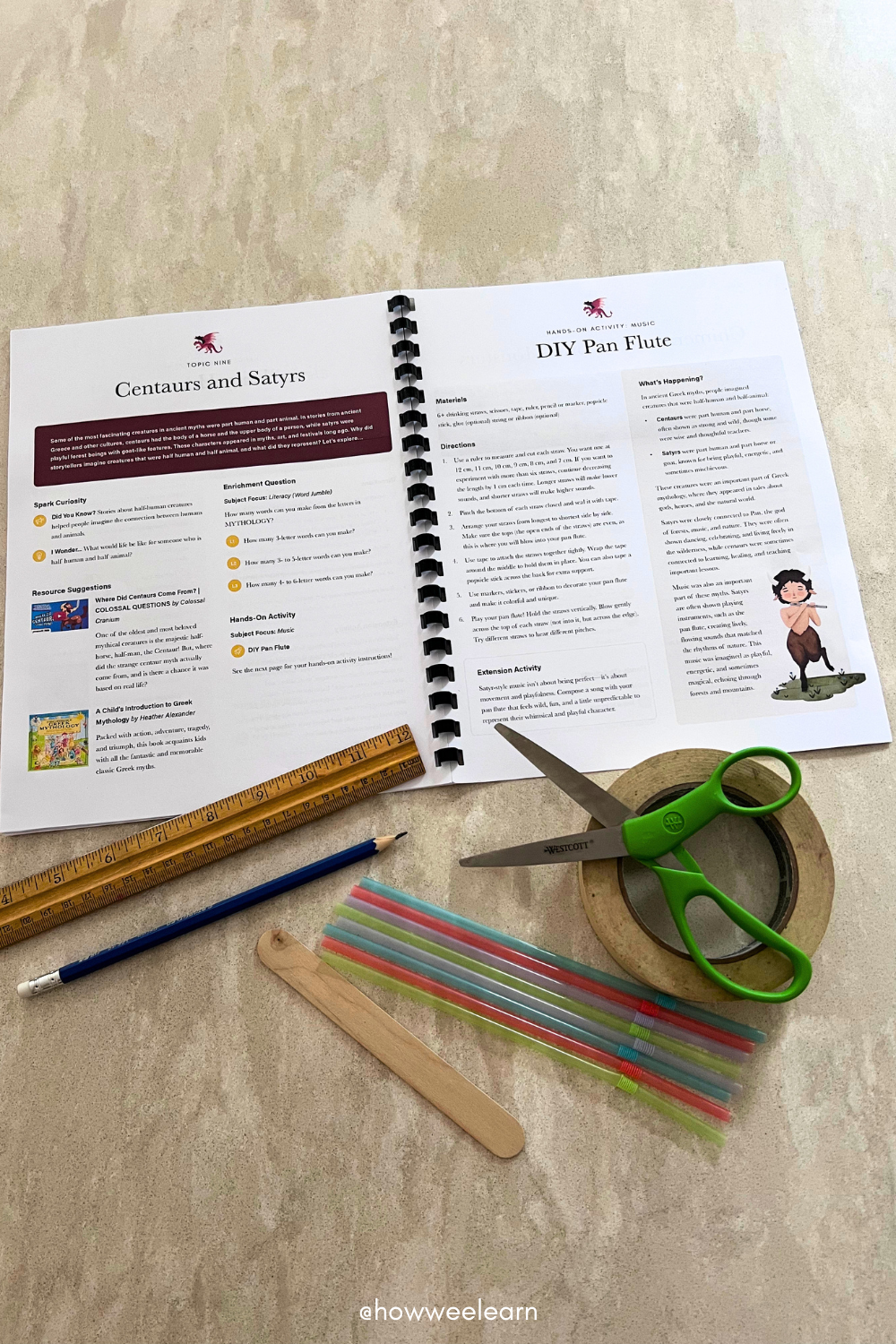
Begin by using a ruler to measure and cut each straw. You want one at 12cm, 11cm, 10cm, 9cm, 8cm, and 7cm. If you want to experiment with more than six straws, continue making straws shorter!
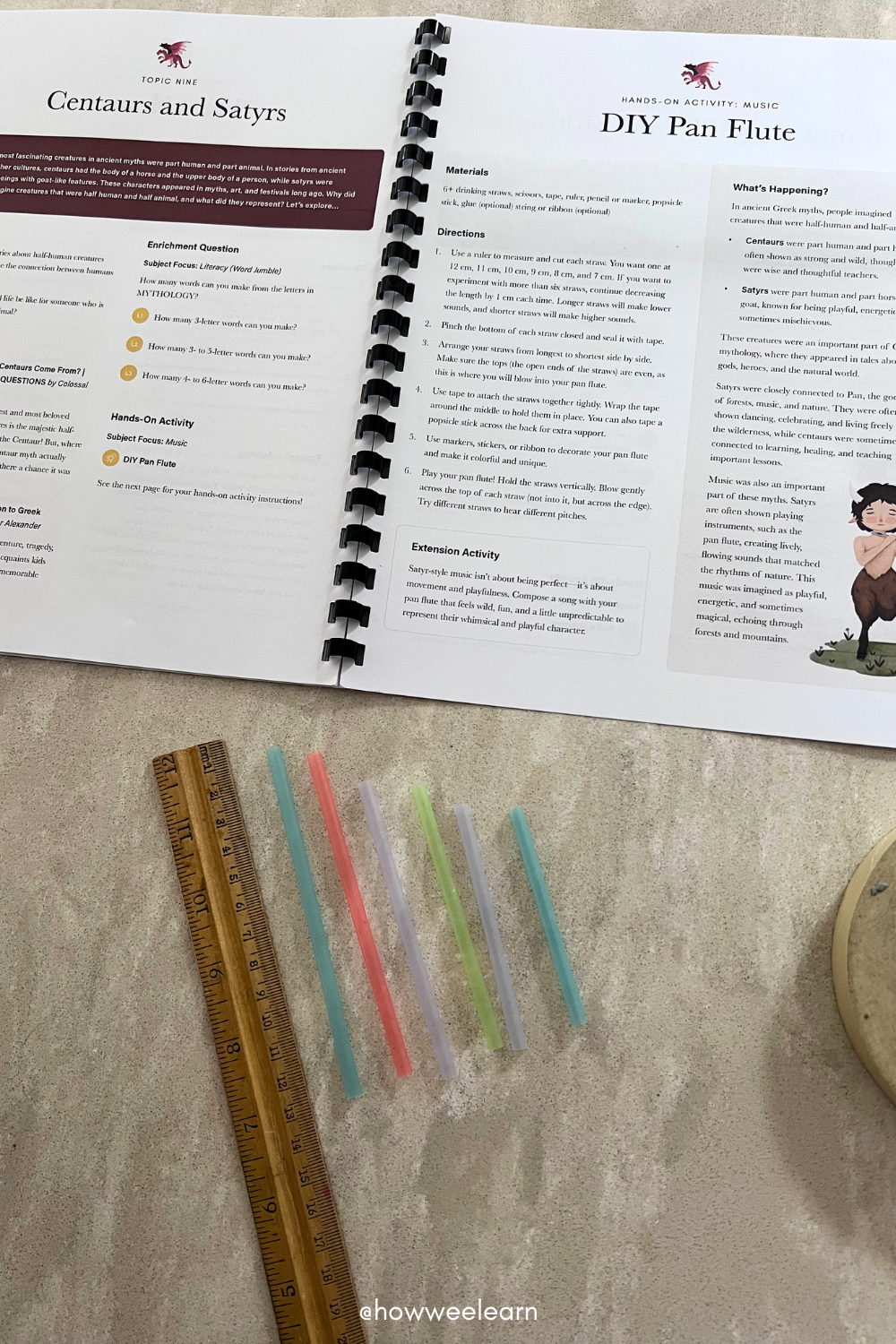
Next, pinch the bottom of each straw closed and seal it with tape.
Then, arrange your straws from longest to shortest side by side. Make sure the tops (the open ends) are even, as this is where you will blow across the top of your pan flute.
Use tape to attach the straws together tightly. Wrap the tape around the middle to hold them in place. You can also tape a popsicle stick across the back for extra support.
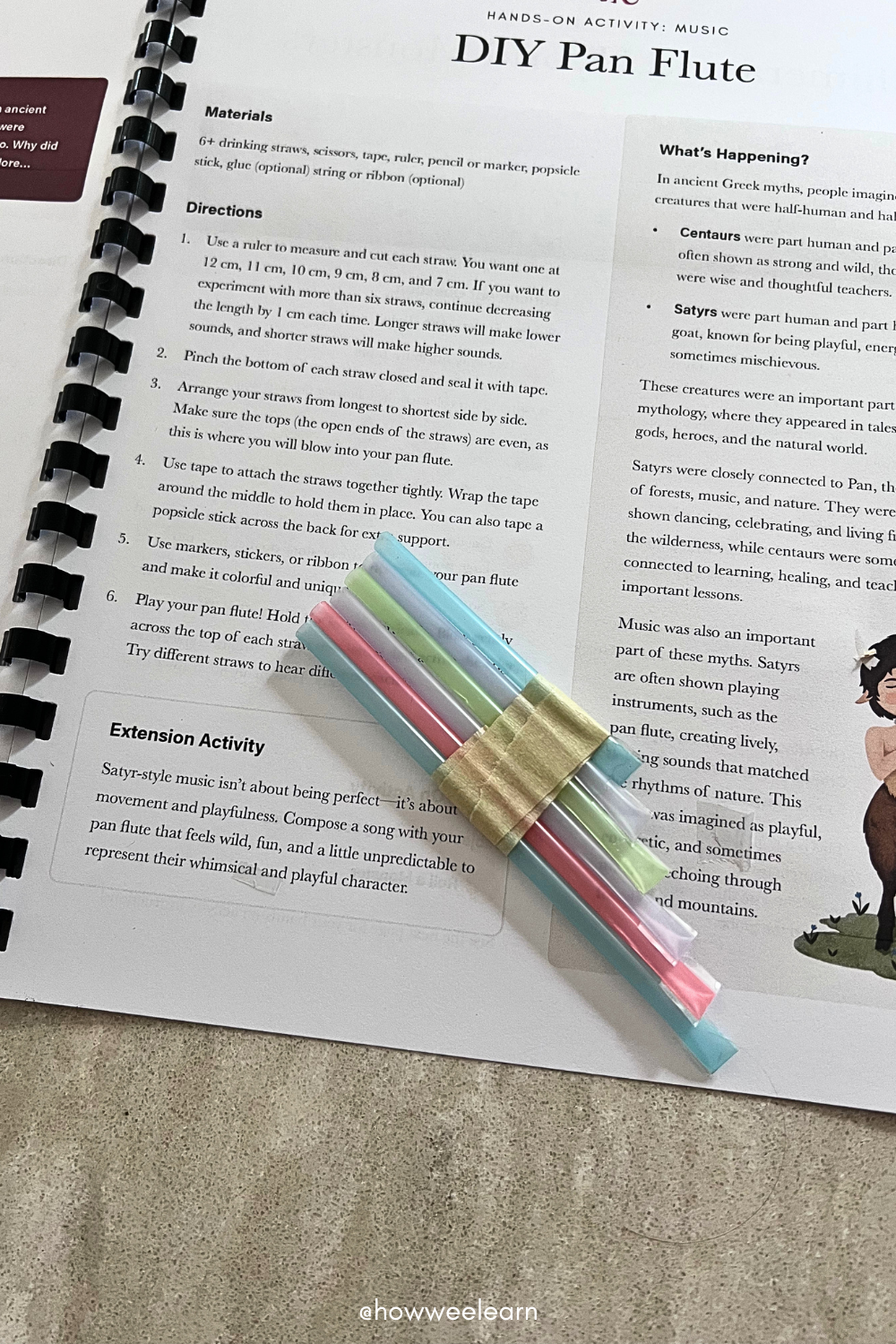
Now, get creative and decorate your pan flute!
To play your pan flute, hold the straws vertically. Blow gently across the top of each straw (not into it, but across the edge). Have fun creating music!
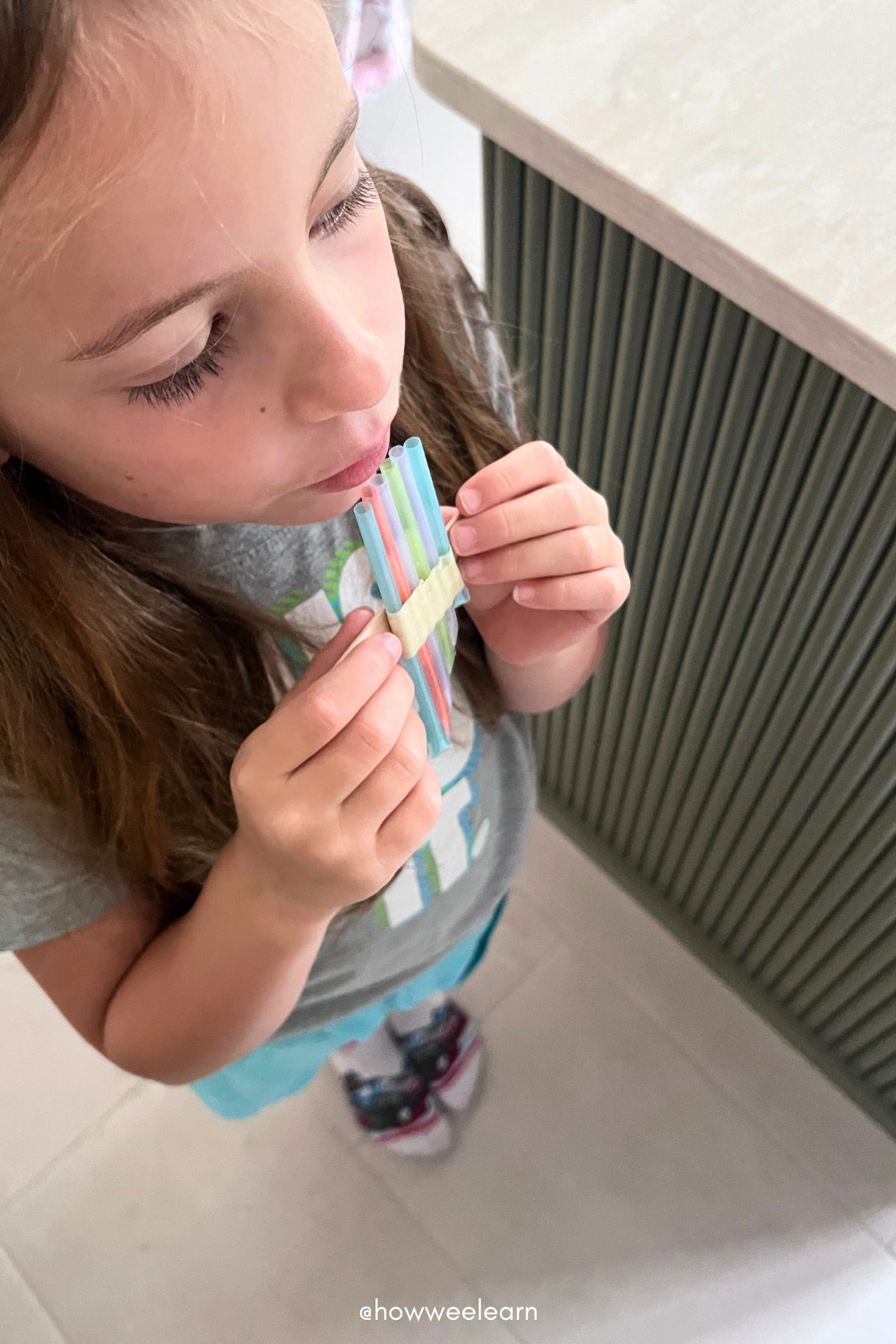
Want to keep the music going? Create your own little song with your pan flute. Don’t worry about playing perfectly – just have fun experimenting with sound, movement, and a little satyr-inspired silliness!
💡Did You Know?
Every hands-on activity in our Family Unit Studies includes a “What’s Happening?” section filled with kid-friendly explanations that help children understand the ideas behind the activity.
We don’t stop at the fun part! Whether children are creating, building, experimenting, or exploring, they’ll also discover the ideas, stories, and connections behind the activity and how it fits into the bigger topic they’re learning about.
It’s one of my favorite ways to turn curiosity into learning that sticks! So what does a Pan Flute have to do with Mythical Creatures?
What’s Happening?
In ancient Greek myths, people imagined creatures that were part human and part animal. Centaurs were part human and part horse, while satyrs were part human and part horse or goat. These fascinating creatures appeared in stories about gods, heroes, and the natural world.
Satyrs were closely connected to Pan, the god of forests, music, and nature. They were often shown dancing, celebrating, and living freely in the wilderness. Centaurs, on the other hand, were sometimes connected to learning, healing, and teaching important lessons.
Music was an important part of these myths, too. Satyrs were often shown playing instruments, such as the pan flute, creating lively and flowing sounds that matched the rhythms of nature. This music was imagined as playful, energetic, and sometimes magical, echoing through forests and mountains.
As you play your own pan flute, listen to the different sounds you can make. How would your music sound if you were a satyr dancing through an ancient Greek forest?
Keep Exploring Mythical Creatures
Some of the best learning begins with a little imagination – and a question like, “What if these creatures really existed?”
When you make, create, and explore alongside the stories of mythical creatures, learning is something you experience together. A simple pan flute can open the door to ancient Greek mythology, music, and stories about fascinating creatures like centaurs and satyrs.
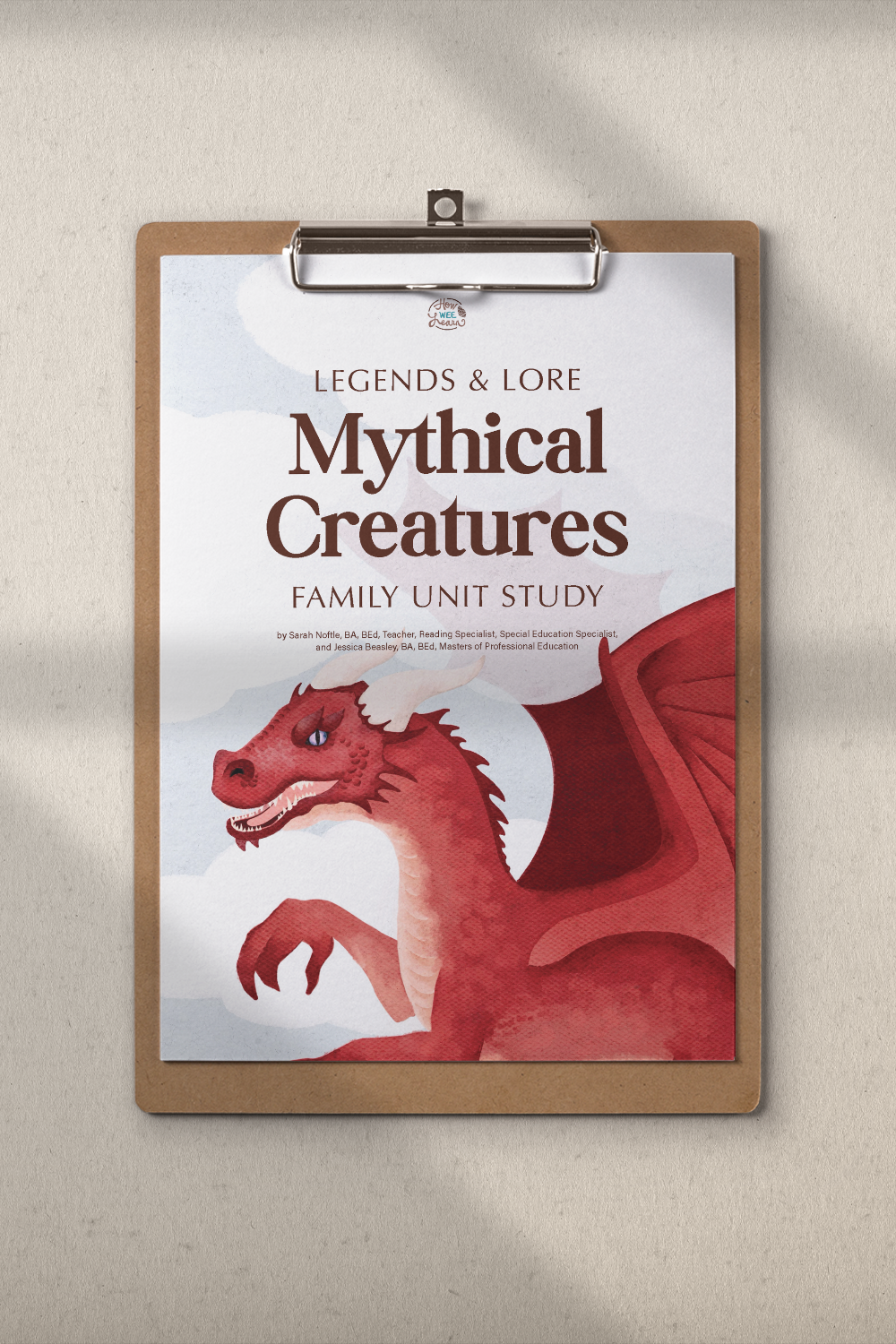
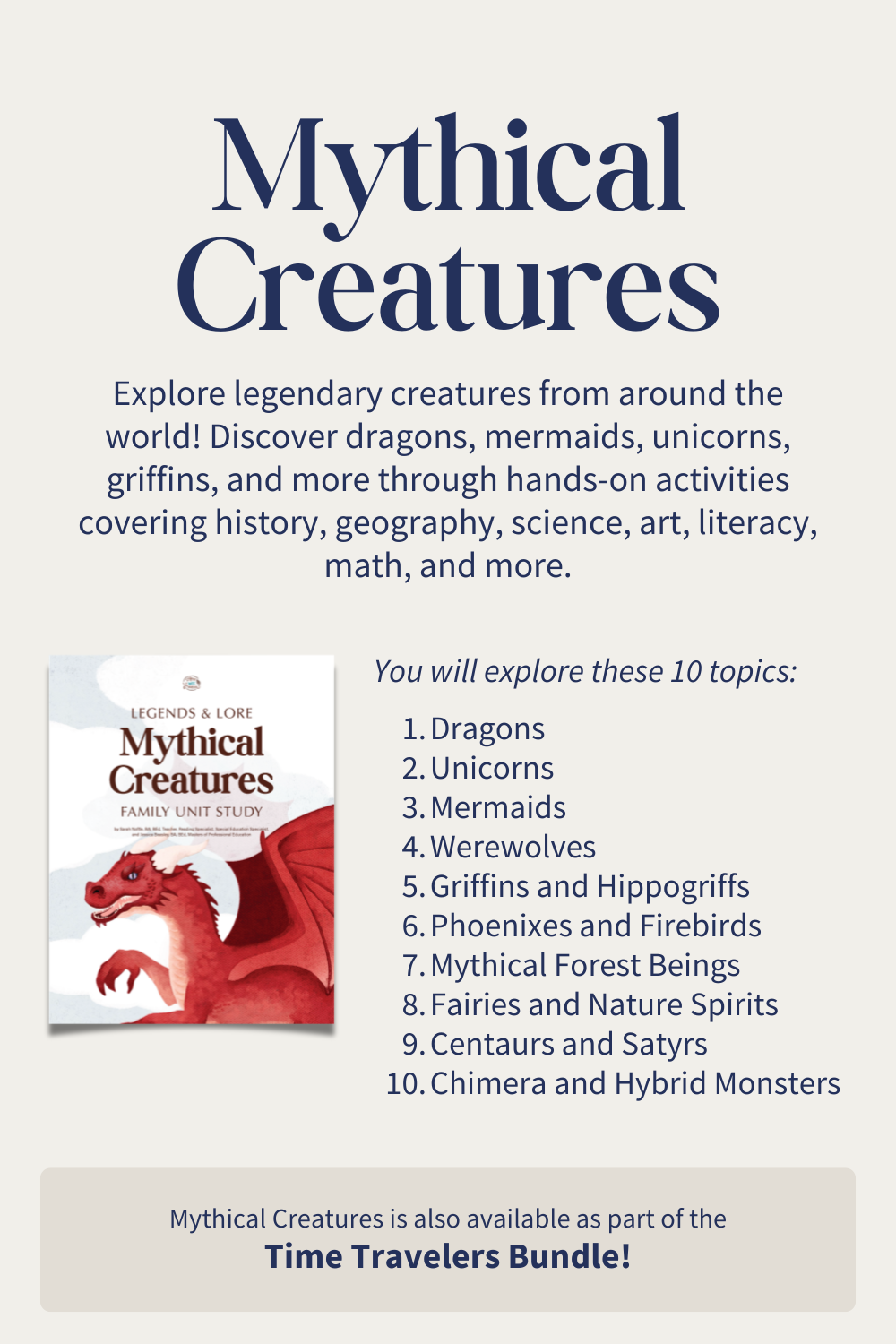
If your family enjoyed making this DIY Pan Flute, you’ll love our Mythical Creatures Family Unit Study. It’s filled with fascinating facts, hands-on activities, creative projects, and plenty of opportunities to explore the strange and wonderful creatures found in myths and legends.
Head over to the How Wee Learn Shop to take a closer look and keep the mythical adventure going!
Mythical Creatures Family Unit Study
https://shop.howweelearn.com/products/family-unit-study-mythical-creatures
 |
 |
Thanks so much for reading, friend!
xo
Sarah

Leave a Reply