What can a tool left behind thousands of years ago tell us about the person who used it? What do we have in common with monkeys and apes? And how do the languages we speak, the music we make, and the traditions we share help tell the story of who we are?
These are the kinds of questions anthropologists explore as they study people, past and present!
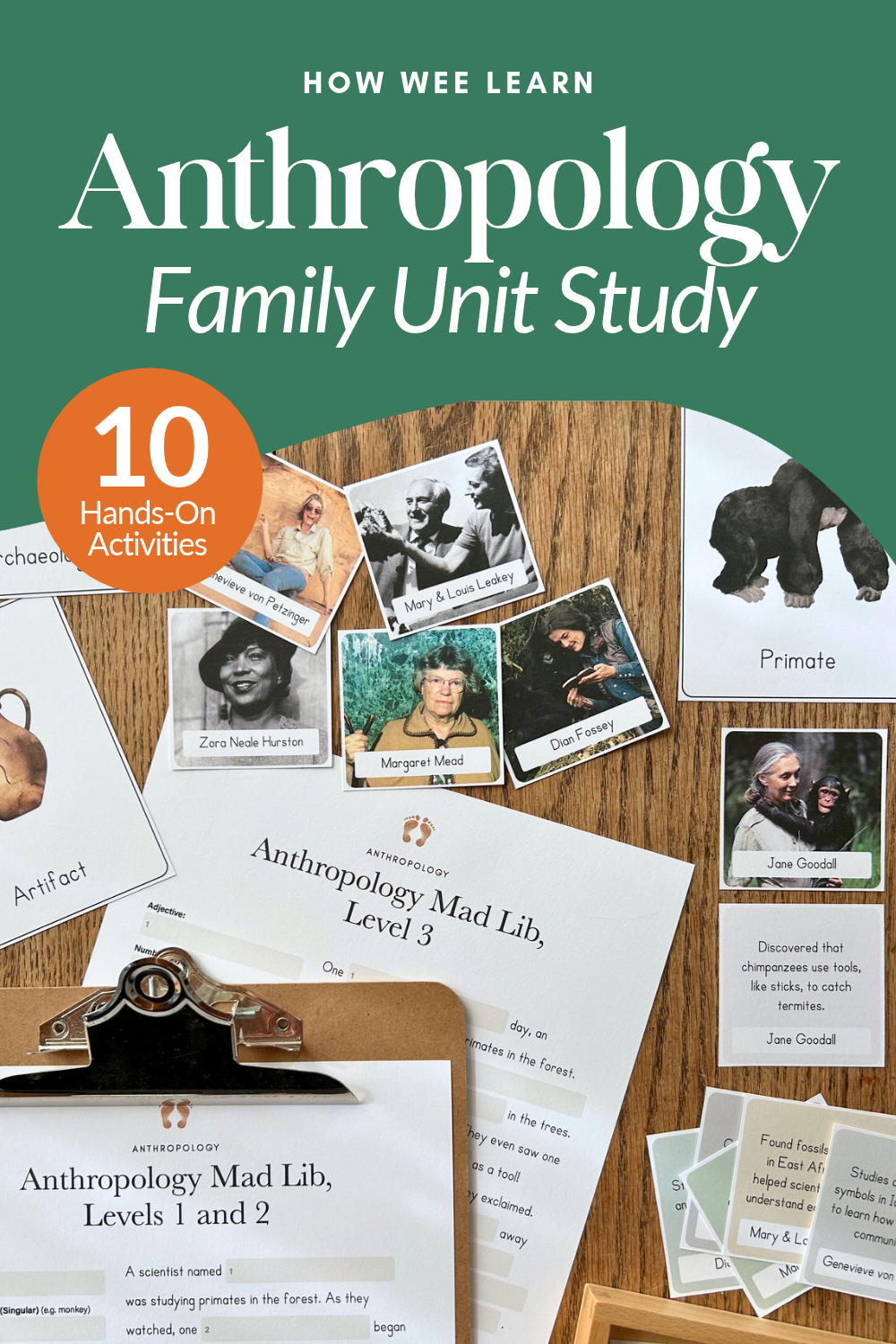
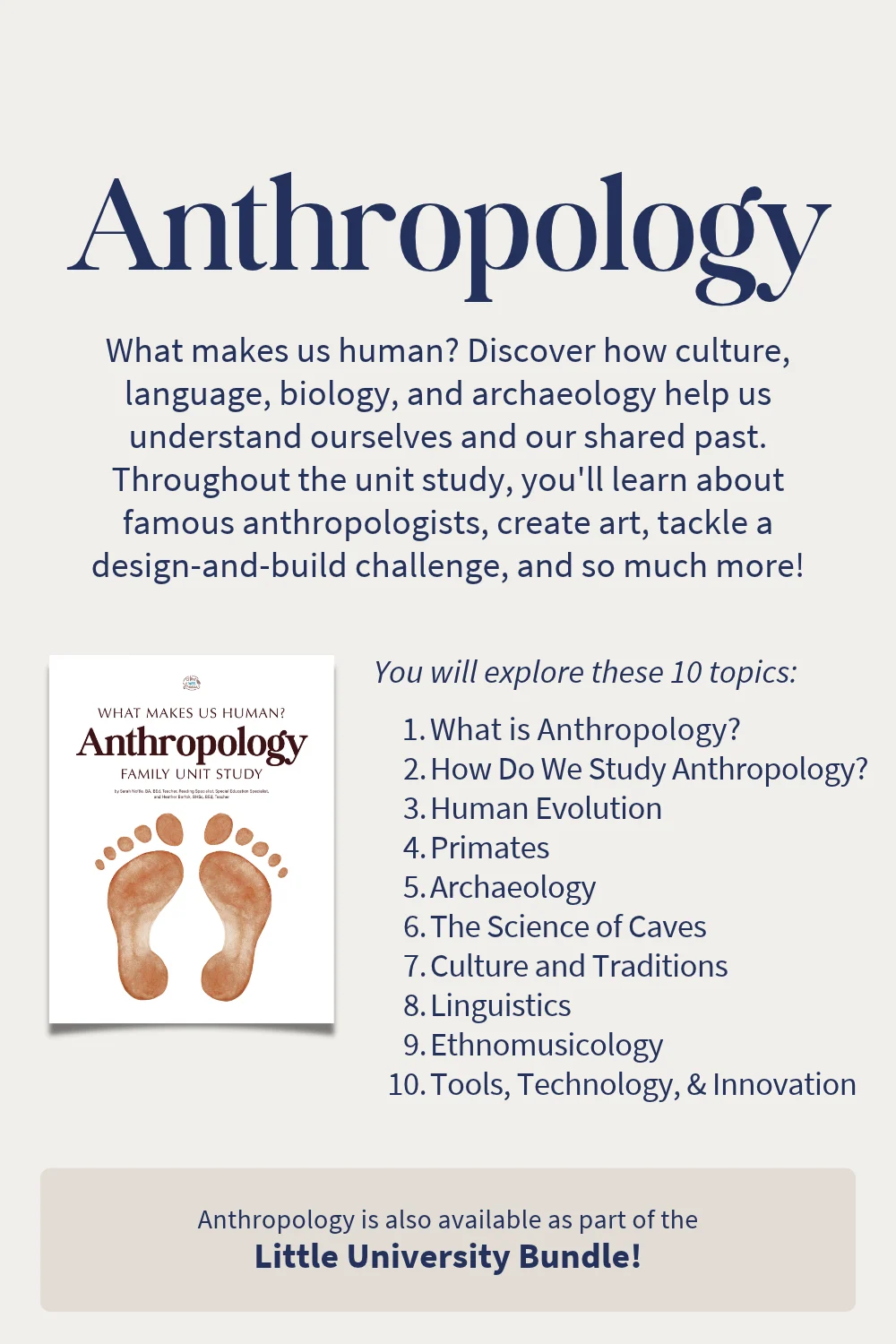
I’m excited to share our Anthropology Family Unit Study with you! It’s a hands-on introduction to anthropology for kids, with ten topics, covering human evolution, our closest animal relatives, archaeological discoveries, cultures and traditions, language, music, and more.
You’ll make fossil-inspired jewelry, build a primate diorama, invent your own alphabet, and pluck the strings of a homemade harp. You’ll even put your problem-solving skills to work by designing a tool to move an egg without cracking it!
Below, I’m sharing all ten topics and a peek at the hands-on activities you’ll enjoy together. Let’s explore what makes us human!
What is a Family Unit Study?
But first… what exactly is a Family Unit Study?
This unit study, like all of our ever-growing library of unit studies, takes one big theme—Anthropology—and breaks it down into ten manageable, bite-sized learning topics. This format gives you the freedom to dive into learning at a pace that works for your family. Perhaps you do one topic per day, perhaps one per week. Whatever suits your fancy! You can learn and explore topics from start to finish in about 1-2 hours each.
Dive in and watch the sparks of wonder ignite. Watch the child-led learning take off. Watch what happens when children are engaged in what they are learning!
Each of the 10 topics includes:

- an interesting fact,
- a discussion question,
- informative information,
- a curated YouTube video,
- a recommended book,
- a math or literacy enrichment question (with three difficulty levels),
- and an ultimate-can’t-be-beat hands-on activity!
Plus, all subjects are covered across the 10 topics! Geography, History, Science, Social Studies, Music, Art, Health, Literacy, and Math.
When everything connects across subjects, learning just makes more sense. Kids remember more, understand better, and actually enjoy the process. It’s the kind of learning that really sticks. 🙌
Before we explore the fascinating world of anthropology, I’d love to share a little something to make your homeschool days just a bit easier (because we all need that, right?).
Our Mini Homeschool Toolbox is a simple, go-to resource filled with helpful printables – like math charts, number lines, and writing supports – to keep your days organized and your lessons running smoothly.
It’s completely free and so handy to have on hand as you move through your homeschool routine. Simply enter your email address below, and a copy will be instantly delivered to your inbox.
Anthropology for Kids: A Look Inside the Unit
Let’s take a closer look at what you can expect with the Anthropology Family Unit Study. Below are the 10 topics, along with some examples of the hands-on activities you will enjoy together.
Topic #1: What is Anthropology?
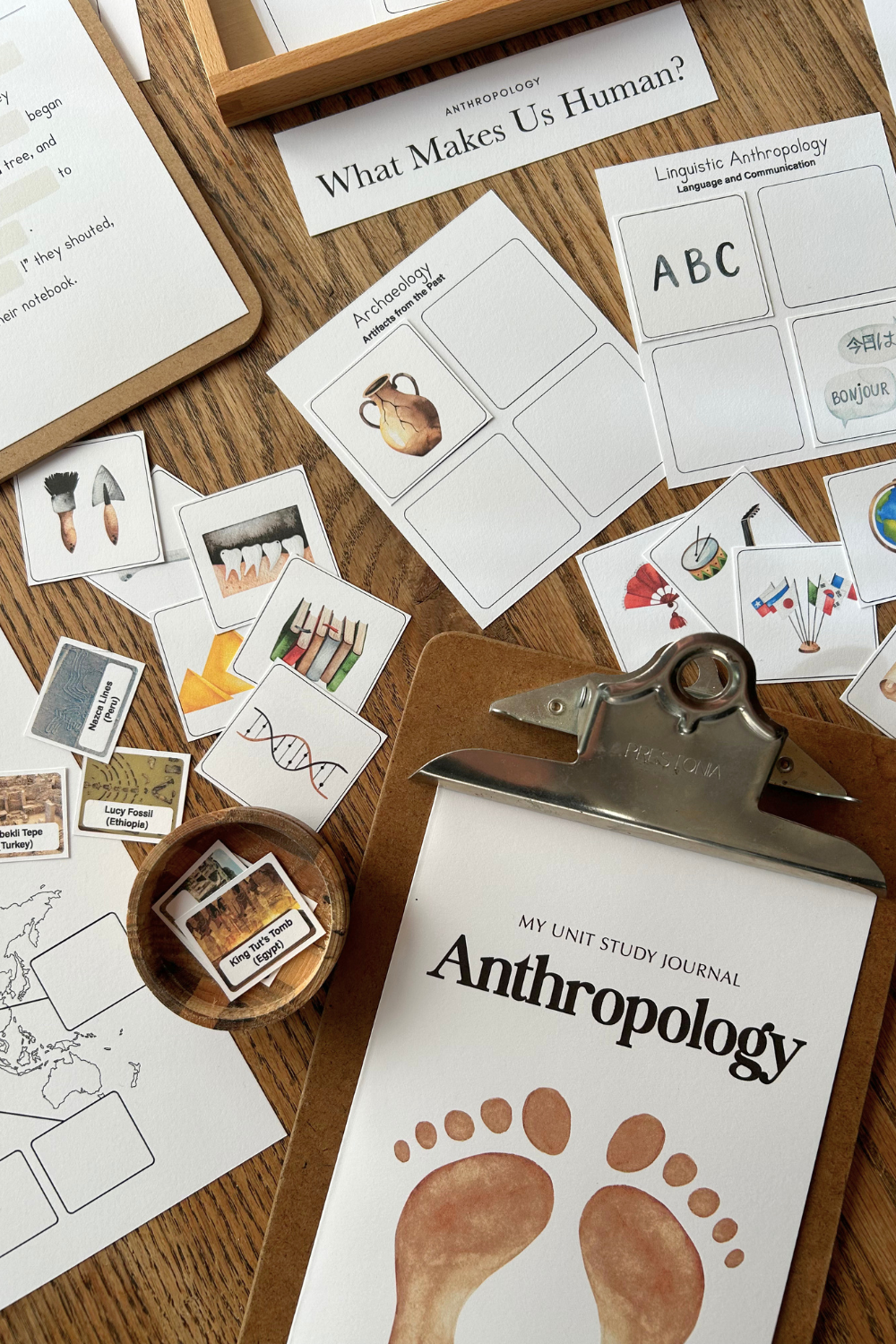
What makes us human? Anthropologists study this question by looking at our bodies, cultures, language, and the things we leave behind. You’ll get to know the four branches of anthropology as you cut, sort, and glue pictures into their matching categories!
Topic #2: How Do We Study Anthropology?
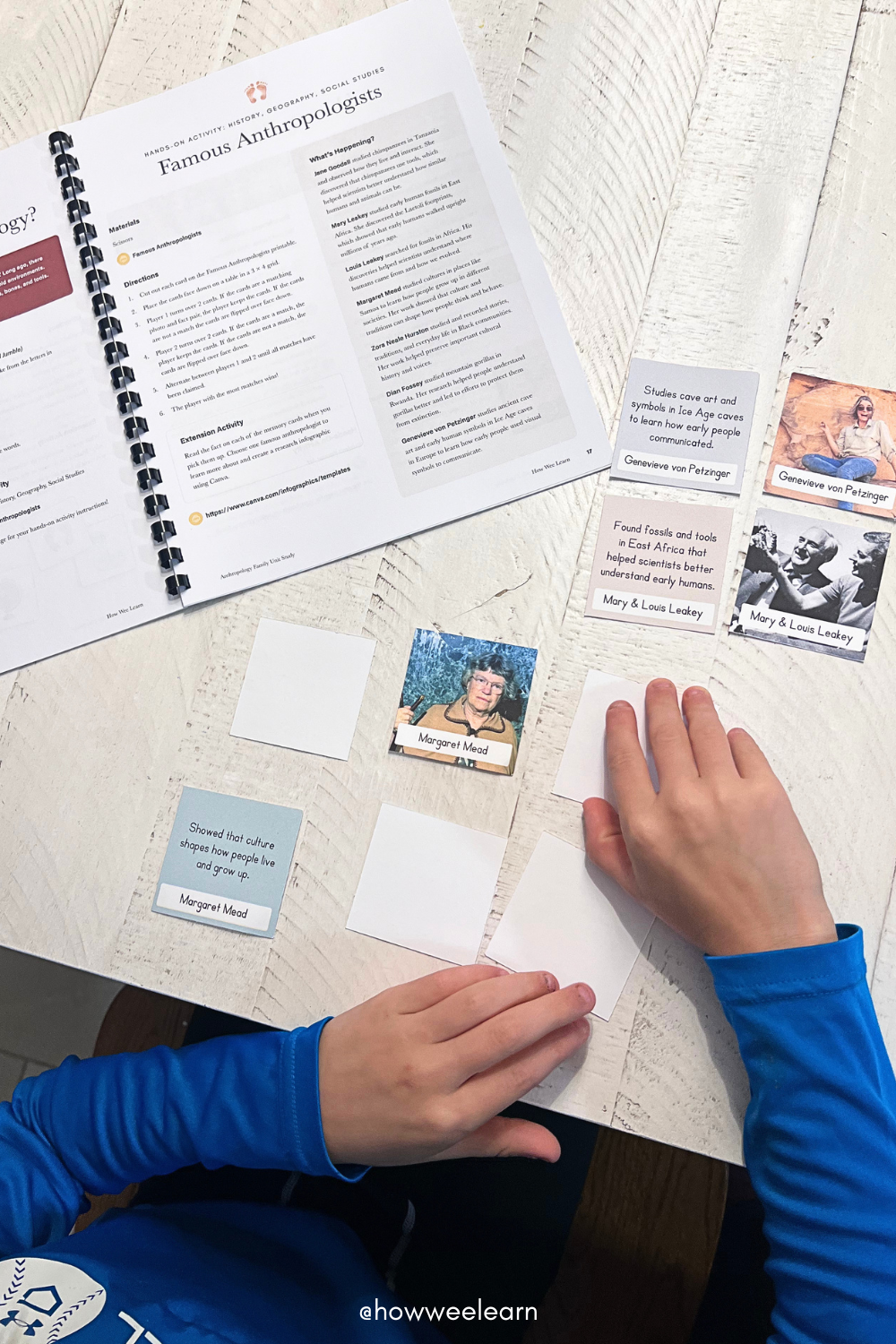
What can a fossil, a bone, or a tool tell us about people who lived long ago? You’ll explore how these clues help anthropologists understand early humans, then meet some famous researchers and learn about their work. Play a memory game – take turns flipping cards to match each researcher’s photo with a fact!
Topic #3: Human Evolution
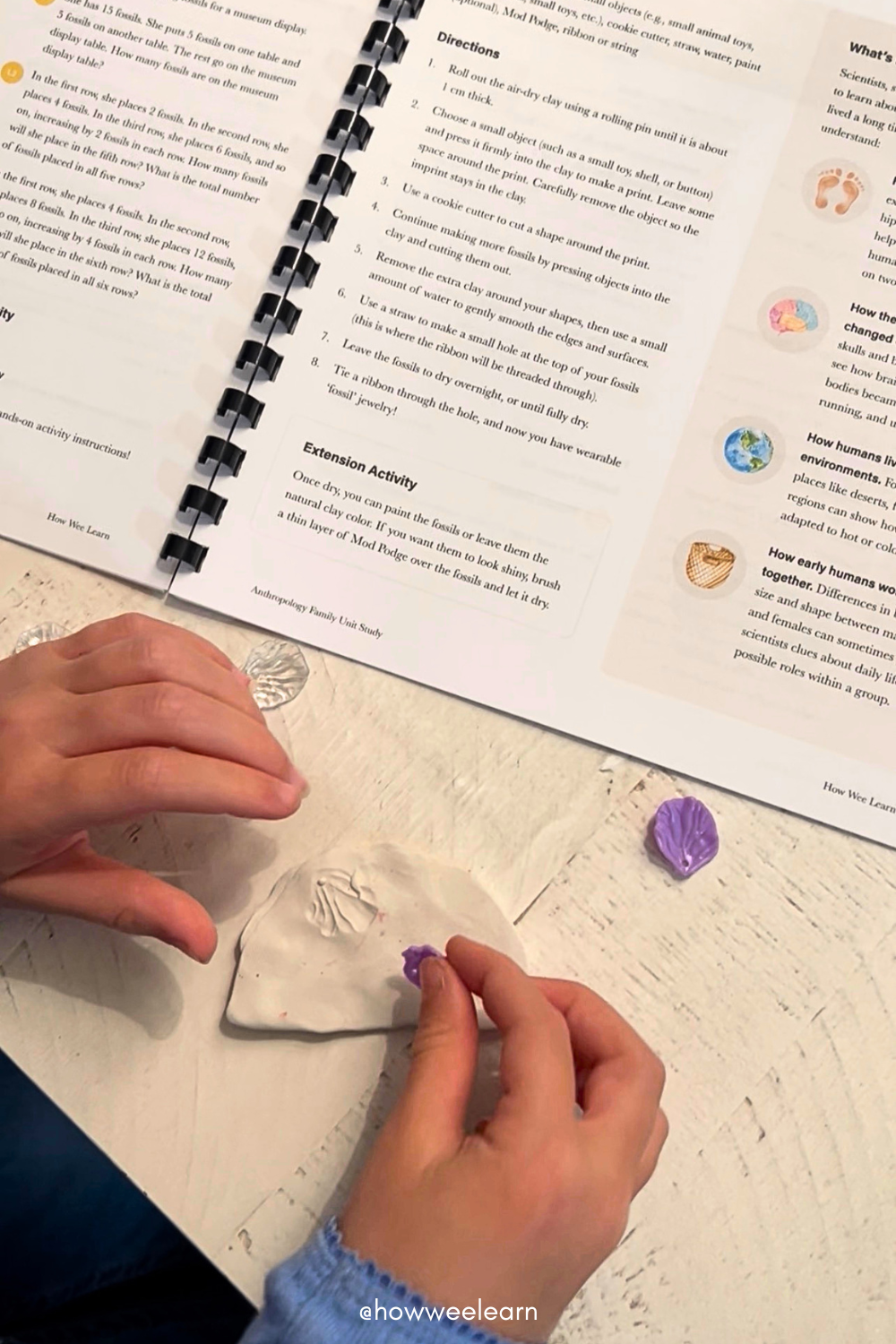
Humans didn’t always look the way we do today! You’ll explore how early human relatives changed over millions of years and how fossils help us understand those changes. Then, you’ll press small objects into clay to create fossil-like imprints and turn them into jewelry you can wear!
Topic #4: Primates
Humans belong to the primate group, along with monkeys, apes, and lemurs! Learn how studying our closest animal relatives helps scientists understand human evolution, then build a diorama with paper tube trees, yarn vines, and colorful primates.
Topic #5: Archaeology
How do archaeologists know where to dig for clues about the past? You’ll explore how the objects people left behind help us understand their lives, then discover remarkable finds from King Tut’s tomb to the Terracotta Army. Cut out pictures of these discoveries and glue them onto a world map to see where each one was found!
Topic #6: The Science of Caves
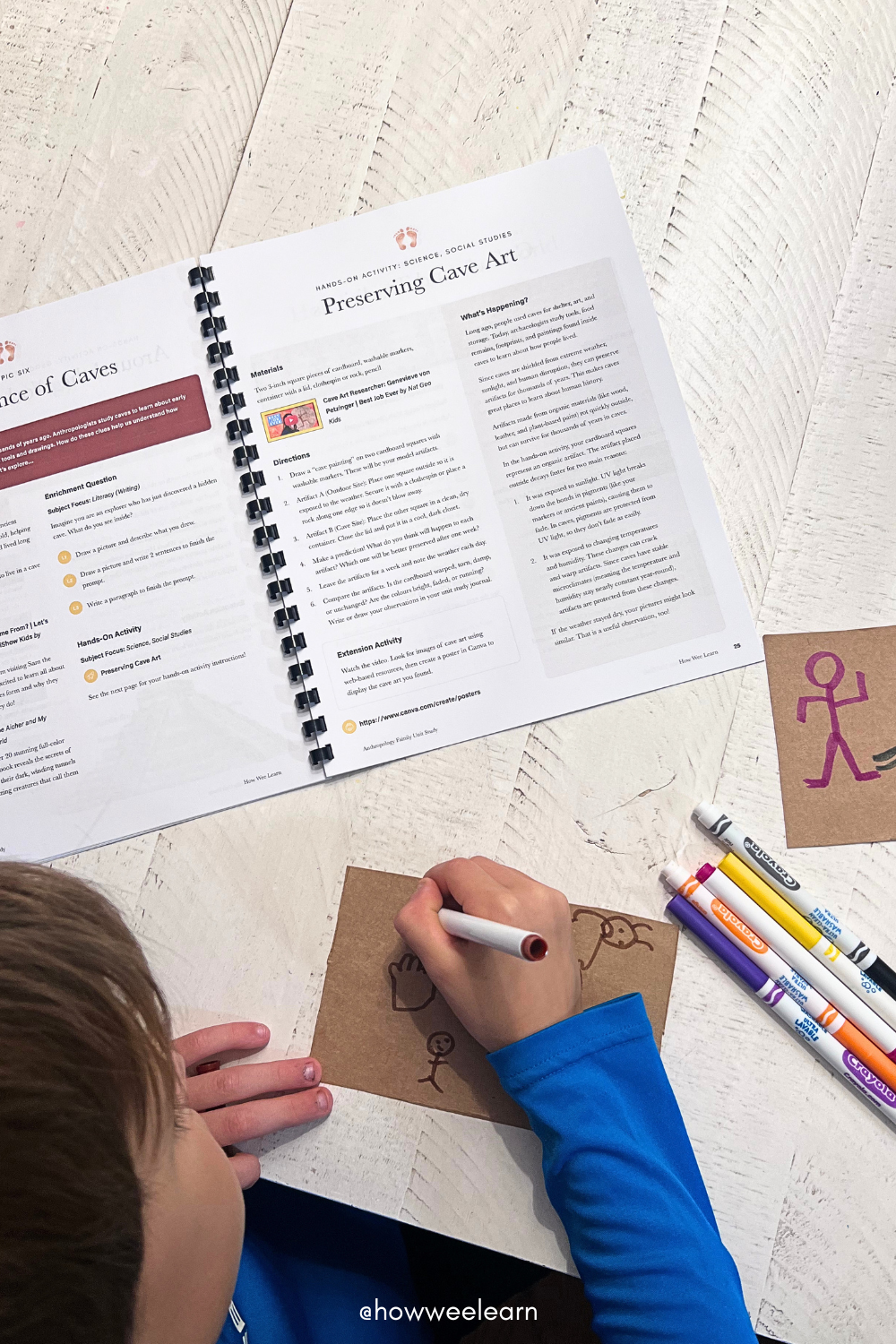
How can a cave protect clues from thousands of years ago? You’ll explore what tools and drawings reveal about early humans, then draw your own cave art on two cardboard squares. Leave one outside and keep the other in a covered container, then compare them after a week to see how well each was preserved!
Topic #7: Culture and Traditions
From the foods we eat to the holidays we celebrate, culture is a part of our everyday lives! You’ll explore how learning about different cultures and traditions helps us understand and respect others. Then, gather together for a game of Go Fish with holiday picture cards, matching celebrations, and learning where they’re celebrated around the world!
Topic #8: Linguistics
Imagine writing your name in an alphabet you invented! After learning how people use language to share ideas and how alphabets have changed over time, it’s your turn to create one. Design a symbol for each letter, then try writing color words and your own name!
Topic #9: Ethnomusicology
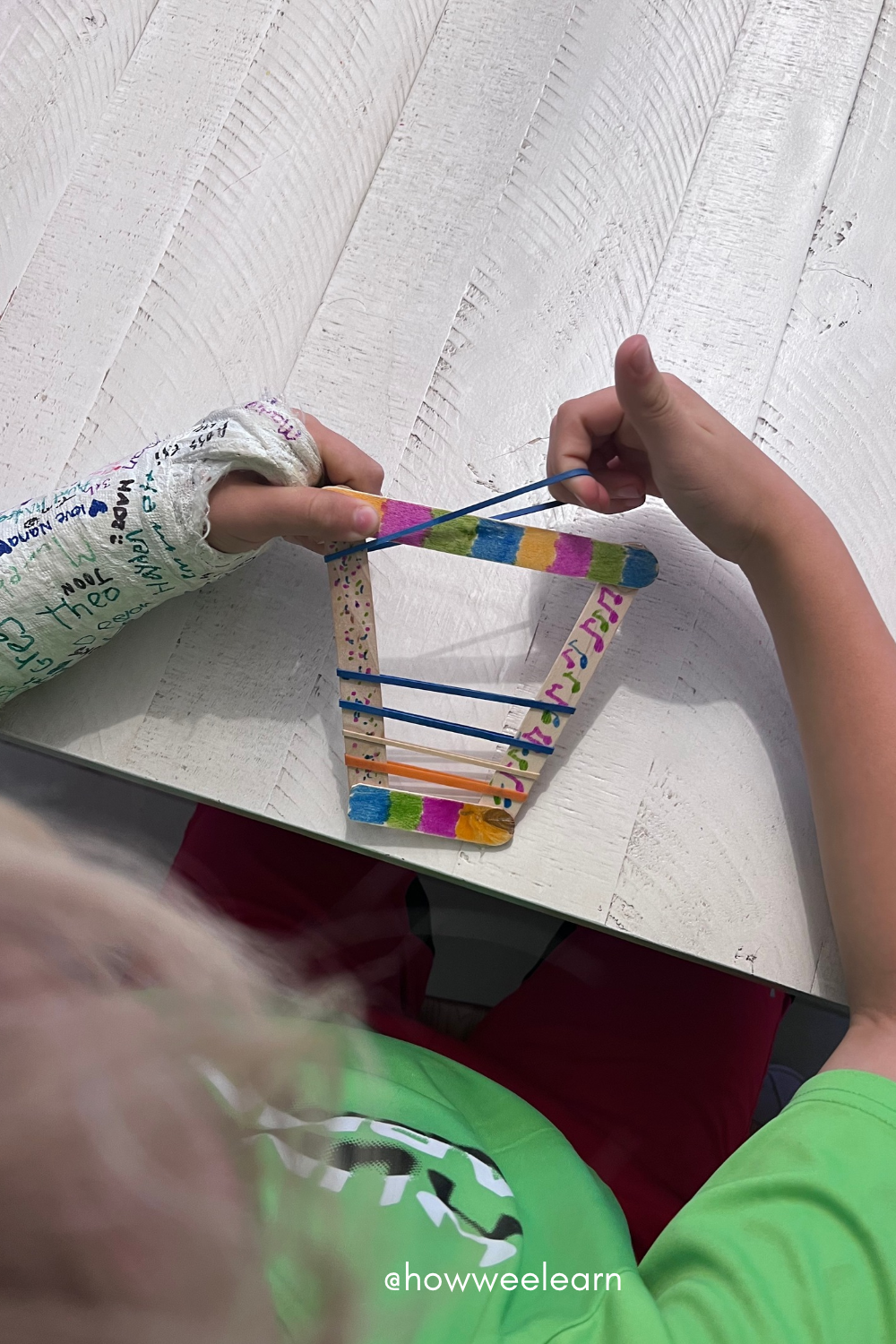
Let’s make some music! You’ll learn how music connects to people’s lives, traditions, and cultures, including how harps were used in ancient ceremonies and celebrations. Then, you’ll make your own simple harp with popsicle sticks and rubber bands, plucking the strings to discover the different sounds they make!
Topic #10: Tools, Technology & Innovation
Can you invent a tool that moves an egg without cracking it? You’ll explore how early humans used stone tools and how their designs became more advanced over time. Then, you’ll design, build, test, and improve your own tool using household materials to carry an egg safely from one bowl to another!
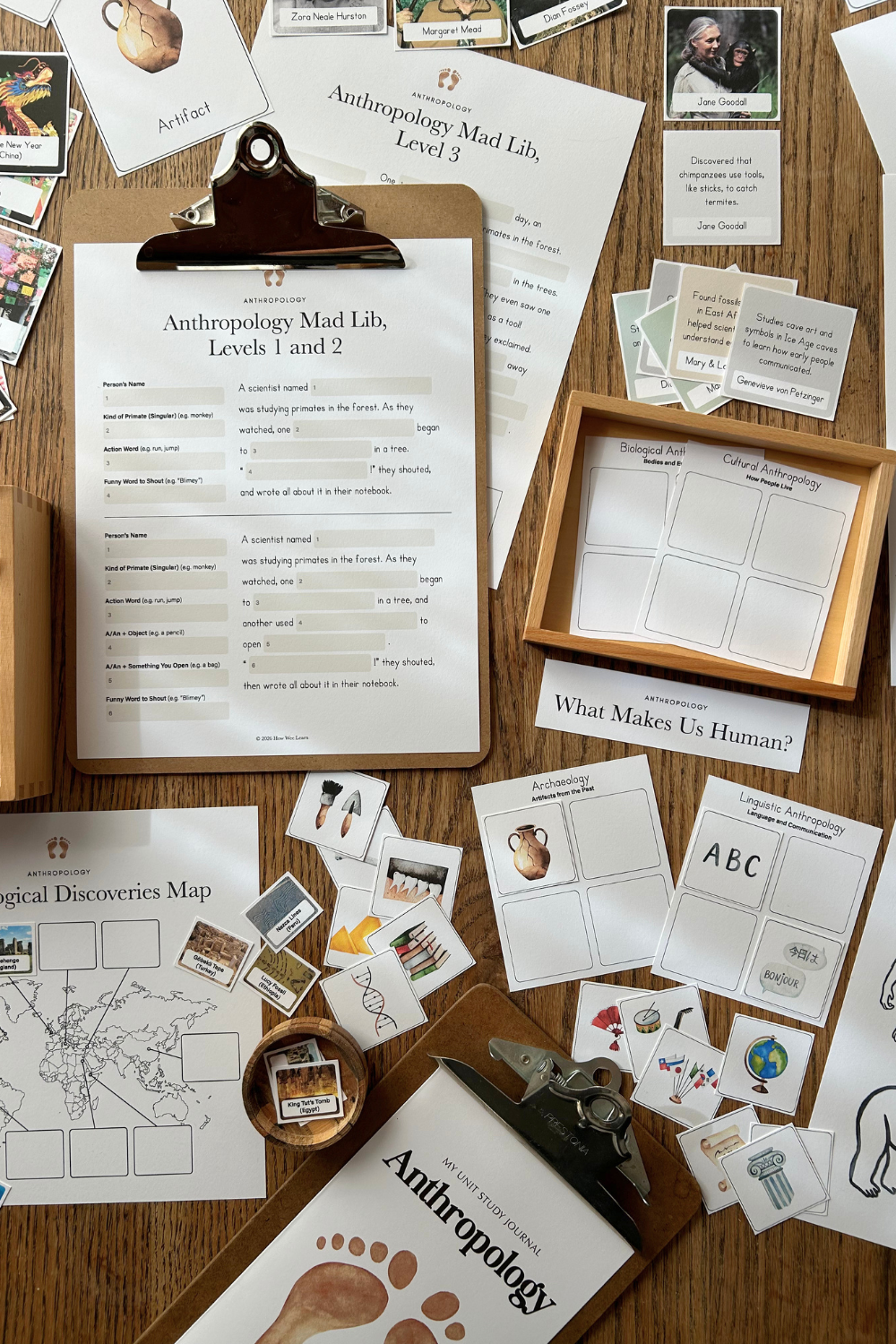
And there you have it – a little look inside our Anthropology Family Unit Study!
I hope you’ve enjoyed this peek inside! You might find yourselves chatting about a family tradition, wondering how an ancient tool was used, or trying one more time to move that egg without cracking it.
I’d love for you to pop over to the shop, take a closer look, and see if it would be a good fit for you and yours!
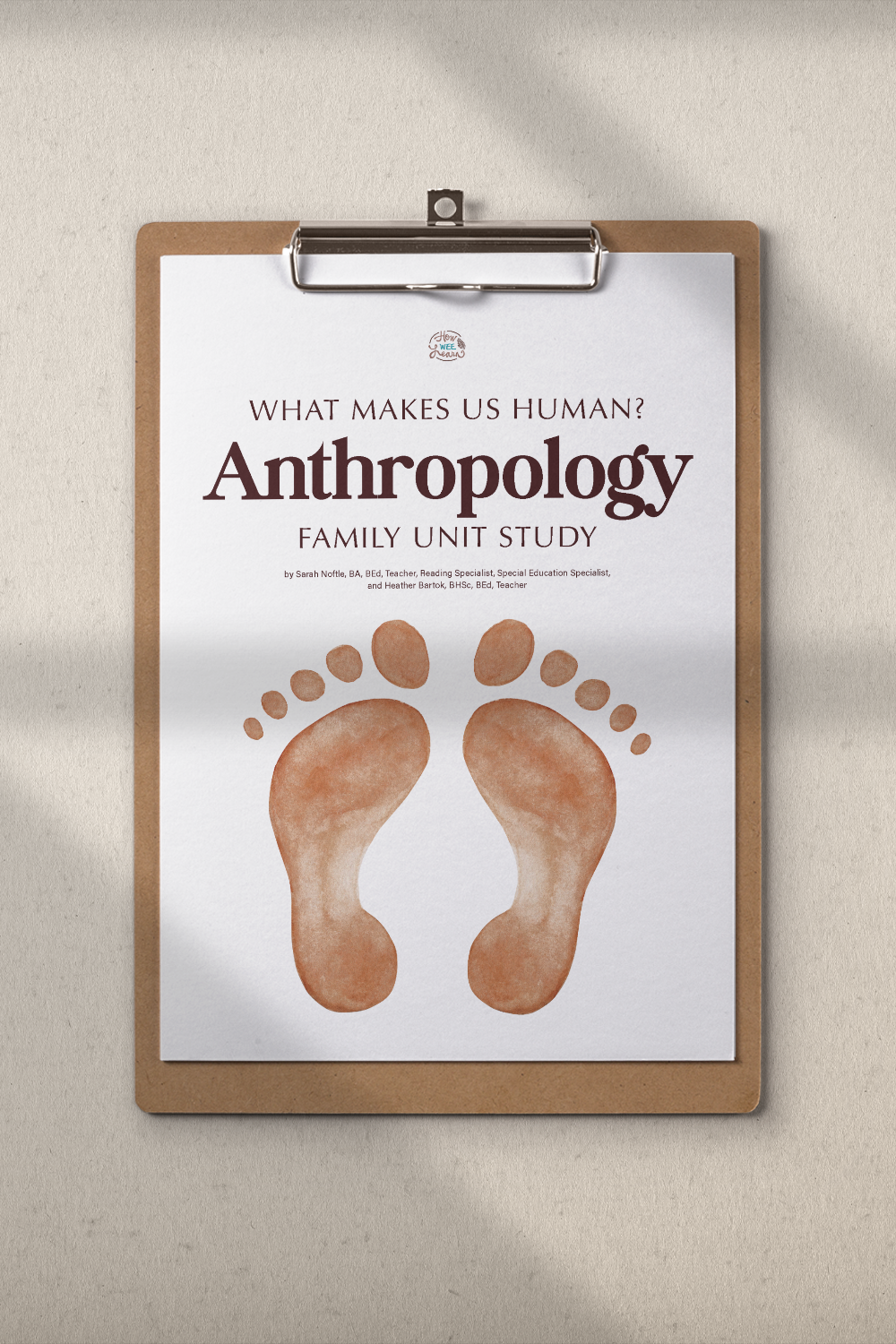
Anthropology Family Unit Study
https://shop.howweelearn.com/products/family-unit-study-anthropology
 |
 |
Thanks so much for reading, friend!
xo
Sarah

Leave a Reply