We all want to raise kind, caring, good kids. Kids who tell the truth, help others, show appreciation, use good manners, and do the right thing – even when it isn’t easy.
But teaching those qualities? Well, that part can be a little tricky.
When emotions are running high and your child has just yelled at a sibling, broken something, or insisted that they most definitely did not eat the last cookie while crumbs cover their shirt, it isn’t always the best time for a heart-to-heart about honesty and compassion.
Those important conversations tend to go much better when everyone is calm.
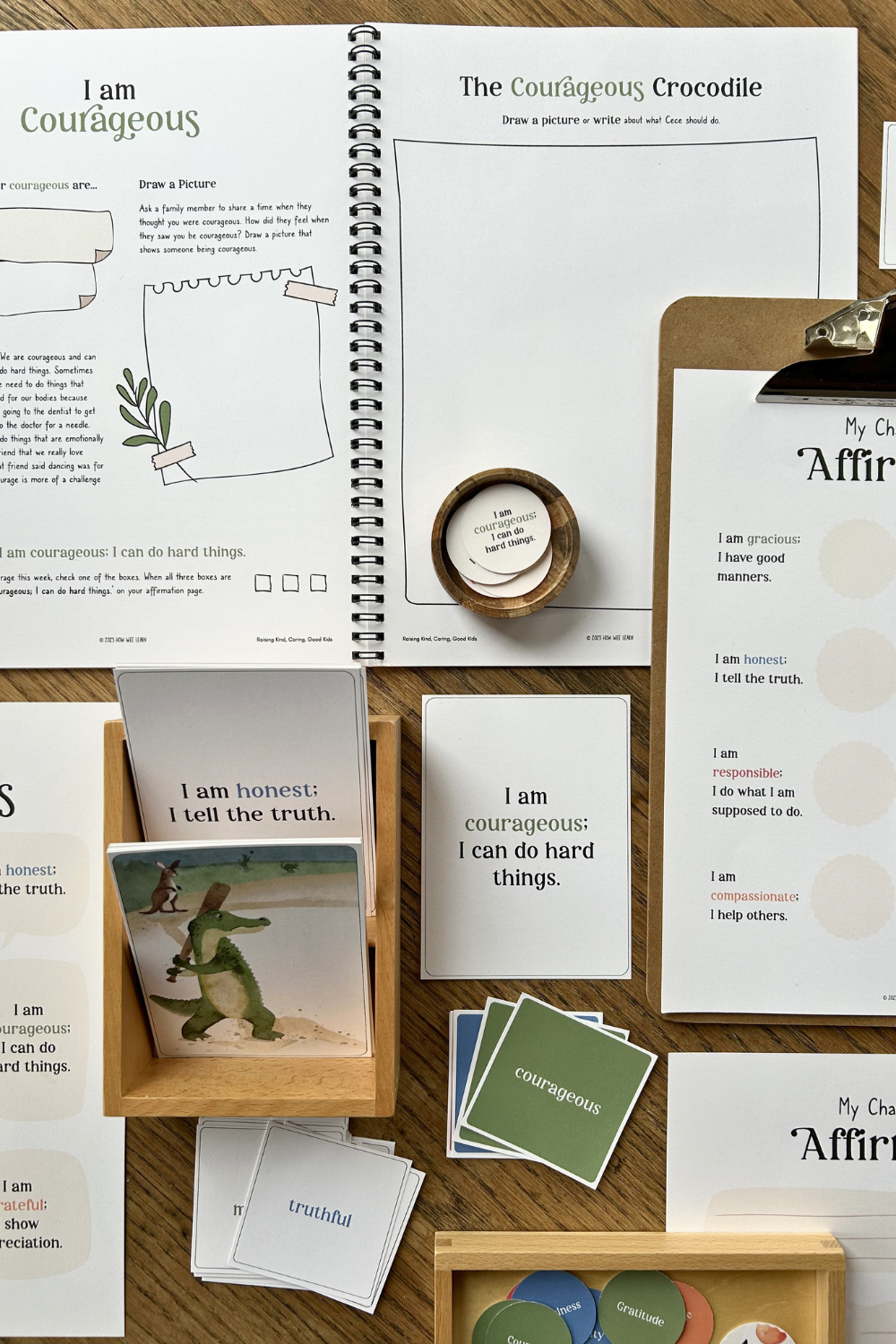
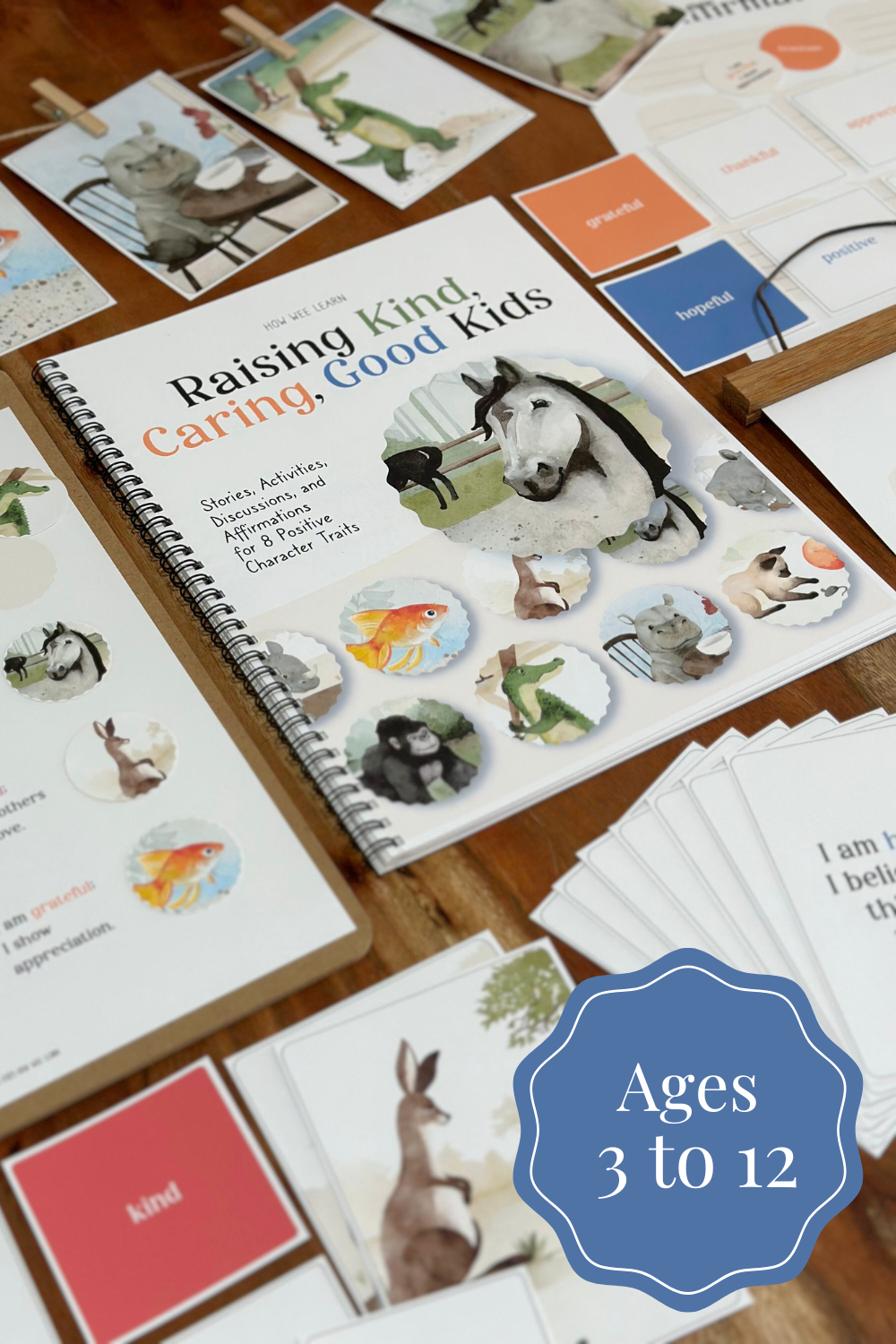
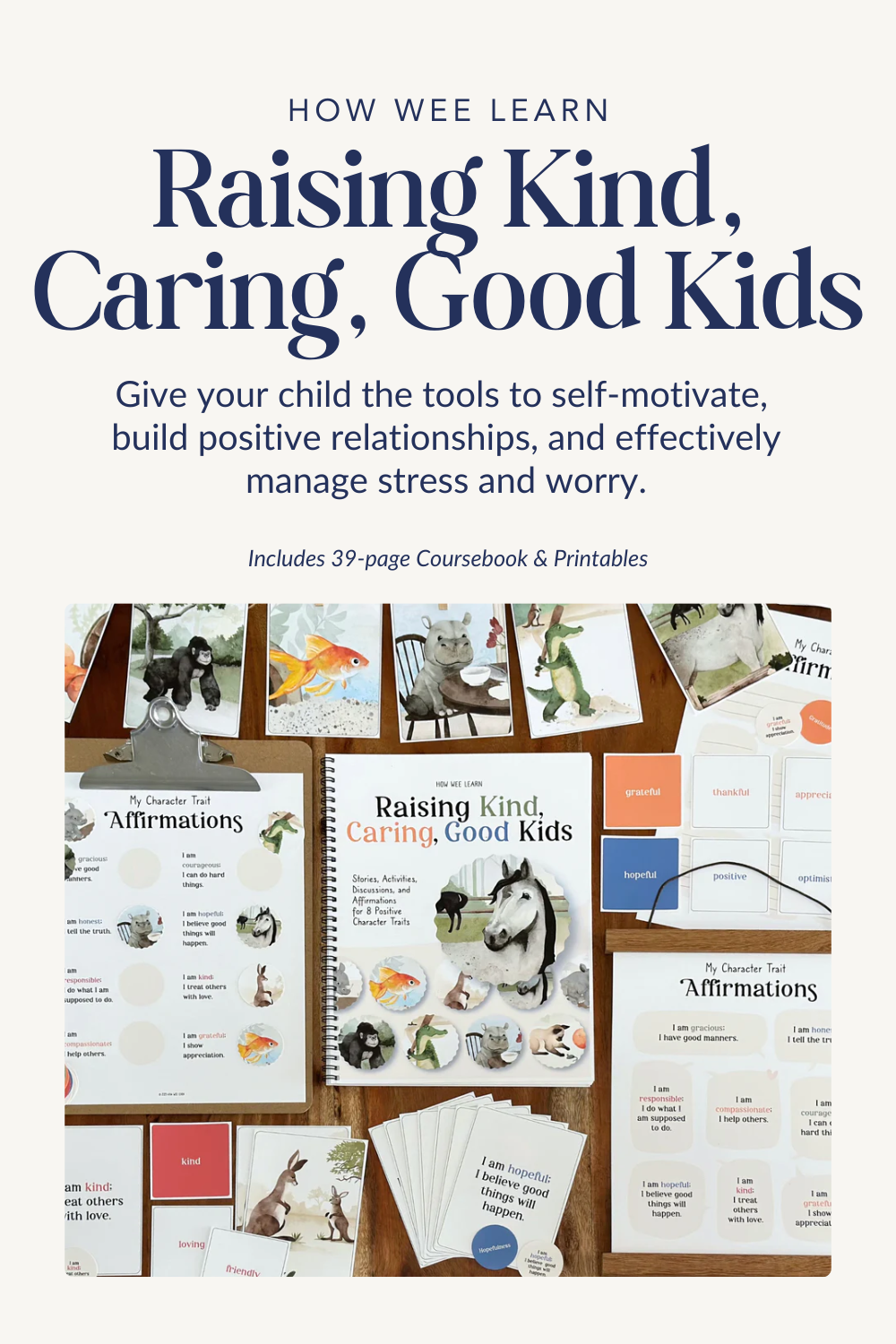
That is exactly why my husband, John, a child psychologist, and I created Raising Kind, Caring, Good Kids!, a resource that makes character building for kids positive, practical, and easy to include in your day.
<Main Image>
Character Building for Kids, One Day at a Time
This resource helps children learn about eight important character traits through positive affirmations, relatable stories, and open conversations.
Instead of waiting for challenging behavior and then focusing on what went wrong, you teach and practice these qualities during calm, connected moments.
While correcting behavior is sometimes necessary, children can learn so much when we talk about kindness, honesty, gratitude, and responsibility before they find themselves in a difficult situation.
Best of all, this resource helps children begin to see these wonderful qualities within themselves.

Positive Affirmations for Kids
Each section of Raising Kind, Caring, Good Kids begins with a simple affirmation:
- I am gracious. I have good manners.
- I am responsible. I do what I am supposed to do.
- I am courageous. I can do hard things.
- I am compassionate. I help others.
- I am honest. I tell the truth.
- I am kind. I treat others with love.
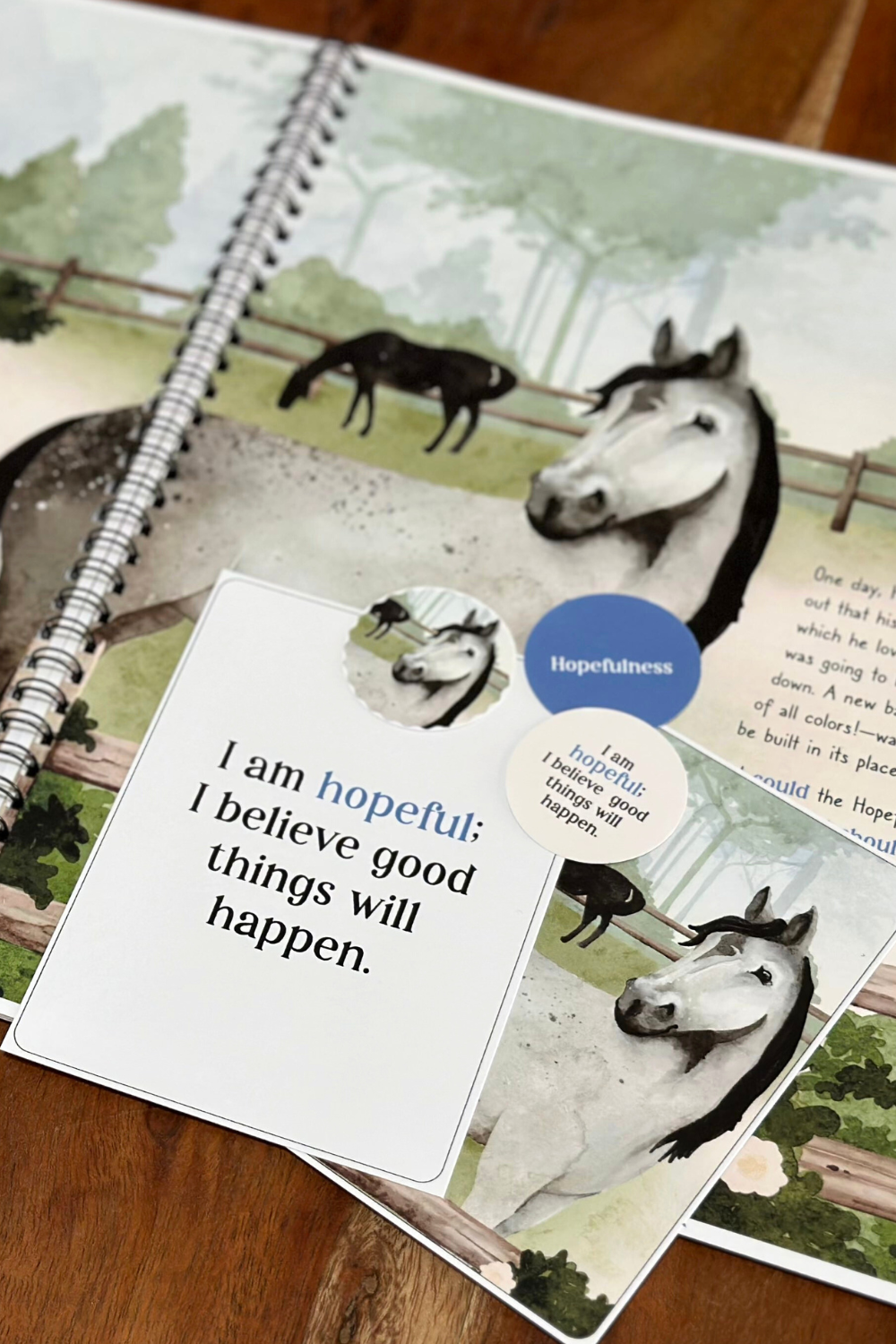
- I am hopeful. I believe good things will happen.
- I am grateful. I show appreciation.
As children read these affirmations regularly, they begin to see these qualities as part of who they are.
Rather than hearing only, “You need to be more responsible”, your child can begin saying, “I am responsible. I do what I am supposed to do.”
It’s a small shift, but it can make a big difference.
Using Stories to Teach Important Life Lessons
Along with each affirmation, children meet a sweet animal character who has found themselves in a social dilemma.
As you read the story together, your child can think about what happened, how the character might be feeling, and what the character could do next.
There is something rather magical about using stories this way. A child who finds it difficult to talk about their own behavior may have no trouble telling you what a storybook character could have done differently!
The story takes the pressure off your child while still opening the door to conversations about choices, feelings, and consequences.
Conversations That Help Children Think
This resource isn’t about giving children a long list of rules to memorize. It is about helping them think.
The stories and activities encourage children to think about questions such as:
- What does this character trait mean?
- What might it look like in everyday life?
- How do our choices affect other people?
- What could the character have done differently?
- When have I shown this quality?
These conversations help children understand not only what a good choice is, but also why it matters.
And, of course, you never quite know where a conversation with a little one will lead. Sometimes their answers are incredibly thoughtful. Sometimes they are hilarious. Usually, they are a little bit of both!
Eight Important Character Traits
Let’s take a closer look at the eight qualities included in Raising Kind, Caring, Good Kids!
 |
 |
Graciousness
I am gracious. I have good manners.
Children learn what it means to be polite and considerate of others. They learn that graciousness can be shown through simple actions such as taking turns, saying please and thank you, and treating others with respect.
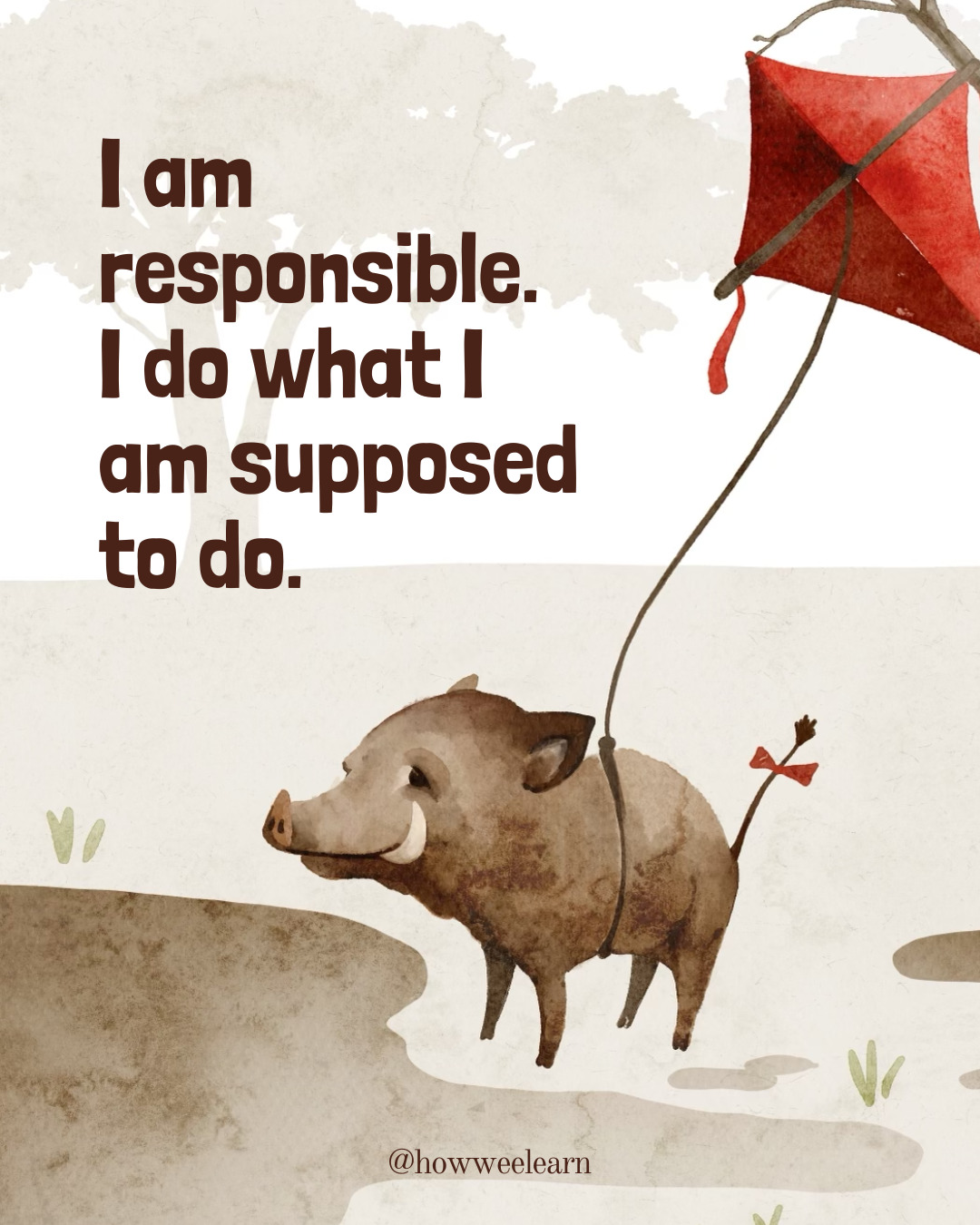
Responsibility
I am responsible. I do what I am supposed to do.
Being responsible means taking care of the things we need to do – even when we would rather be doing something else! Children learn how following through, helping out, and taking ownership of their choices helps others know they can be counted on.
 |
 |
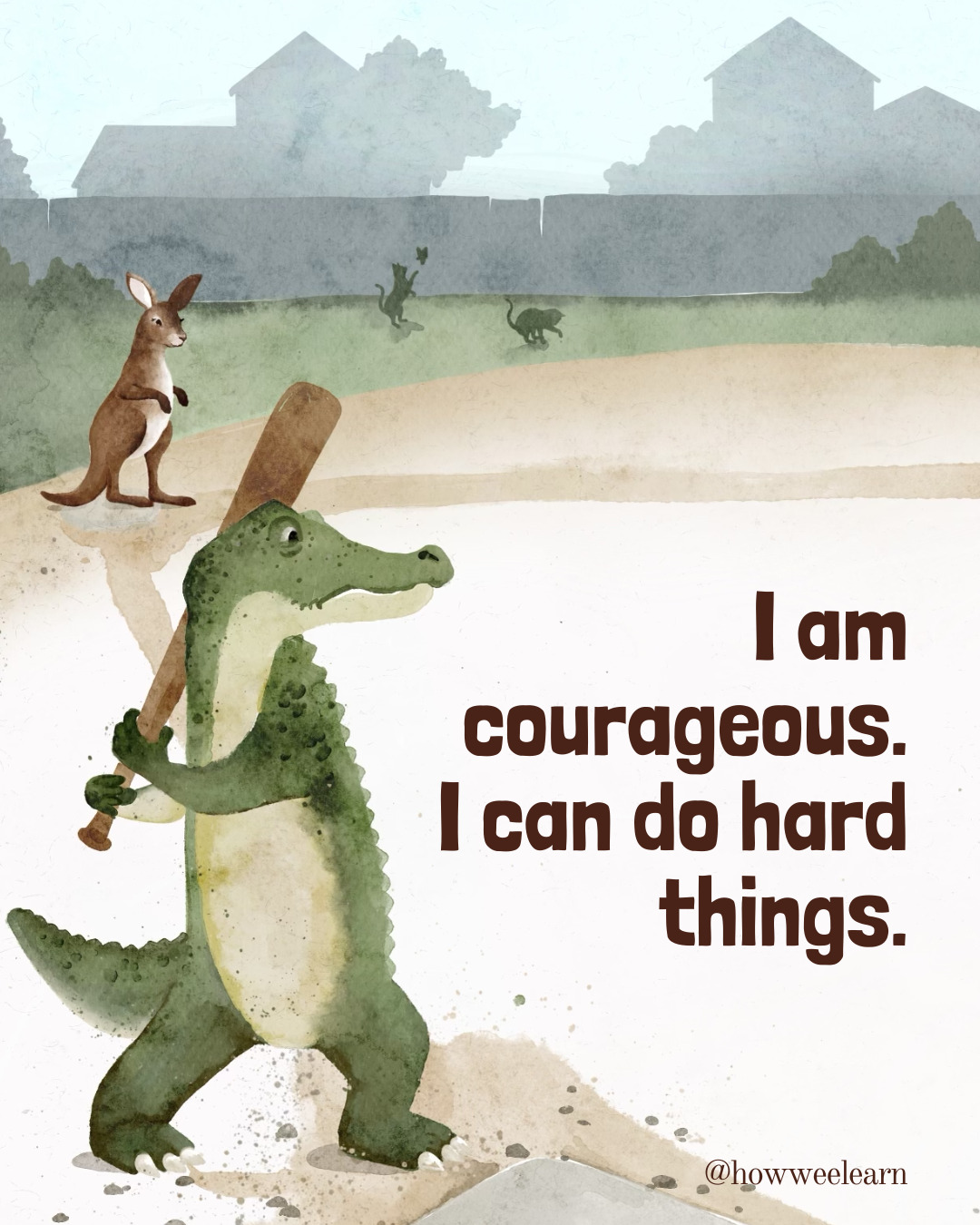
Courage
I am courageous. I can do hard things.
Courage does not mean that we never feel nervous or afraid. It means trying, speaking up, or doing what is right even when something feels difficult.
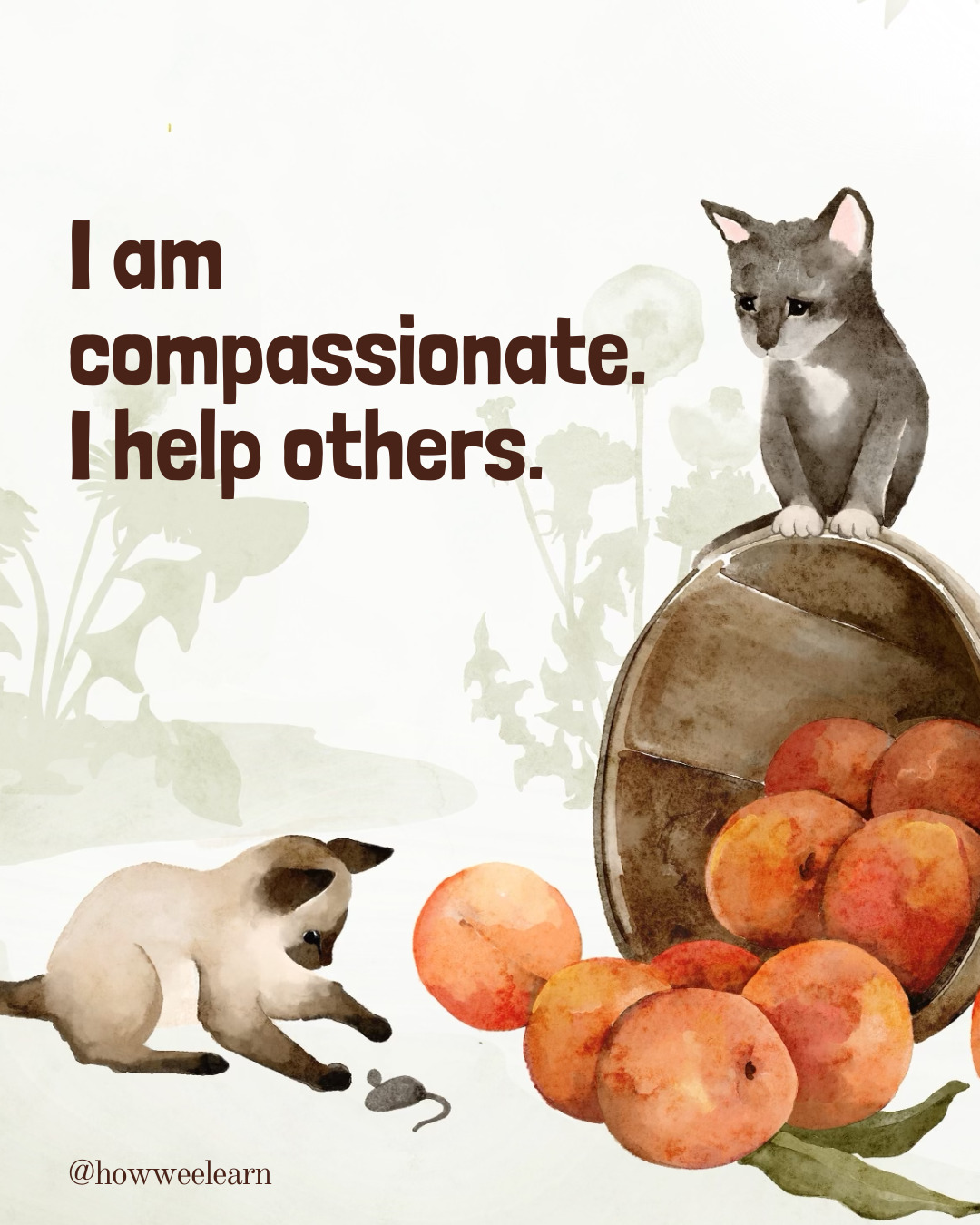
Compassion
I am compassionate. I help others.
Children learn to notice how others may be feeling and think about ways they can offer help, comfort, or support.
 |
 |
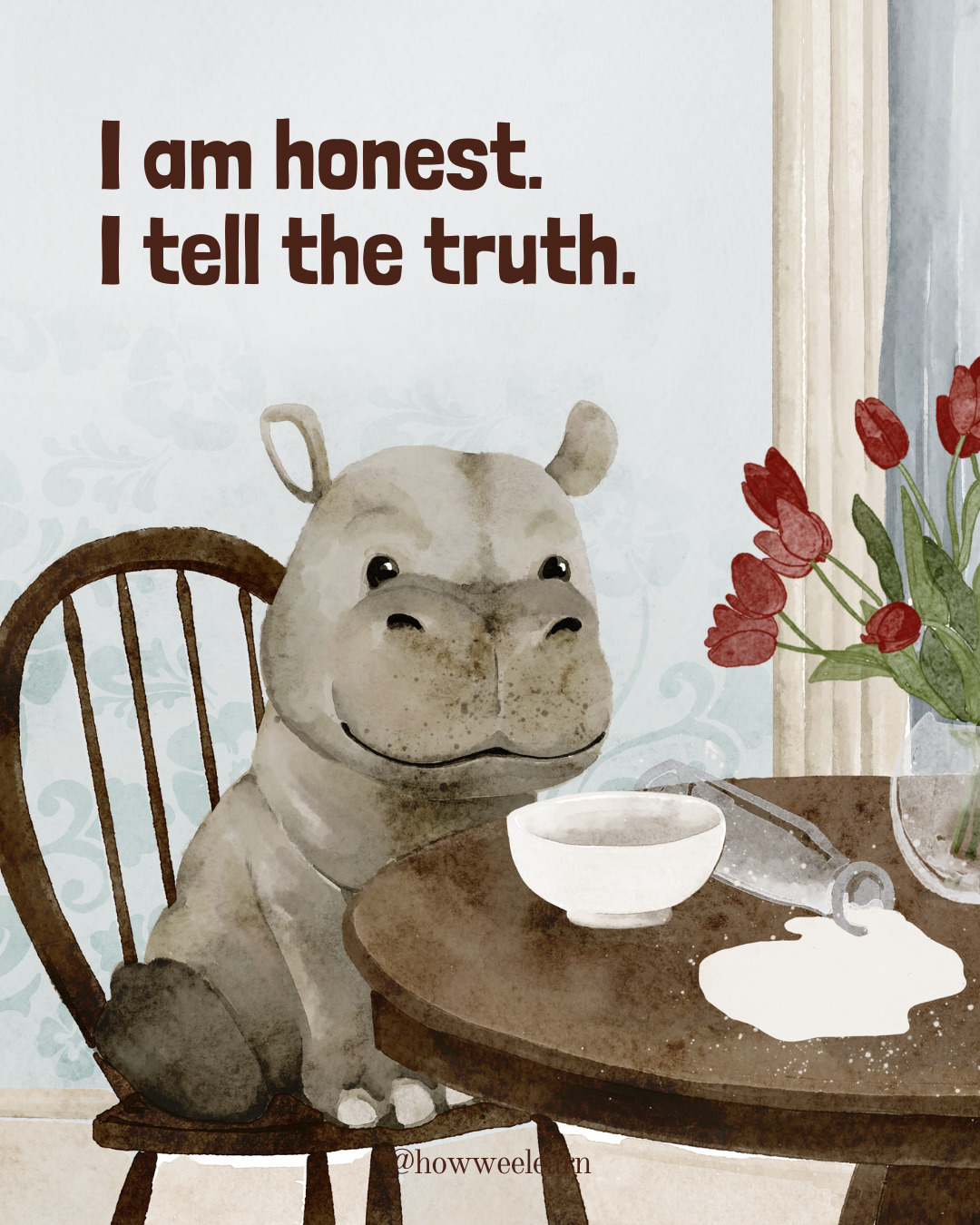
Honesty
I am honest. I tell the truth.
Telling the truth can sometimes feel difficult – especially when we are worried about getting in trouble. This section helps children understand why honesty matters and how telling the truth helps others trust us.
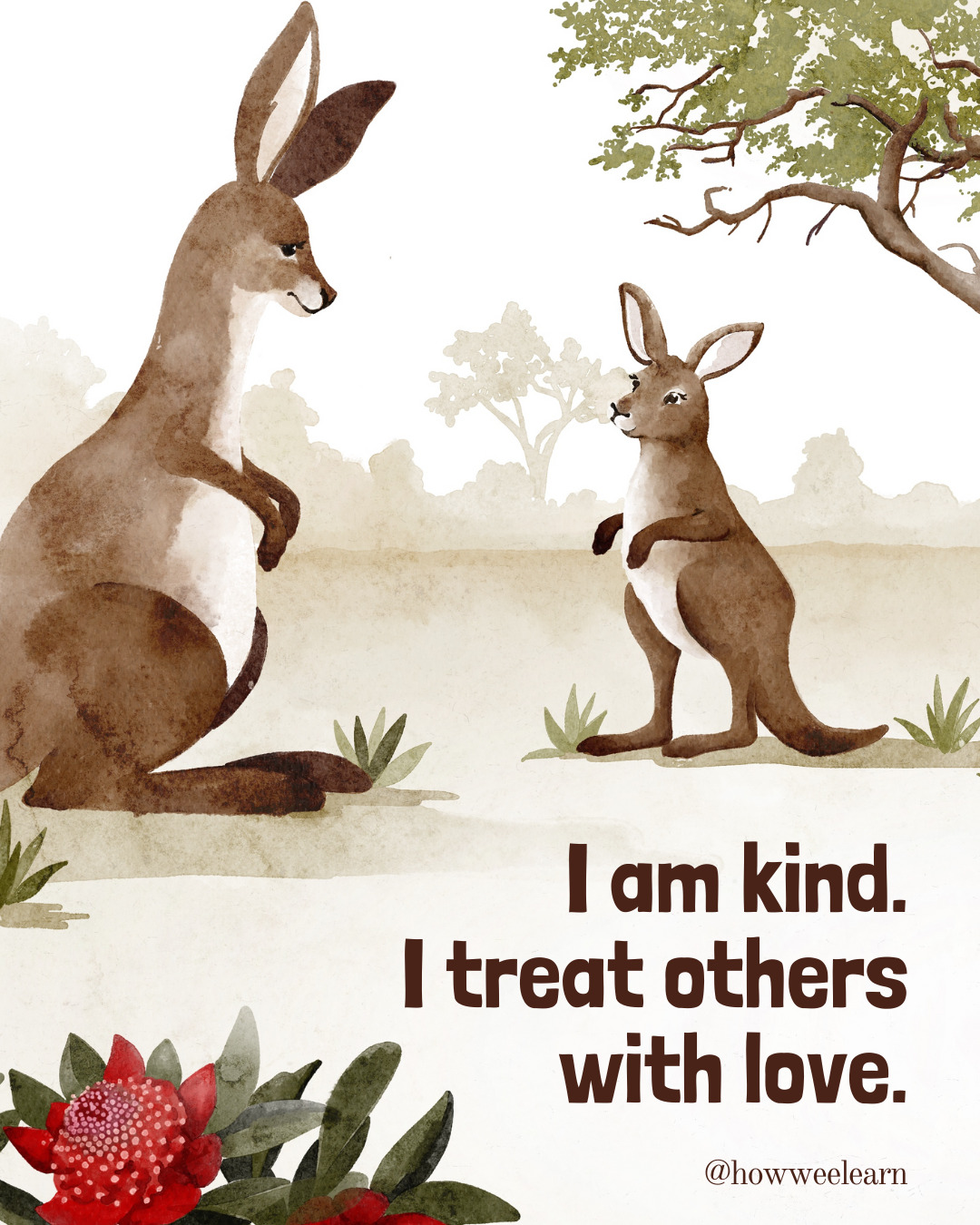
Kindness
I am kind. I treat others with love.
Kindness can be found in the little things we say and do each day. Children learn how their words, actions, and choices can help others feel cared for and included.
 |
 |
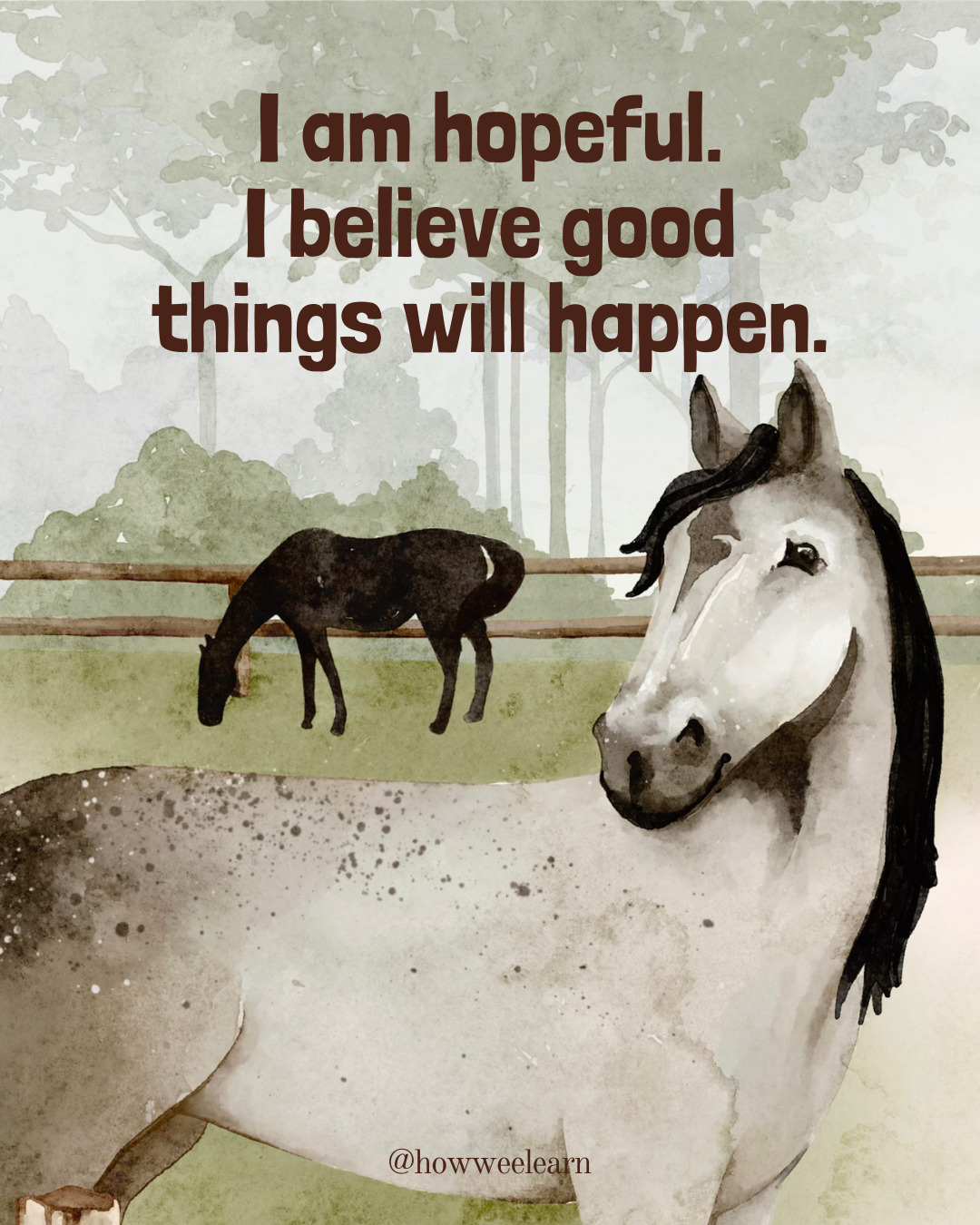
Hopefulness
I am hopeful. I believe good things will happen.
Being hopeful helps children look for possibilities, continue trying, and believe that difficult moments will not last forever.
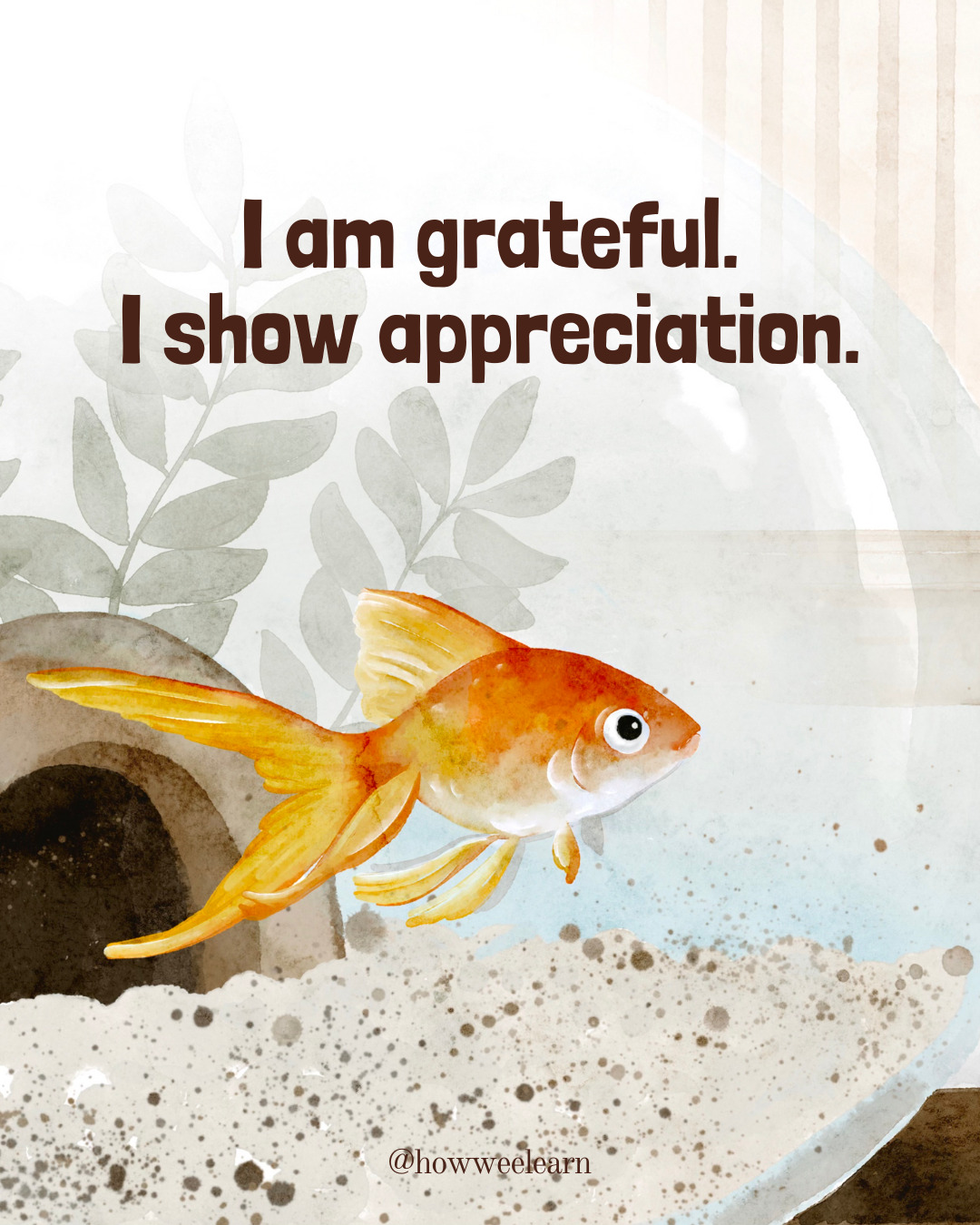
Gratitude
I am grateful. I show appreciation.
Children practice noticing and appreciating the people, experiences, and everyday things that bring joy into their lives.
Look for the Good
One of the most important parts of this approach is noticing when your child demonstrates these qualities.
Try to catch your child being gracious, responsible, courageous, compassionate, honest, kind, hopeful, or grateful – and point it out!
You might say:
- “You told me the truth even though it was difficult. That was very honest.”
- “You noticed that your sister needed help. That was compassionate.”
- “You kept trying even when it was hard. That took courage.”
This helps children connect the affirmations with their own actions and recognize that these traits are already growing within them.
What to Avoid When Using the Affirmations
I’ll admit, this part took some practice for me.
It can be very tempting to turn an affirmation around during a difficult moment:
- “That wasn’t very gracious, was it?”
- “Are you being responsible right now?”
- “Was that really a kind choice?”
But when affirmations are regularly used to point out what a child has done wrong, they can begin to feel more like criticism than encouragement.
Instead, try to use the affirmations when you notice your child displaying the trait. You can still calmly correct behavior when needed, of course, but the affirmation itself remains something positive that your child can feel proud to claim.
Let Your Children See You Practicing Too
None of us demonstrates perfect character all the time – children or grown-ups.
There will be days when we lose our patience, forget to show appreciation, or avoid something we know we need to do. Those moments give us a chance to show children that we are still learning, too.
You might say, “I wasn’t very patient just then. I’m going to take a breath and try again.”
When children see us acknowledge our mistakes, make things right, and keep practicing, they learn that being a good person does not mean being perfect. It means learning from our mistakes and trying again.
Try a Free Sample!
Would you like to take a peek inside Raising Kind, Caring, Good Kids?
Enter your email address below to receive a free sample featuring Graham the Gracious Gorilla. You’ll get to read his story, try the accompanying activities, and see how the affirmation is included in the lesson.
It is a fun way to begin talking about graciousness and good manners with your child – and to see whether this resource is a good fit for your family.
Ready to Raise Kind, Caring, Good Kids?
Kindness, courage, compassion, honesty, responsibility – these are qualities that take time and plenty of practice to develop. And truthfully, we grown-ups are still practicing them, too!
Raising Kind, Caring, Good Kids makes character building for kids easier with positive affirmations, relatable stories, and activities you can enjoy together.
Most importantly, it helps you notice and celebrate wonderful qualities you already see in your little one.
I hope you’ll pop over to the How Wee Learn Shop and grab your copy today.
Raising Kind, Caring, Good Kids!
https://shop.howweelearn.com/products/raising-kind-caring-good-kids
 |
 |
Thanks so much for reading, friend!
xo
Sarah

Leave a Reply