There’s something a little magical about watching a few simple characters come to life through light and shadows. With no elaborate stage or fancy supplies, children can create an entire world of their own!
This kind of imaginative play fits so perfectly with the story of little Christopher Robin Milne. As a boy, he played with the stuffed animals that later became Pooh, Piglet, Tigger, and Eeyore in his father’s stories.
Today, I’m sharing the Shadow Puppets activity from our Winnie’s Story Family Unit Study. You’ll create your own characters, use light and shadows to bring them to life, and act out a Winnie-the-Pooh story or dream up a brand-new adventure of your own.
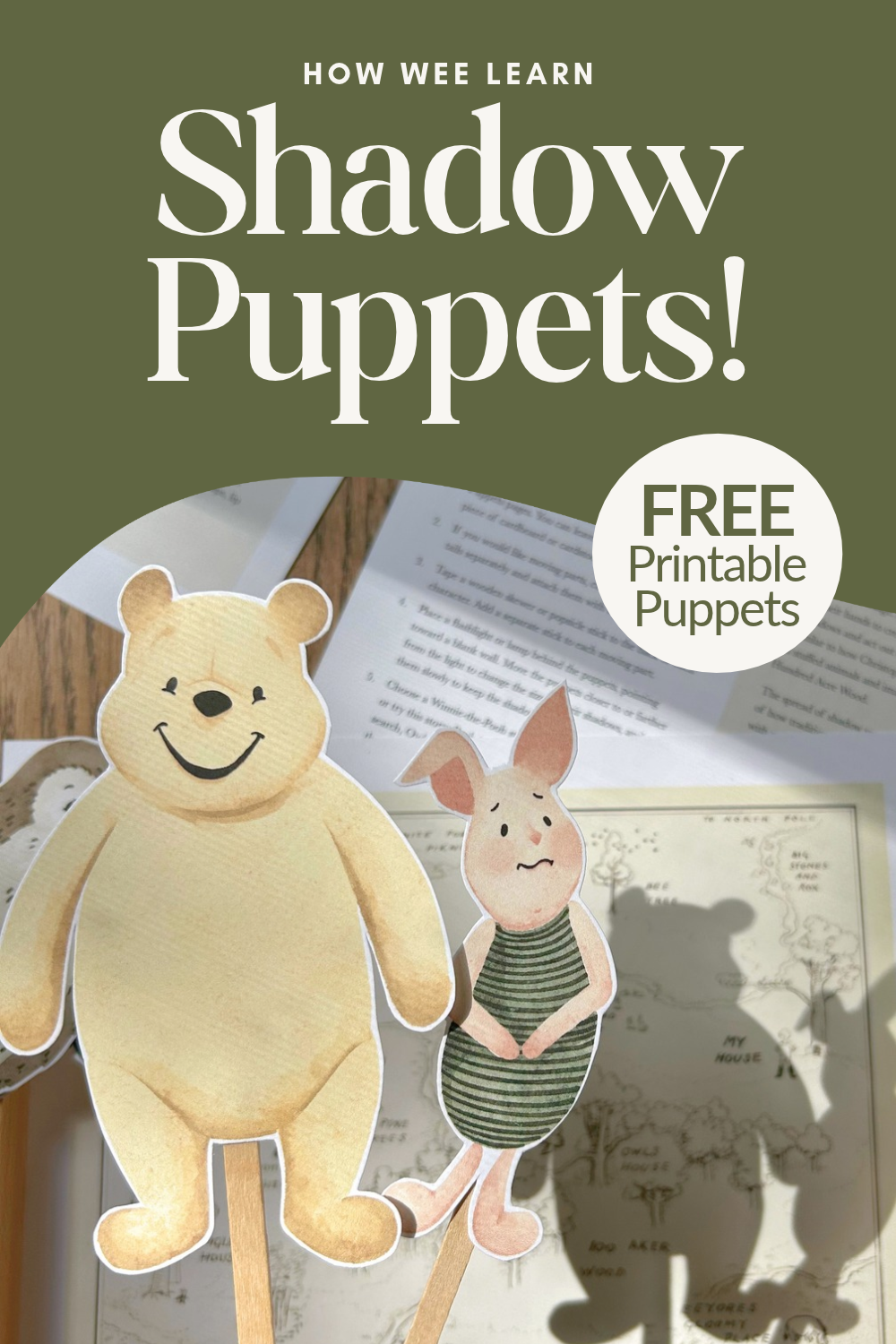
Put on a Puppet Show
Did you know that each and every one of our Family Unit Studies includes: Geography, History, Science, Social Studies, Music, Art, Health, Literacy, and Math?
Well, they do! You can feel confident knowing you’re covering all of the core subject areas through hands-on activities that bring each topic to life.
Today’s free activity combines Social Studies and Art in one simple project. With printable characters ready to cut out, children can add moving parts, set up a flashlight, and put on their very own puppet show!
Enter your email address below, and the free Shadow Puppets activity will be sent straight to your inbox.
Let’s Get Crafting!
Start by gathering your materials:

- Scissors
- Cardboard or cardstock (optional)
- Glue (optional)
- Pencil (optional)
- Wooden skewers or popsicle sticks
- Tape
- Brad fasteners (optional)
- Flashlight
- Blank wall (no need to gather the wall, you can leave it where it is!)
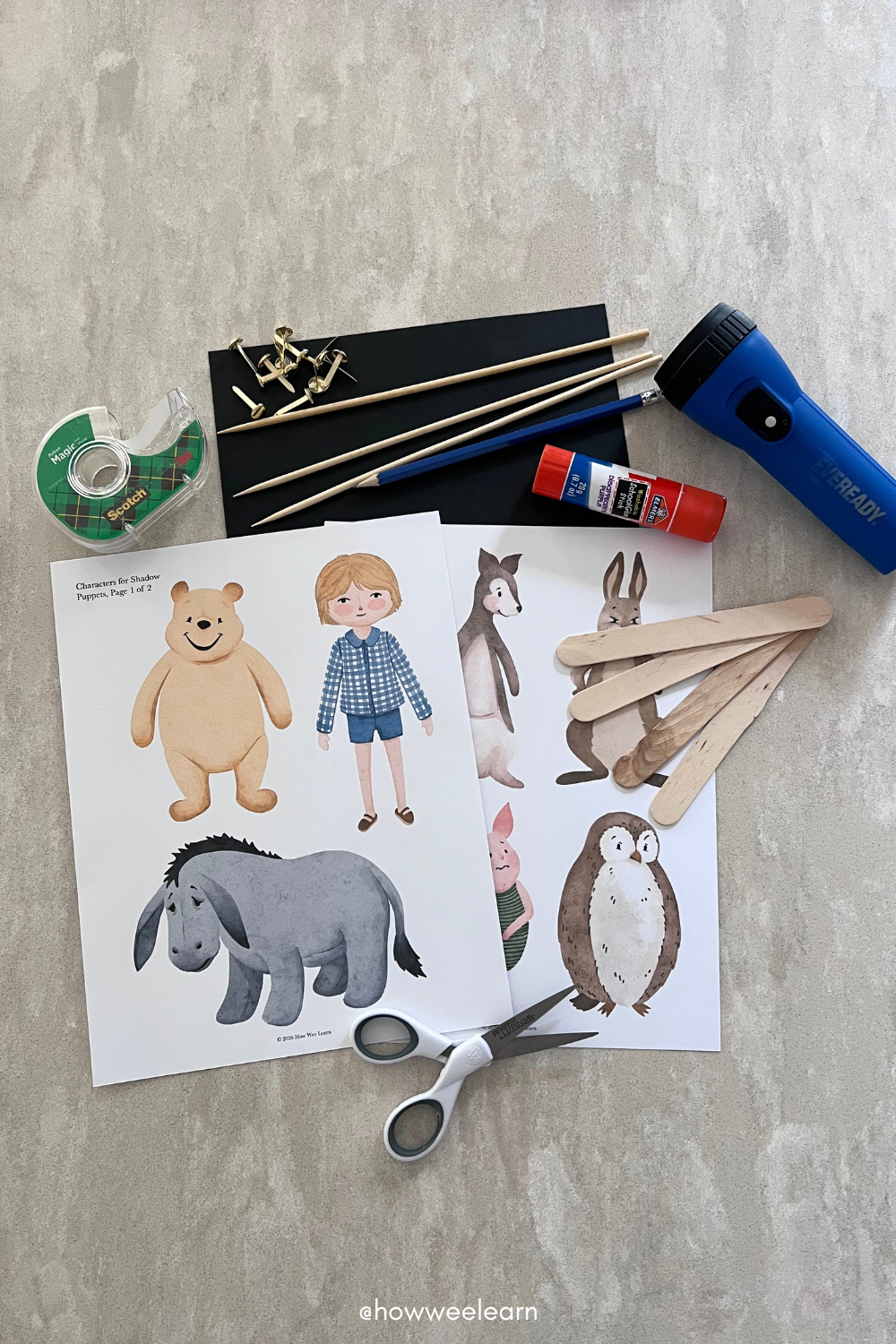
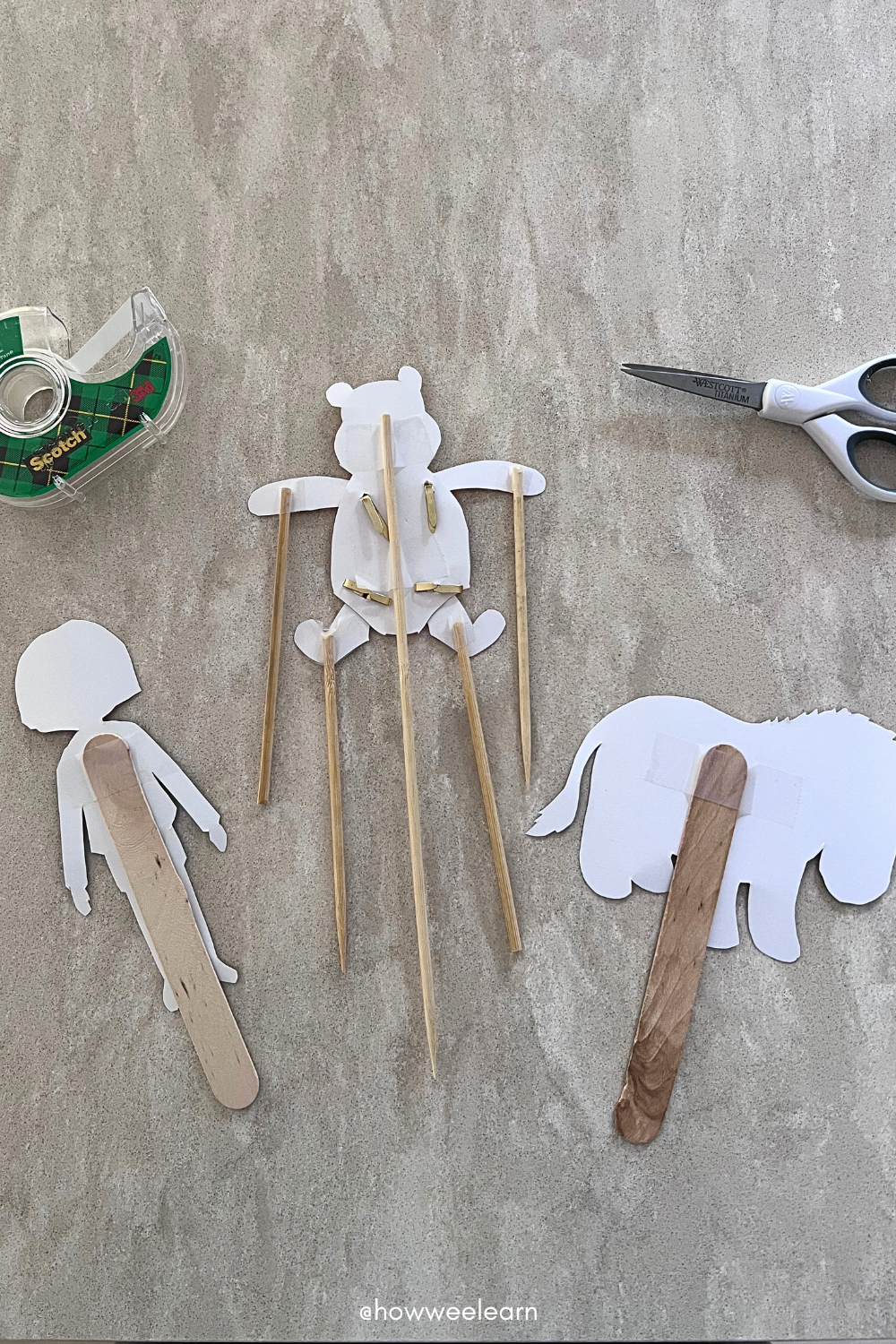
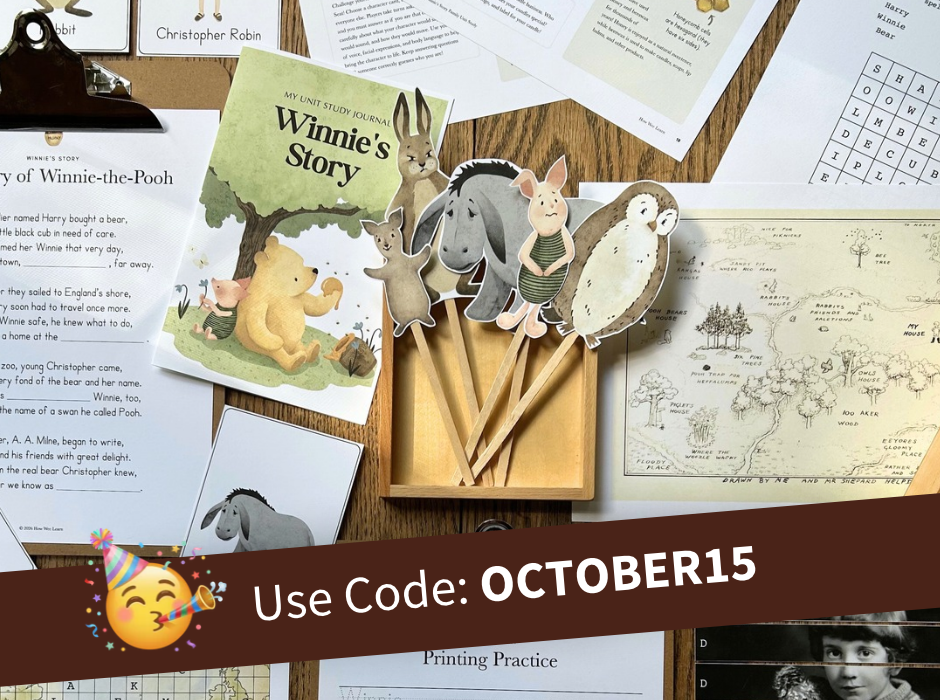
Choose a few characters you would like to use in your story and cut them out from the printable Shadow Puppet Characters pages.
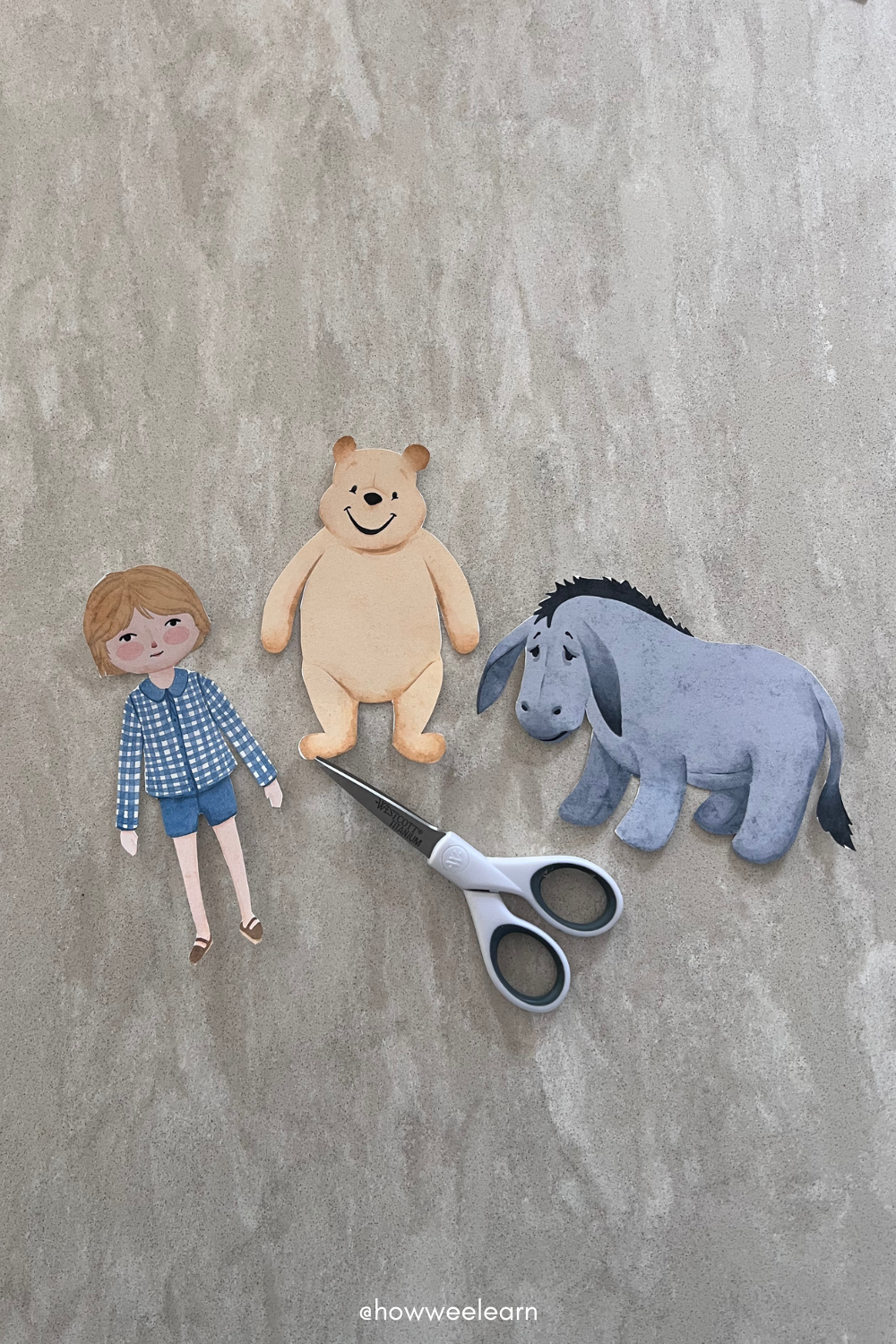
You can use the characters as they are or glue them onto cardboard or cardstock to make them sturdier.
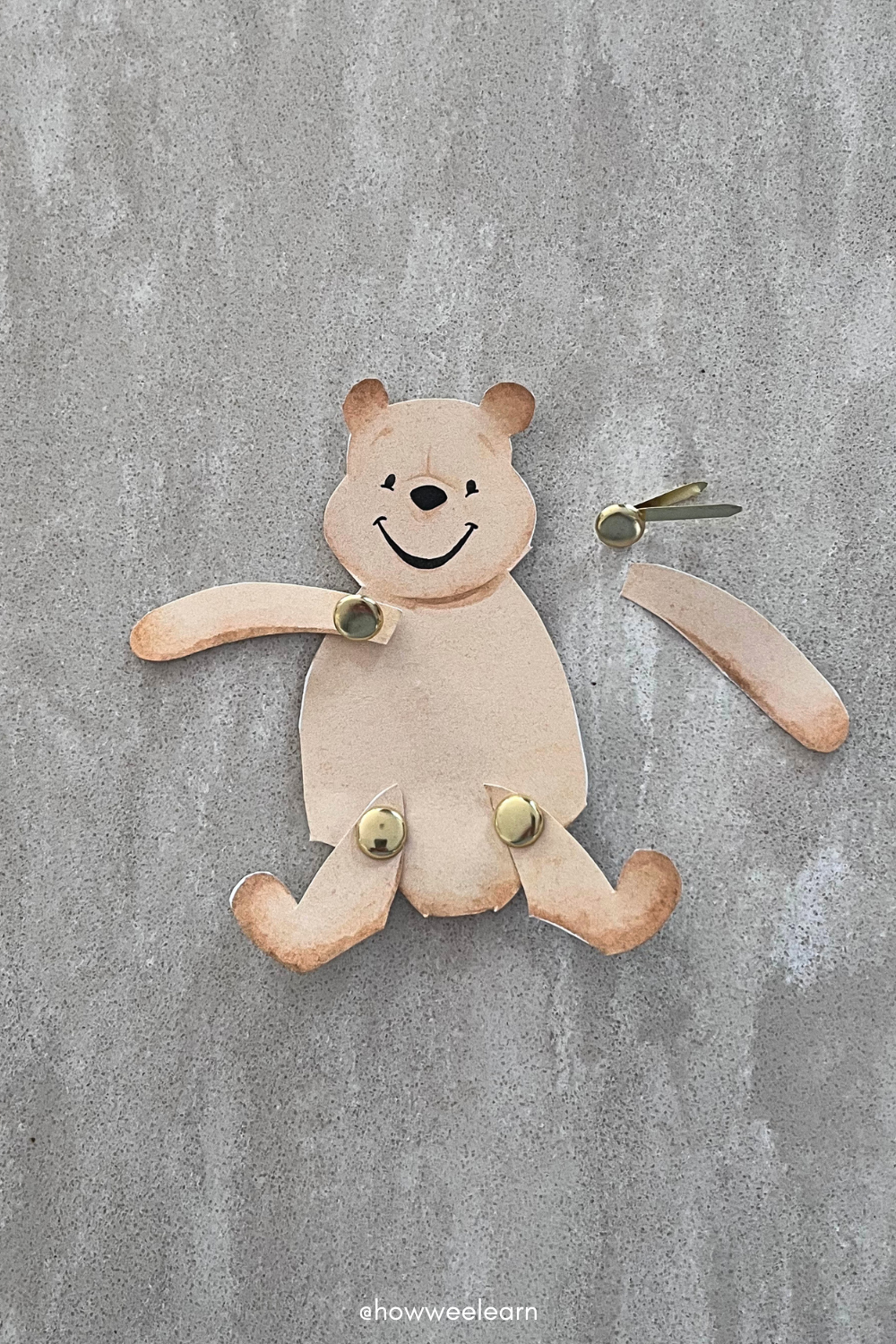
If you would like your puppets to have moving parts, cut out pieces such as arms or tails separately. Attach them to the puppets using brad fasteners.
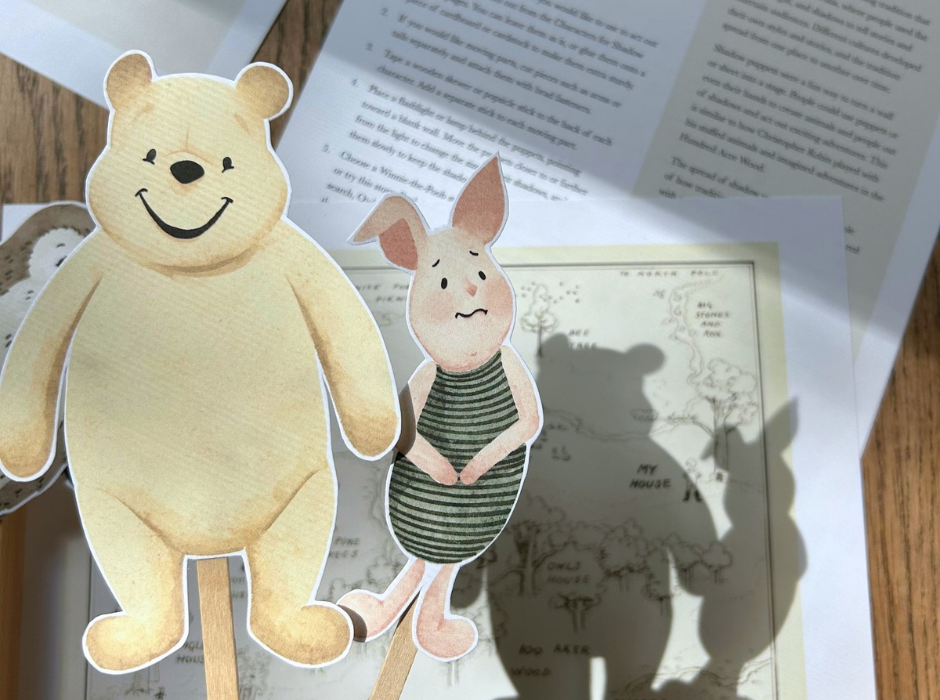
Tape a wooden skewer or popsicle stick to the back of each character. If your puppet has moving parts, attach a separate stick to each one.
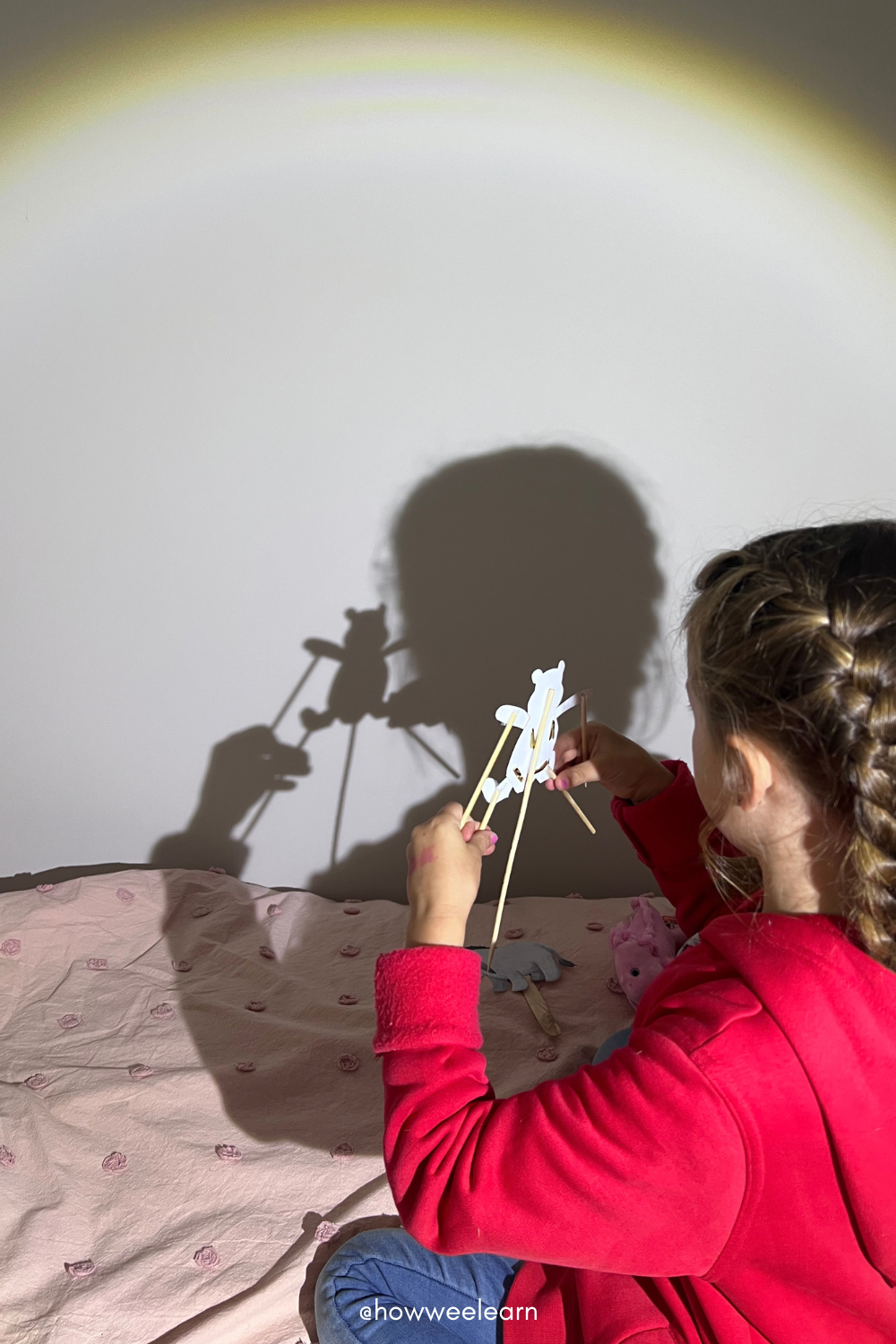
Place a flashlight or lamp behind the puppets and point it toward a blank wall.
Move the puppets closer to or farther away from the light and watch how their shadows change in size. Move them slowly to keep the shadows clear.
Now it’s time to put on a show! Retell a Winnie-the-Pooh story, create one of your own, or try this simple adventure:
Pooh is searching for honey. Piglet joins the search. Owl flies overhead, and Eeyore accidentally finds the honey pot. In the end, the friends celebrate together!
Want to take your puppet show one step further? Write a script for your shadow puppets about an exciting adventure! Include dialogue and stage directions that describe the actions and movements of each puppet.
💡Did You Know?
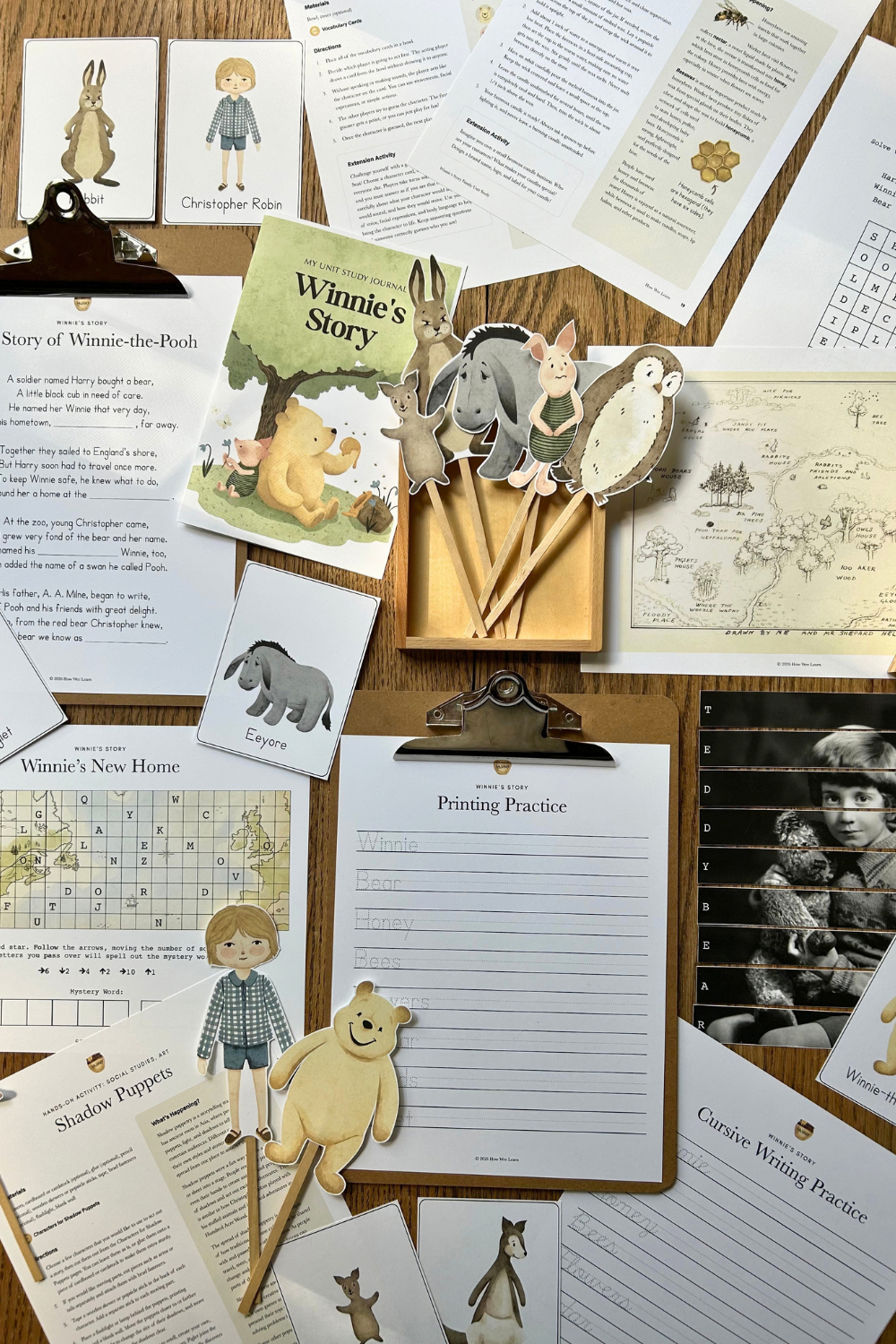
Every hands-on activity in our Family Unit Studies includes a “What’s Happening?” section filled with kid-friendly explanations that help children understand the ideas behind the activity.
We don’t stop at the fun part! Whether children are creating, building. or experimenting, they’ll also learn about the ideas, stories, and connections behind each activity and how it fits into the bigger topic they’re studying.
It’s one of my favorite ways to turn curiosity into learning that sticks! So what do shadow puppets have to do with Christopher Robin and the stories of Winnie-the-Pooh?
What’s Happening?
Shadow puppetry is a storytelling tradition with ancient roots in Asia. People used flat puppets, light, and shadows to tell stories and entertain audiences. Different cultures created their own styles and stories, and the tradition spread from one place to another over time.
With only a light and a few puppets – or even your hands – a plain wall or sheet can become a stage filled with animals, people, and exciting adventures. This is similar to the way Christopher Robin played with his stuffed animals and imagined adventures in the Hundred Acre Wood.
The spread of shadow puppetry shows how traditions can be shared and passed between cultures. As people travel, meet, and exchange ideas, traditions may change and take on new forms while still keeping parts of their original history.
Shadow puppets and toys also gave children in the 1920s plenty of ways to be creative. They could make up games, invent stories, pretend their toys could talk, and solve imaginary problems together – just as you can with your puppets today!
What kind of adventure will your shadow puppets have?
More Adventures in the Hundred Acre Wood
A simple puppet show can open the door to creativity, storytelling, history, and art – all through one playful activity.
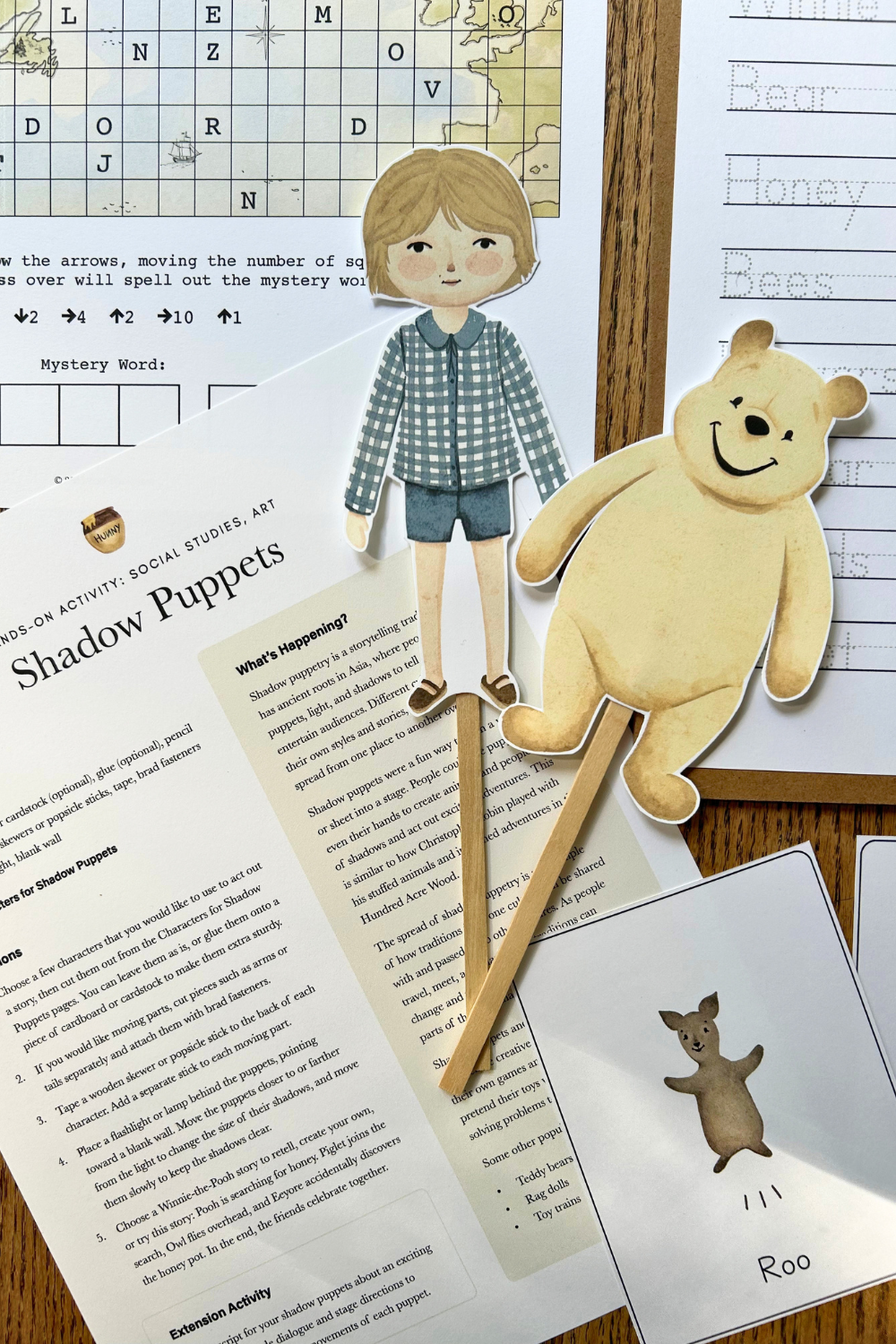
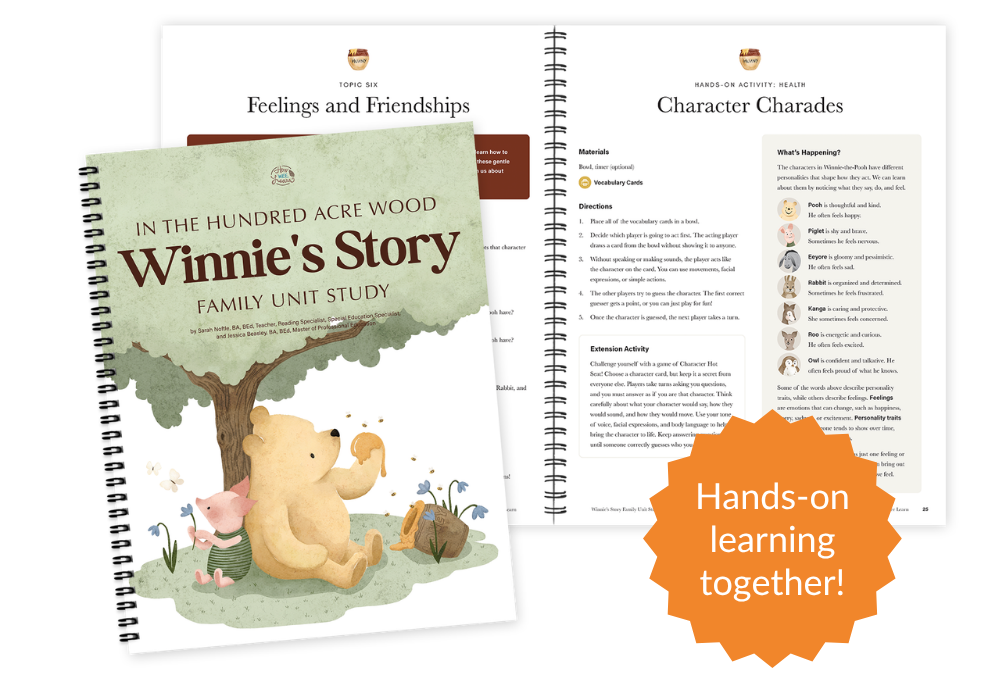
If your family enjoyed making these shadow puppets, you’ll love our Winnie’s Story Family Unit Study. It’s filled with fun lessons, hands-on activities, and creative projects inspired by the real people, places, and stories behind Winnie the Pooh.
Pop over to the How Wee Learn Shop to take a closer look and continue your journey through the Hundred Acre Wood!
Winnie’s Story Family Unit Study
https://shop.howweelearn.com/products/family-unit-study-winnies-story
Thanks so much for reading, friend!
xo
Sarah

Leave a Reply