“Can we play a game?”
If there’s one thing Grade One kids love, it’s learning through play—and math is no exception! I’m a big believer that math skills stick best when they’re wrapped in laughter, movement, and a little bit of friendly competition. Math games make numbers feel less intimidating and a whole lot more fun.
Whether your first grader is working on counting, number sense, addition, or simple problem-solving, these math games are an easy way to practice without it feeling like school. Perfect for homeschool days, after-school play, or sneaking in learning on a rainy afternoon.
Today, I’m sharing some of my favorite math games for Grade One—simple to set up, engaging to play, and kid-approved every single time. Let’s make math something they want to do!

Before we get into all of the fun math games for kids, you’ll want to grab this Free Hundreds Chart Printable Pack! It includes eight different hundreds charts, perfect for playing all sorts of math games, like these 8 Fun Hundreds Chart Games.
Fun Math Games for Grade 1
Math practice doesn’t have to be boring or repetitive. These engaging Grade One math games combine hands-on play, simple movement, and meaningful learning to help math skills stick. Let’s check them out!

1. “I Spy”
by Susan Jones, Teaching

Most students are familiar with the popular “I spy…” game played on car trips all over the world, so it’s easy to transition them to playing with cards! To play this game, you will lay out all the cards in a grid. Then one student will go first and say something like, “I spy two cards that make the sum 12.” The other player will try to find any two cards that add up to 12 and remove them from the grid. Then, it’s their turn to find a sum! Students keep playing until all cards have been removed.

2. UNO Card Addition
by Primary Playground
Separate the number cards into two piles: one with numbers 5 and under for creating problems, and another with numbers 0-9 for answers. Using a small paper or sticky note, write an addition sign and an equal sign. Have your child flip two cards from the problem pile, place the addition and equal signs between them, then solve the equation by finding the correct answer card from the answer pile.

3. Dominoes & Dice Game
by Primary Inspiration
Players create a simple game board using an eight-petal flower (or a homemade paper version) and place dominoes on each petal, using only dominoes that total 1-6. Taking turns, players roll one die and look for a domino whose dots add up to the number rolled. If they have a match, they remove that domino; if not, they skip their turn. The first player to remove all of their dominoes wins.

4. Puddle Jump
by Math Geek Mama
Cut simple “puddle” shapes from blue paper and write numbers on each one (choose a range that fits your child, like 0-11 or 11-20). Spread the puddles on the floor or ground with space to jump, taping them down if needed. Children jump from puddle to puddle while counting forward or backward, then play again by jumping to numbers you call out – or solving clues like “one more than 16” or “two less than 15” for an extra challenge.

5. Subtraction Bowling
by (STEP)momming
Arrange the cups in a bowling-pin triangle: 4 on the bottom, then 3, then 2, and with one cup at the top. Have your child roll a ball to knock some over, then subtract the number of cups knocked down from 10. It’s a simple, hands-on way to practice subtraction while playing a fun game.
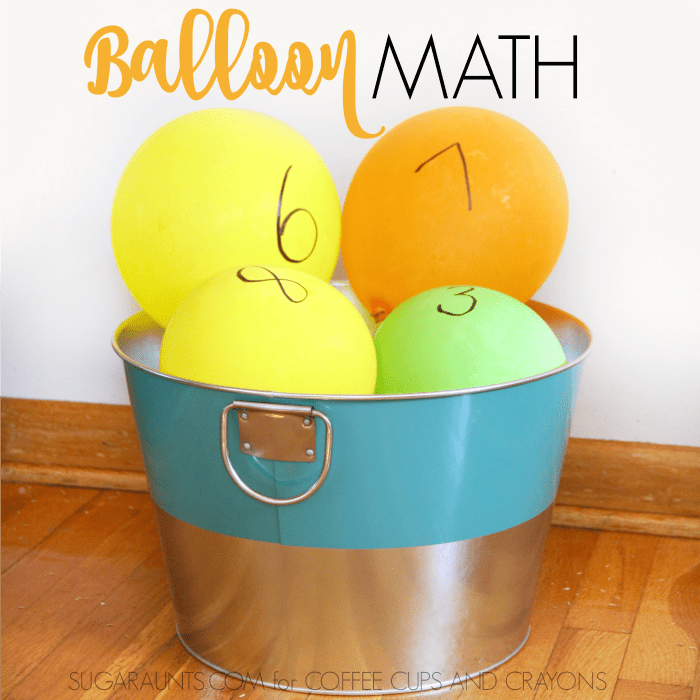
6. Balloon Math
by Coffee Cups & Crayons
Write numbers on balloons and keep them in the air by tapping them, calling out each number as it’s touched. Start by identifying numbers (even when they’re upside down), then increase the challenge by having the numbers appear on two or more balloons as they’re tapped. You can easily adapt the game to practice subtraction, larger numbers, or other math skills – all while keeping kids moving, laughing, and learning.
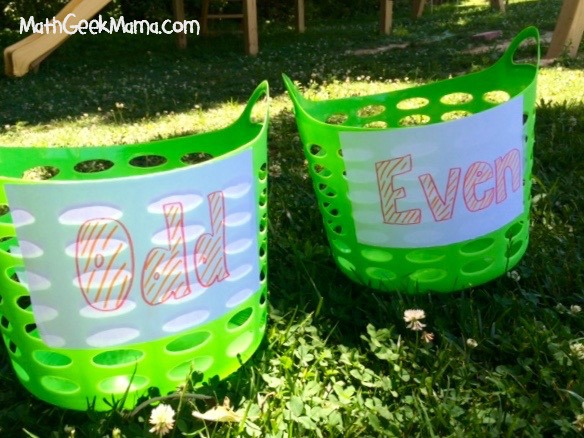
7. Even and Odd Beanbag Toss
by Math Geek Mama
Label two baskets “even” and “odd”, then write a mix of numbers on cards and attach them to beanbags. Kids toss the beanbags into the correct basket, deciding whether each number is even or odd. As they play, you can reinforce strategies like checking the ones place (and noticing that numbers ending in zero are even), making this an active, hands-on way to practice number sense.
8. Domino Dash
Place dominoes around the room. Kids run to find one that matches a rolled number or an addition/subtraction sentence. Lots of fun with this one (plus it tires them out!).
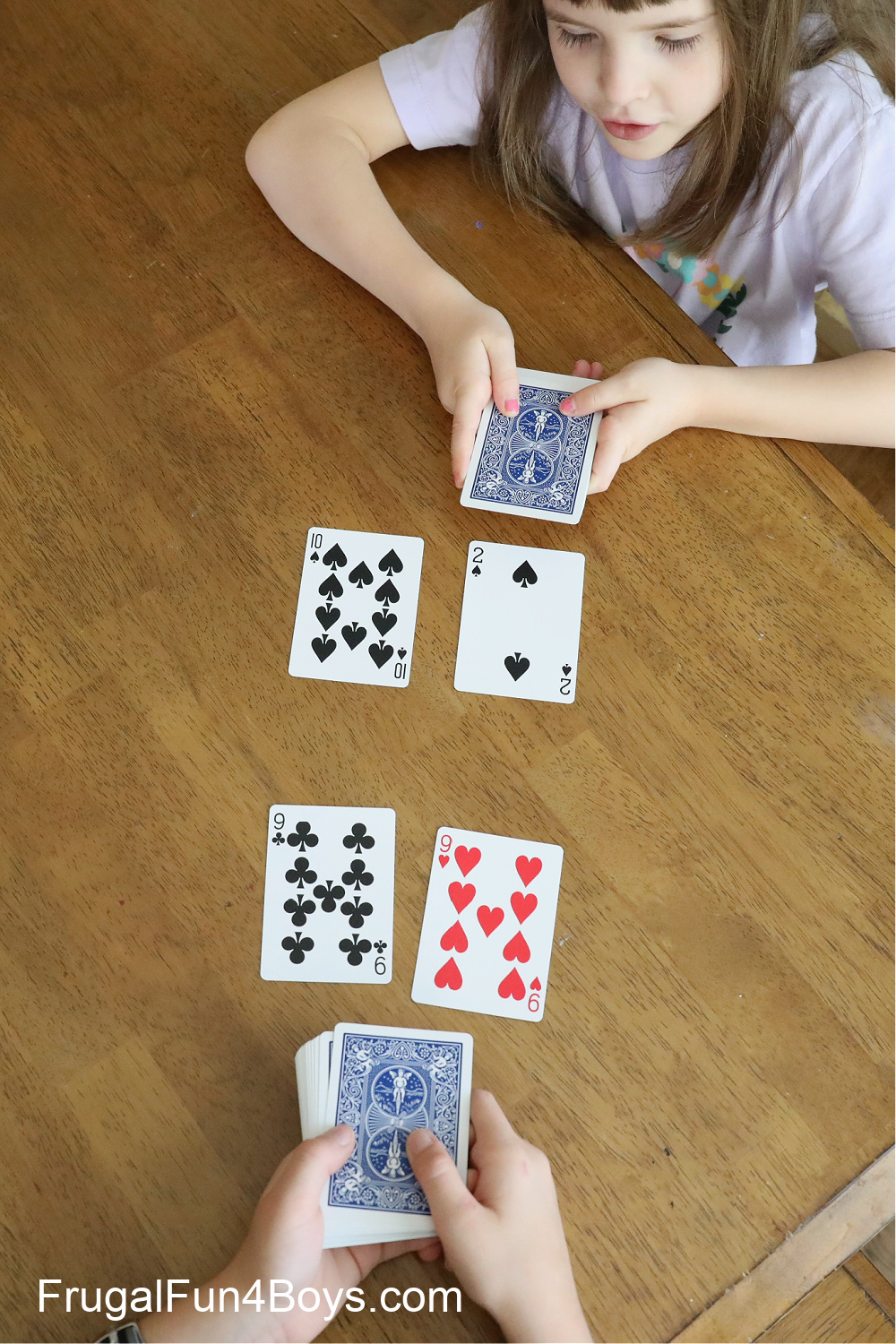
9. Addition Challenge Card Game
by Frugal Fun 4 Boys
Remove face cards and jokers from a deck, then give each player two full suits (aces count as 1). Players flip over two cards at the same time and add their numbers; the player with the larger sum keeps all four cards. Play for a set amount of time, then count cards at the end – whoever has the most wins.
10. Swat it Fast!
Write numbers (or answers) on cards and spread them out on the floor, wall, or table. Call out an addition or subtraction problem, and kids race to solve it and swat the correct answer with a fly swatter. It’s a fast-paced, high-energy game that builds math fact fluency while letting kids move, laugh, and burn off some wiggles.
And there you have it: 10 fun, hands-on math games perfect for your Grade One learner!
I hope you enjoy playing these together while building confidence with numbers and making sweet learning memories along the way.
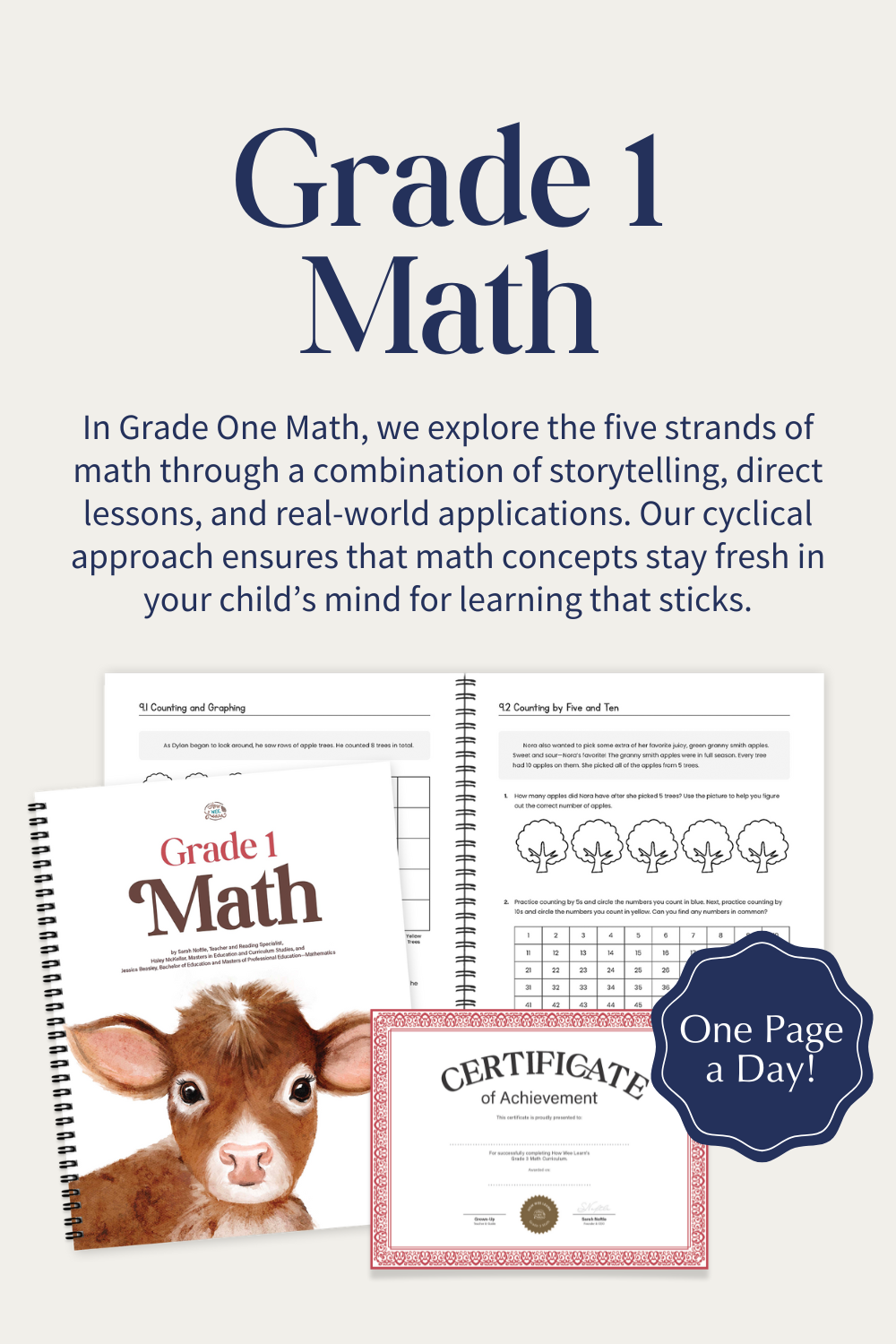
If you’re looking for a math curriculum that values quality over quantity, and gives you more time in your day for games and connection, then you are going to love the How Wee Learn Grade 1 Math Curriculum.
How Wee Learn’s Grade One Math Curriculum
shop.howweelearn.com/products/grade-one-math-curriculum
How Wee Learn’s Grade One Math uses the power of storytelling to create an engaging and fun math experience. Plus, our one-page-a-day and quality-over-quantity approach makes the experience simple and stress-free. Simply open your coursebook and go!
 |
 |
Thank you so much for reading, my friend!
xo Sarah

Leave a Reply