Did you know that the first jack-o’-lanterns were carved from turnips? Or that some spiders spin a brand-new web every day? And have you ever wondered why we dress up and knock on our neighbors’ doors for candy in the first place?
I’m excited to share our Halloween School Family Unit Study with you! Across ten topics, you’ll learn the stories behind some of your favorite Halloween traditions and get to know the real bats, spiders, and black cats that show up in so many of our spooky decorations.
You’ll scoop out the gooey insides of a pumpkin, mix up a glittery magic potion, and see if you can balance a paper bat on the tip of your finger. You’ll even make a little salt dough ghost that glows!
Below, I’m sharing all ten topics and a peek at the hands-on activities you’ll do together. Let’s get started!

What is a Family Unit Study?
But first… what exactly is a Family Unit Study?
This unit study, like all of our ever-growing library of unit studies, takes one big theme—Halloween—and breaks it down into ten manageable, bite-sized learning topics. This format gives you the freedom to dive into learning at a pace that works for your family. Perhaps you do one topic per day, perhaps one per week. Whatever suits your fancy! You can learn and explore topics from start to finish in about 1-2 hours each.
Dive in and watch the sparks of wonder ignite. Watch the child-led learning take off. Watch what happens when children are engaged in what they are learning!
Each of the 10 topics includes:
- an interesting fact,
- a discussion question,
- informative information,
- a curated YouTube video,
- a recommended book,
- a math or literacy enrichment question (with three difficulty levels),
- and an ultimate-can’t-be-beat hands-on activity!
Plus, all subjects are covered across the 10 topics! Geography, History, Science, Social Studies, Music, Art, Health, Literacy, and Math.

When everything connects across subjects, learning just makes more sense. Kids remember more, understand better, and actually enjoy the process. It’s the kind of learning that really sticks. 🙌
Before we get started, I’d love to share a little something to make your homeschool days just a bit easier (because we all need that, right?).
Our Mini Homeschool Toolbox is a simple, go-to resource filled with helpful printables – like math charts, number lines, and writing supports – to keep your days organized and your lessons running smoothly.
It’s completely free and so handy to have on hand as you move through your homeschool routine. Simply enter your email address below, and a copy will be instantly delivered to your inbox.
Halloween School Hands-On Activities
Let’s take a closer look at the 10 topics covered in the Halloween School Unit Study and the hands-on activities you’ll enjoy with each:
Topic #1: Pumpkins
How does a tiny seed turn into a great big pumpkin? Follow a pumpkin’s life cycle from seed to vine to fruit, and scoop out the gooey insides of a real pumpkin to see what’s hiding beneath the rind. Save your hollowed-out pumpkin for the next topic!
Topic #2: Jack-O’-Lanterns
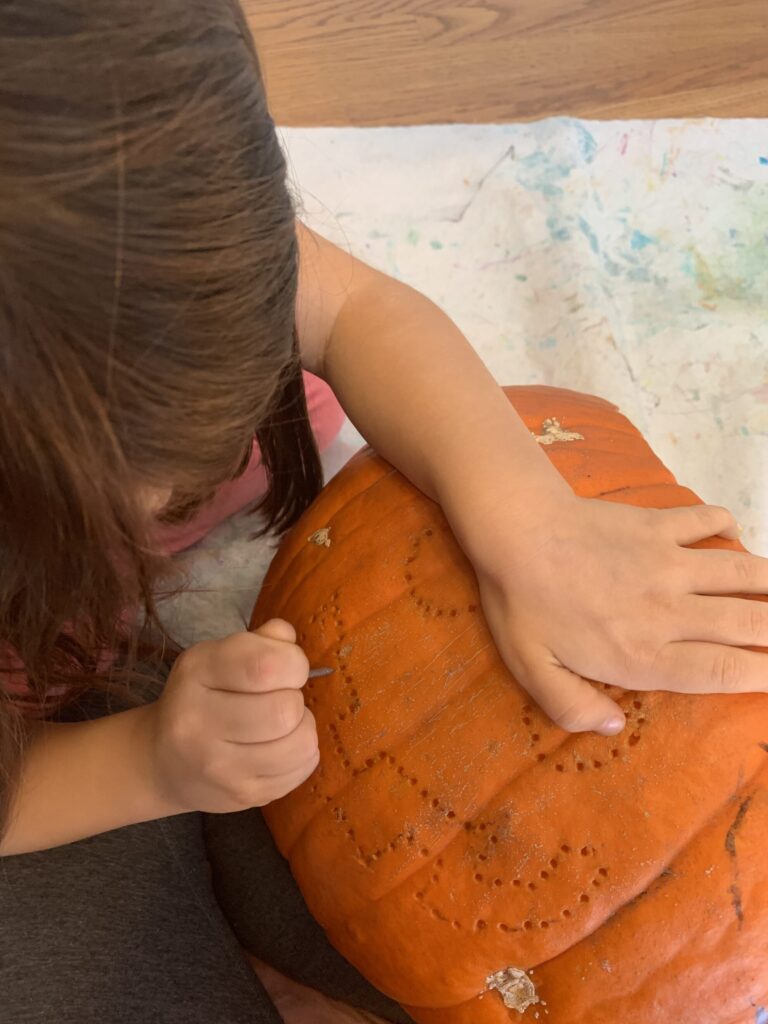
How did a glowing pumpkin become such a familiar sight on Halloween? You’ll hear the Irish folktale of Stingy Jack and learn how pumpkins took the turnip’s place in North America. Sketch a design for your own jack-o’-lantern and use a hammer and nail to make little holes for the light to shine through.
 |
 |
Topic #3: Skeletons
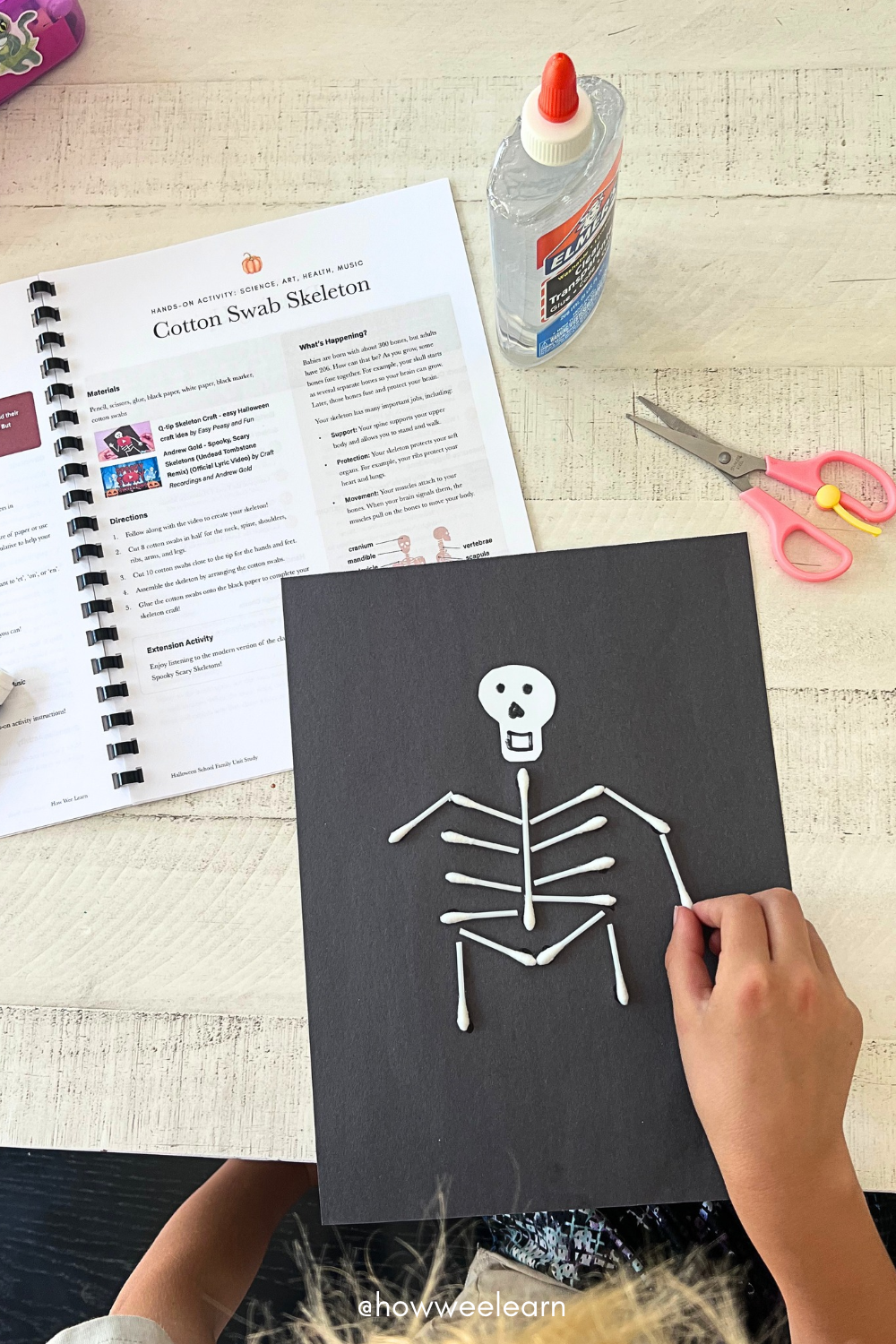
Your skeleton helps you stand, protects your organs, and works with your muscles every time you move. Get to know some of the bones that do all that work as you piece together a skeleton of your own using cotton swabs.
Topic #4: Dressing Up
From homemade disguises to the first store-bought costumes, Halloween dress-up has changed quite a bit over the years! You’ll do a little pretending of your own as you flutter like a fairy or stomp like a giant, listening for high and low sounds to tell you when to switch.
Topic #5: Bats
Bats are the only mammals that can truly fly, but how did they become a Halloween symbol? You’ll learn about their nighttime habits and make a paper bat that balances right on your fingertip with the help of two dimes.
Topic #6: Witches & Magic Potions
What goes into a witch’s potion? You’ll learn how witches became a familiar Halloween symbol and mix up a glittery Magic Potion Calming Jar. See which ingredients dissolve and which stay suspended as you watch your potion swirl and settle.

Topic #7: Spiders
A spider wears its skeleton on the outside of its body! Learn how that hard outer covering protects a spider and what happens when it outgrows it. Grab some yarn and a pair of straws to make a paper spider that zips back and forth in a spider race.
Topic #8: Spider Webs
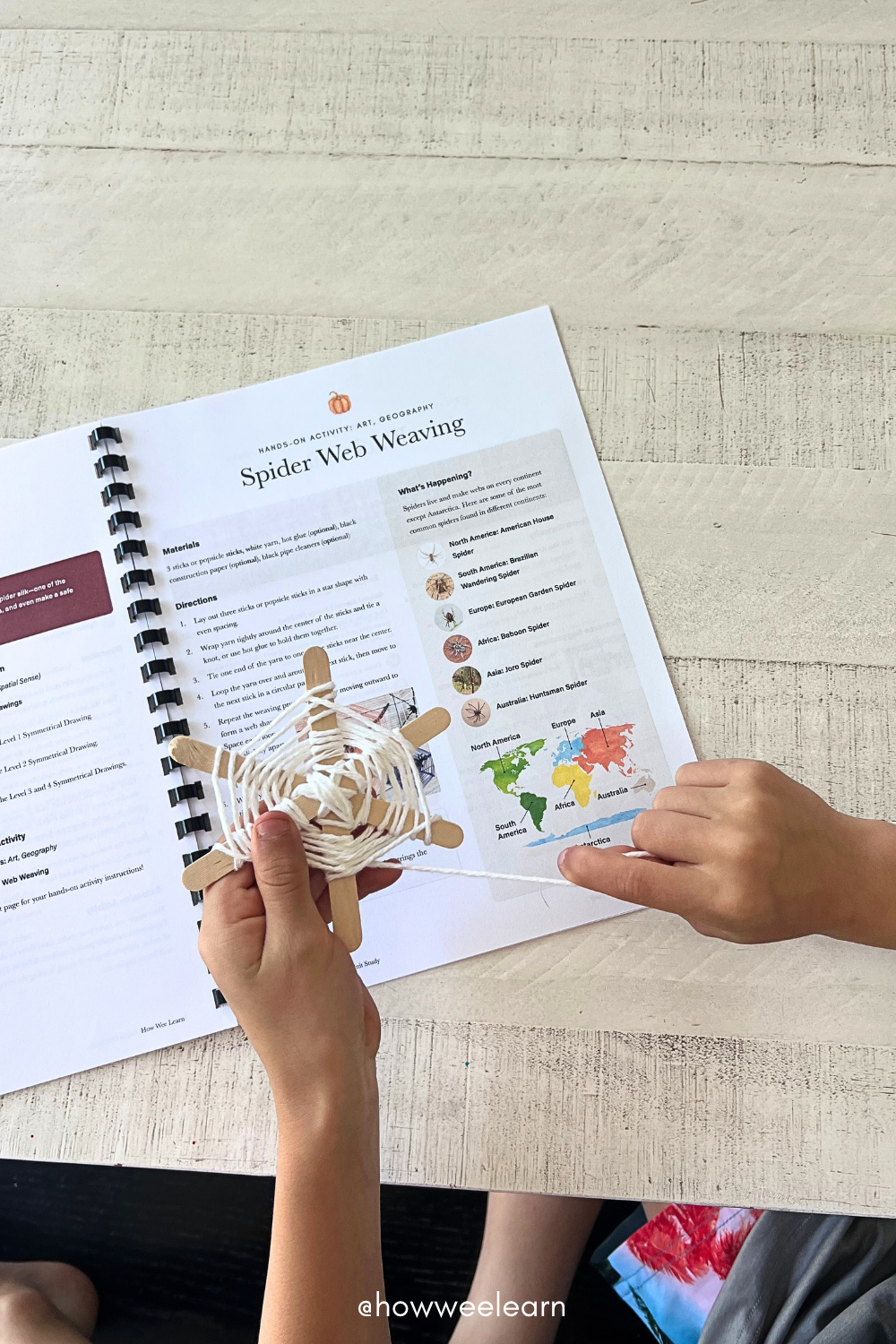
How does a spider turn its silk into a trap for its next meal? Learn about spider webs and find out where different spiders live around the world! Then, weave a web of your own by looping yarn around craft sticks, starting in the center and working your way out.
Topic #9: Black Cats
Would you feel lucky if a black cat crossed your path? You’ll hear how people in different times and places have seen black cats as a sign of good fortune or bad luck, and fold a black cat bookmark that peeks over the corner of your page.

Topic #10: Trick-Or-Treating
Long before kids went door-to-door saying “trick or treat,” some dressed up and performed a song or a trick to earn a treat. Follow the tradition through the years and make a salt dough ghost that glows over a battery-operated tea light.
And there you have it! Ten topics filled with Halloween traditions, a little spooky science, and plenty of hands-on fun to share with your family.
I hope this peek inside Halloween School has you looking forward to learning together this October. From the pumpkins on your porch to the spiders in your garden, there are so many stories to tell and questions to ask along the way!
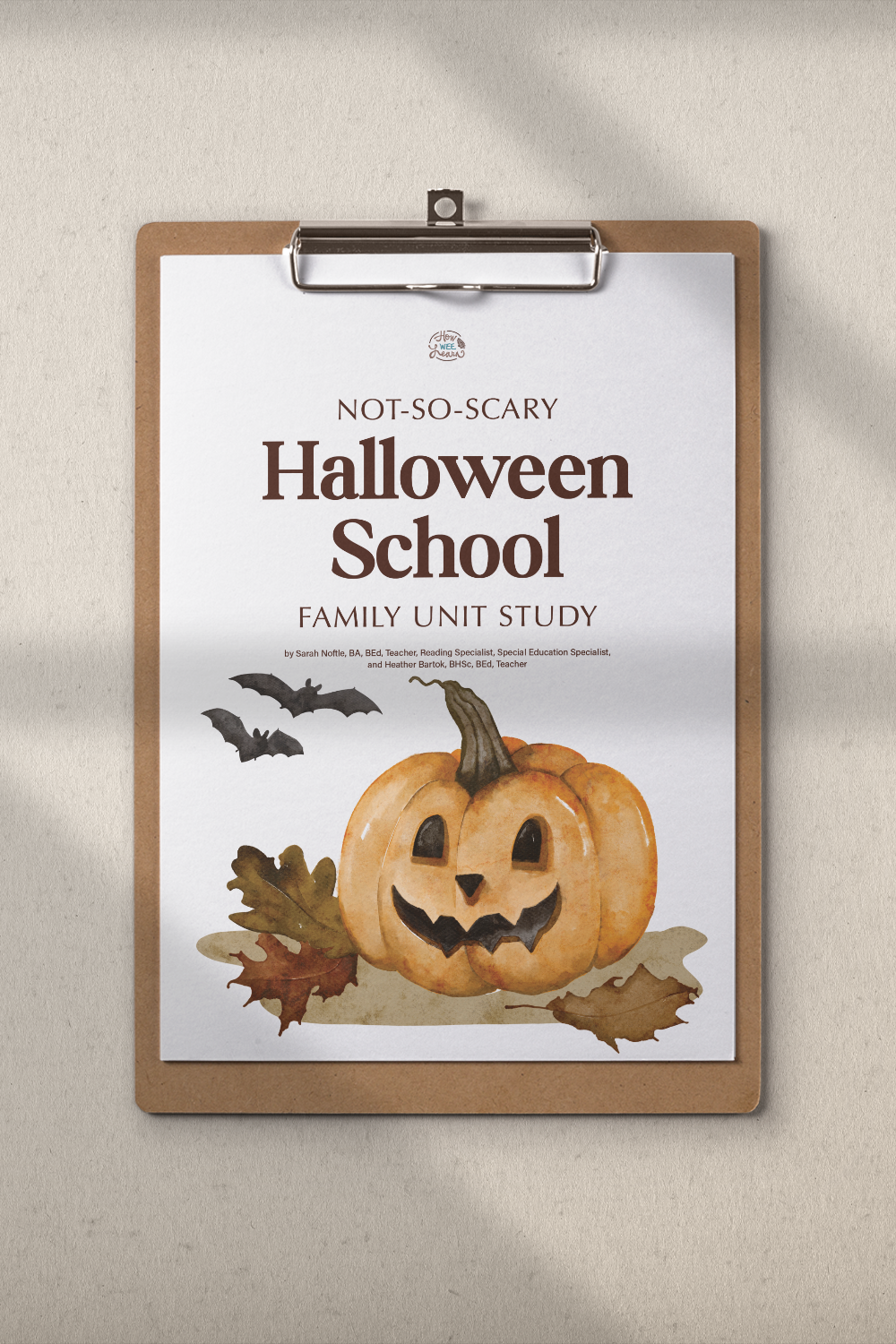
Check out Halloween School for a fun, hands-on lesson plan for Halloween!
https://shop.howweelearn.com/products/halloween-school
 |
 |
Thank you so much for being here with me, sweet friend!
xo
Sarah


Leave a Reply