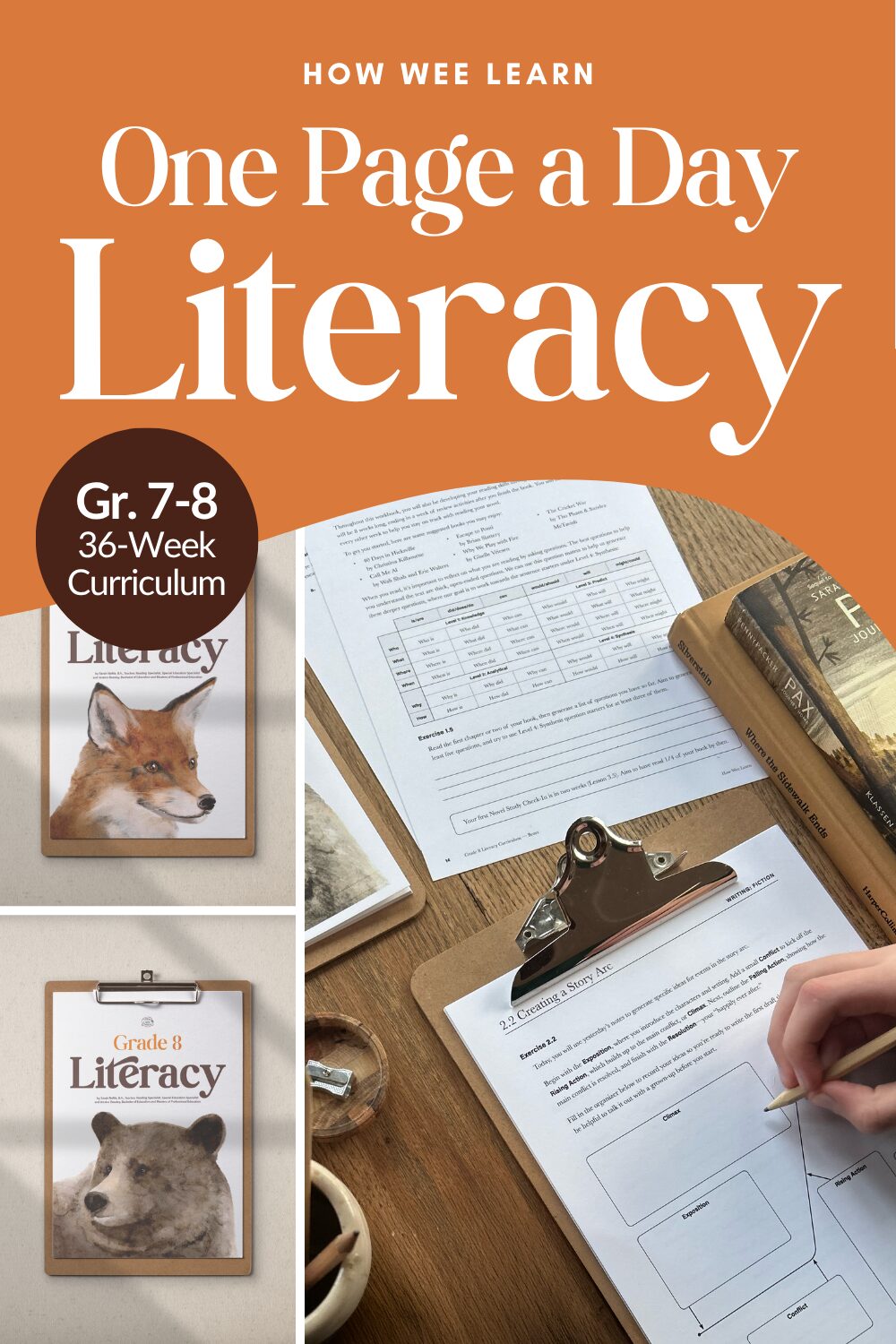
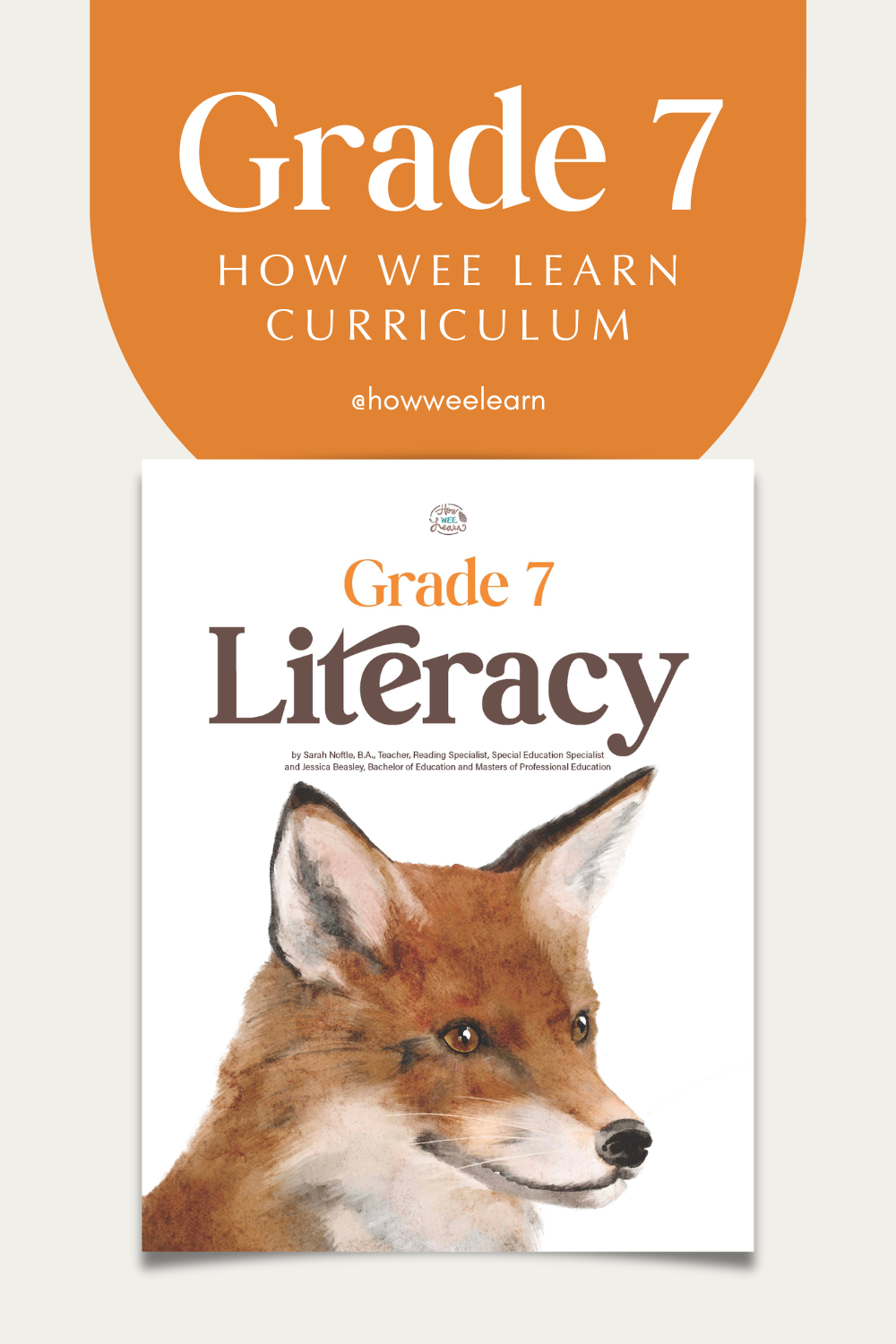
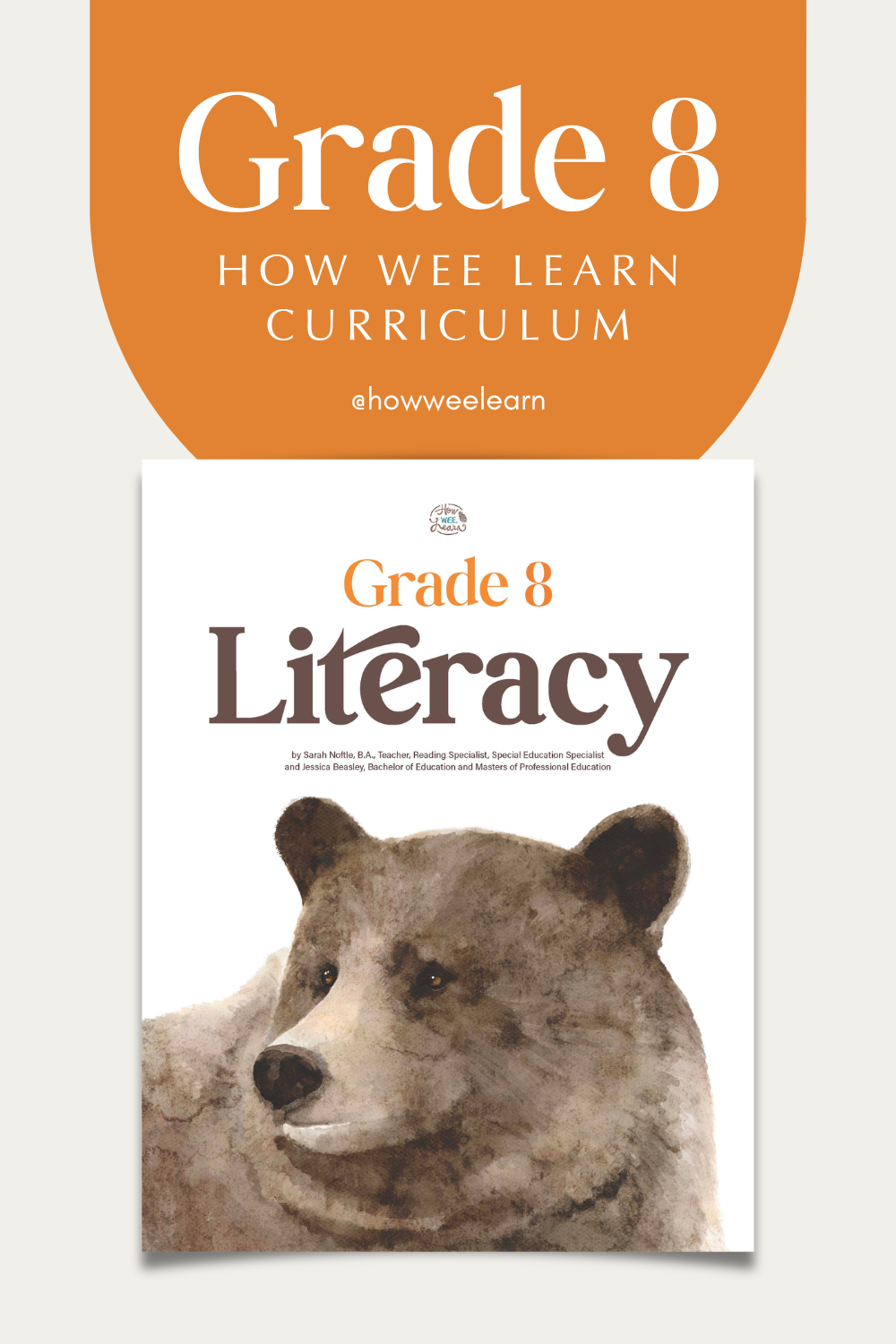
I’m so excited to share what literacy looks like in my Grade 7 and 8 Literacy Curriculum!
Over the past couple of weeks, we’ve explored Grades 1-3 and Grades 4-6, and now it’s time to step into Grades 7-8. While the topics and skills continue to grow alongside our learners, my approach stays exactly the same: simple, meaningful, and completely doable.
In Grades 7 and 8, we continue building on a deeper understanding of writing while connecting literacy learning to important themes and issues in the broader world. Students begin thinking more critically about what they read, strengthening reading comprehension skills through novel studies, and developing a stronger voice in their own writing – all in a way that feels engaging rather than overwhelming.
Just like all of my curricula, this program is designed to cut out the busywork and focus on what really matters: meaningful literacy skills, one page a day.
Even in the older years, kids still need plenty of time for creativity, hobbies, outdoor adventures, and all the wonderful things that make learning come alive!
Before we dive into this literacy curriculum, I wanted to share a little freebie with you that homeschooling families absolutely love!
Our Mini Homeschool Toolbox is packed with helpful printables designed to make your homeschool days run a little smoother – from writing supports and reference charts to handy learning tools you can use again and again. Just pop your email address below, and we’ll send your free Homeschool Toolbox straight to your inbox!
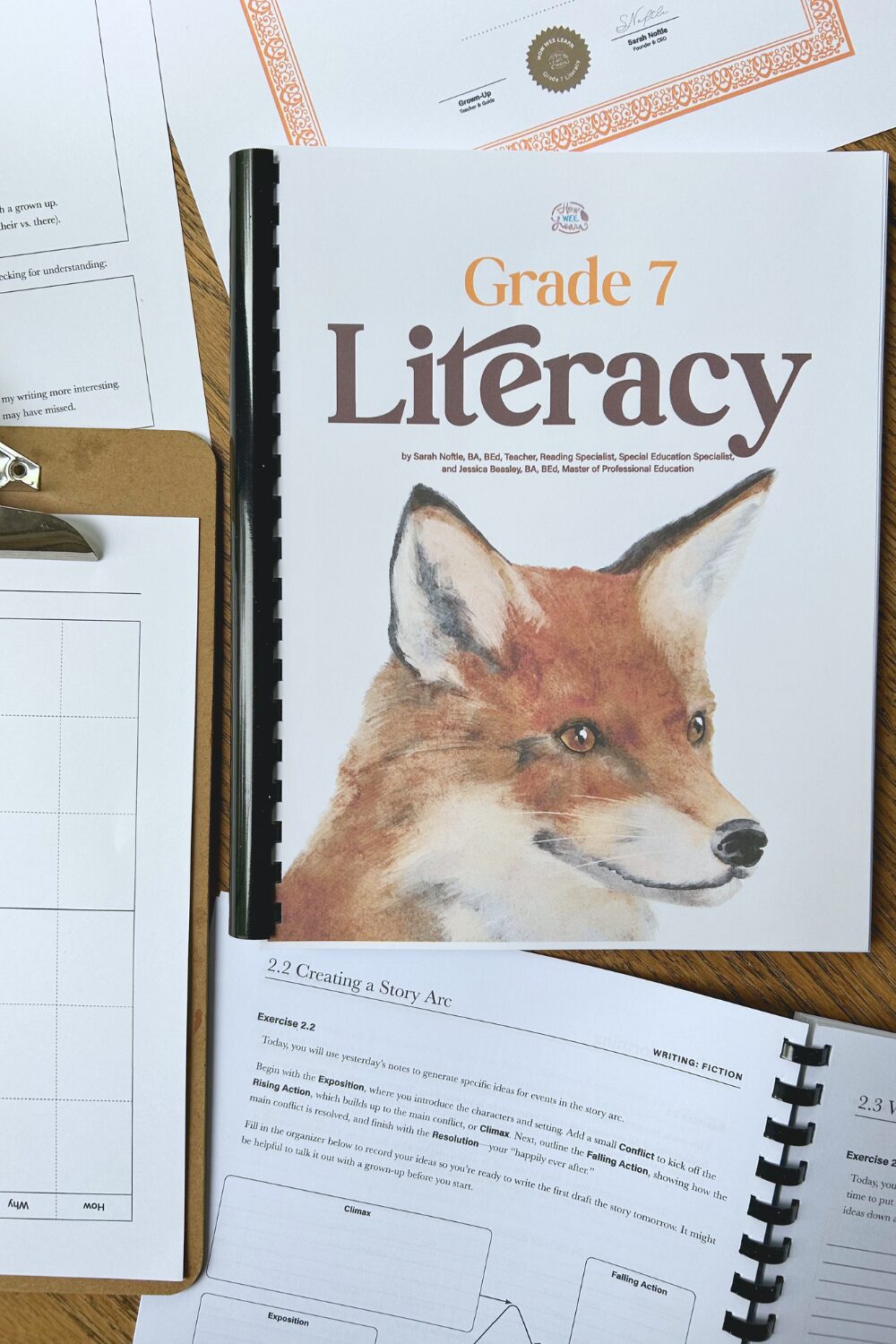
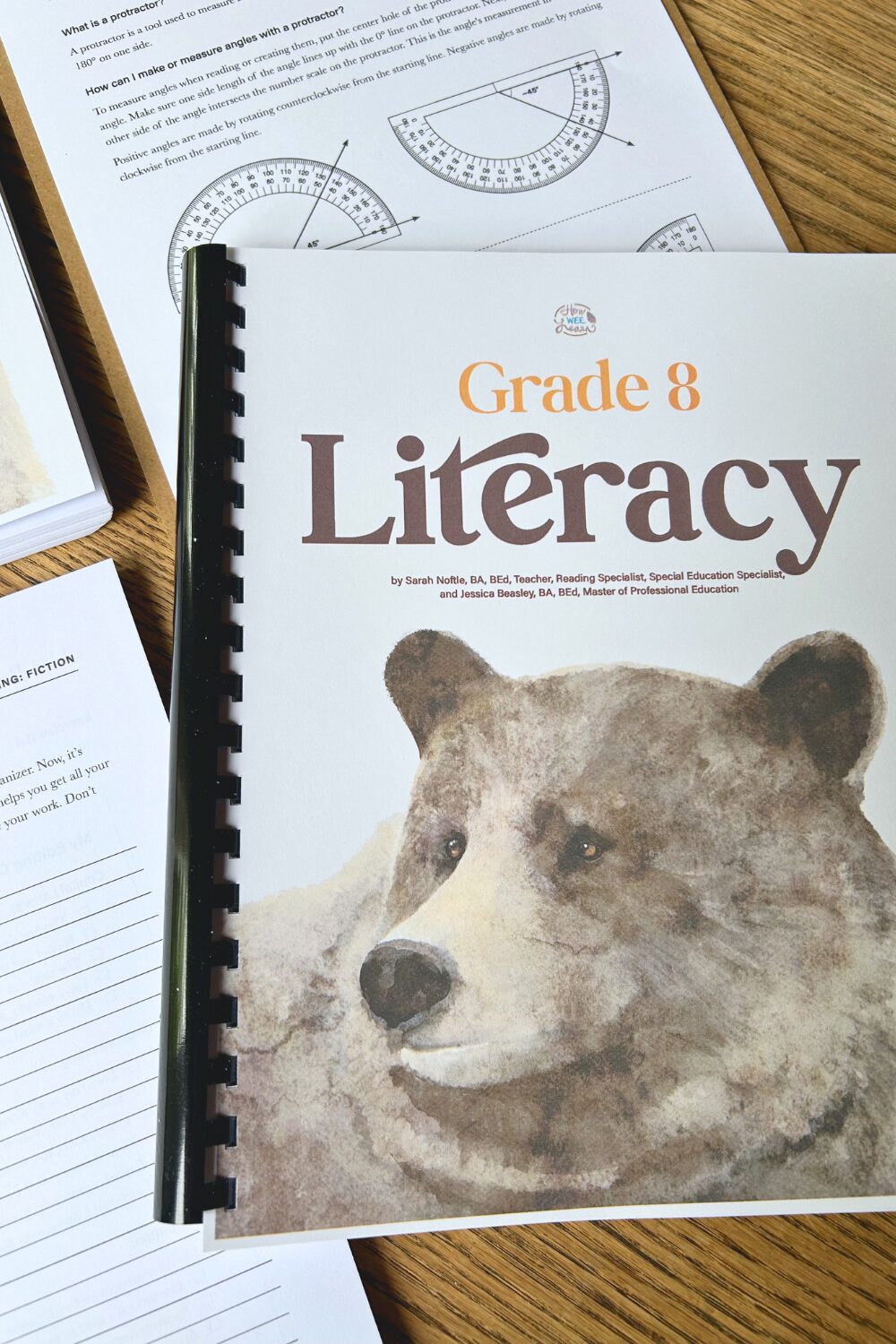
Grade 7 and 8 Literacy Curriculum
In the Grades 7 and 8 Literacy Curriculum, students explore a balanced mix of fiction and non-fiction reading and writing through thoughtfully structured weekly themes.

Each four-week theme is divided into focused daily lessons that help learners build confidence and strengthen literacy skills step by step:
- Week One – Fiction Reading: Students dive into Fiction Reading through reading comprehension, proofreading, vocabulary, sentence construction, literary devices, and novel study check-ins that deepen understanding of the texts they are reading.
- Week Two – Fiction Writing: Next, we focus on Fiction Writing. Students move step-by-step through the writing process by brainstorming ideas, creating story arcs, drafting, proofreading, and publishing polished final copies of their work.
- Week Three – Non-Fiction Reading: This week, students shift into Non-Fiction Reading, where they strengthen comprehension skills, build vocabulary and morphology knowledge, practice making inferences, and continue reflecting on their novel studies.
- Week Four – Non-Fiction Writing: Finally, we bring everything together through Non-Fiction Writing. Students learn valuable real-world literacy skills like researching, organizing their writing, drafting, proofreading, and creating strong final pieces of writing.
Throughout the curriculum, regular novel study check-ins and reflection projects encourage students to deeply engage with literature while developing strong reading comprehension skills.
And best of all? It’s still just one page a day! A simple, meaningful approach that fits beautifully into your homeschool routine without overwhelming your learner or you.
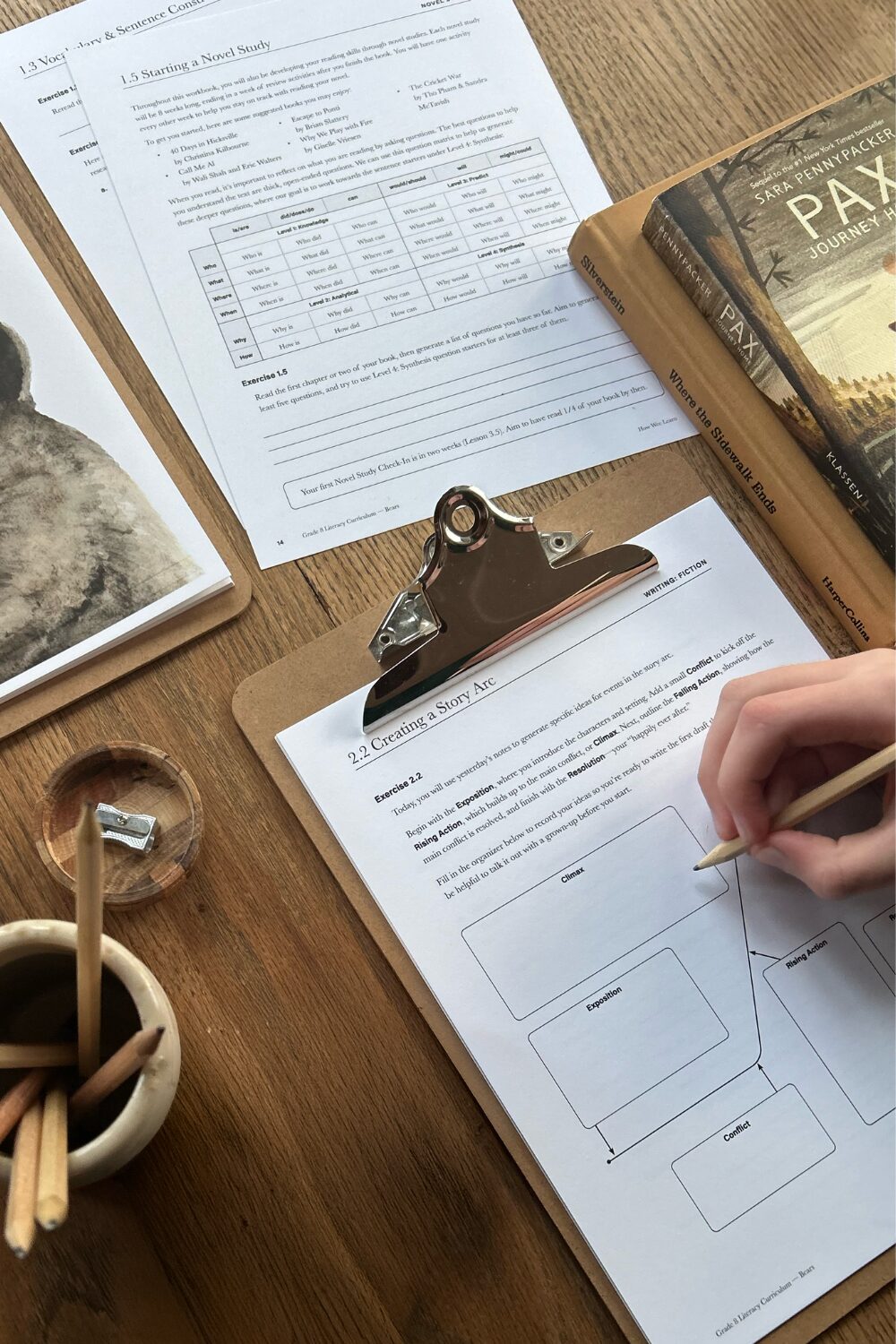
Novel Studies in the Grades 7 and 8 Literacy Curriculum
One of my favorite parts of the Grades 7 and 8 Literacy Curriculum is the addition of novel studies. At this age, students are ready to move beyond simply reading a story and begin thinking more deeply about characters, themes, perspectives, and the messages woven throughout literature.
Rather than assigning endless worksheets or overwhelming book reports, these novel studies are woven gently into the curriculum through simple check-ins and reflections. Students regularly pause to make connections, strengthen comprehension skills, and reflect on what they are reading.
As learners progress through the curriculum, they begin to analyze ideas more critically, considering different perspectives, and developing stronger communication skills through discussion and writing.
After every two themes, students complete a culminating Novel Study Reflection. This gives them an opportunity to look back on their reading, organize their thoughts, and express their understanding in a deeper and more personal way.
It’s a simple, manageable approach that helps students truly engage with literature—while still keeping literacy enjoyable and approachable!
Building Thoughtful Readers & Writers
Grade 7 and 8 can feel like a big transition in learning, especially when it comes to literacy. Students are growing into deeper thinkers, stronger writers, and more independent learners. But that doesn’t mean learning needs to become overwhelming!
My goal with the Grades 7 and 8 Literacy Curriculum is to give homeschool families a simple, meaningful approach to literacy that builds real skills while still leaving room for creativity, curiosity, and connection.
With just one page a day, students strengthen reading comprehension, writing, critical thinking, and communication skills.
If you’re looking for a literacy curriculum that gently supports older learners as they grow into thoughtful readers and confident writers, I truly hope you’ll consider How Wee Learn!
Visit the How Wee Learn shop to explore more and
download your free samples today!
https://shop.howweelearn.com/collections/grade-school-math-and-literacy
 |
 |
Thanks so much for reading, friend!
xo
Sarah

Leave a Reply